
 Center for Financial Inclusion
348d ago
Center for Financial Inclusion
348d ago
▶
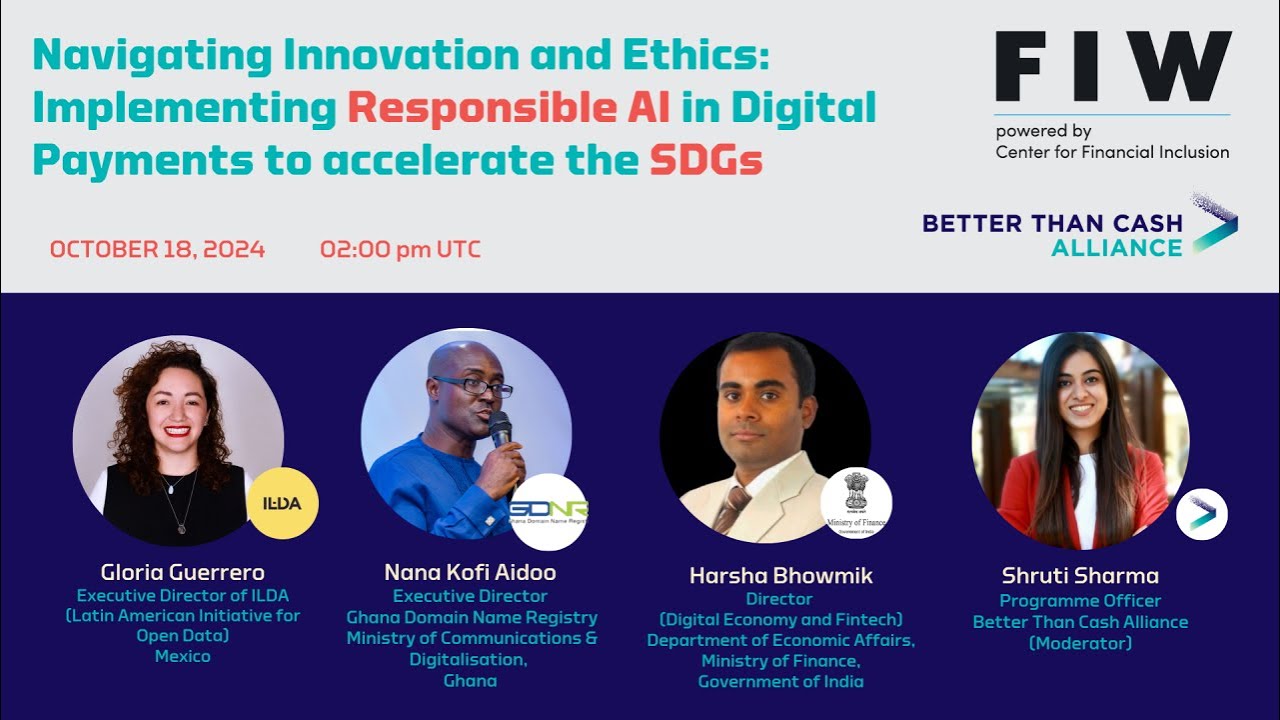
Navigating Innovation and Ethics Implementing Responsible AI in Digital Payments
As AI continues to advance, it is reshaping various financial industries, including the realm of digital payments infrastructure. The integration of AI and DPI presents unique opportunities for enhancing efficiency, bolstering security, and improving convenience. For example, in Togo, AI has significantly improved the targeting of cash transfer programs, ensuring aid reaches those most in need. Additionally, according to the World Bank, AI's impact extends to public services and financial inclusion by streamlining tax collection, enhancing social protection transfers, and expanding digital financial services (DFS) to underserved populations. Such applications, though not immediately apparent to users, play a crucial role in optimizing the functionality and reliability of financial systems, streamlining processes, and improving user experiences.
However, this integration also necessitates careful consideration of potential biases and responsible data collection practices to ensure these advancements are beneficial for all. By carefully balancing these approaches, we can ensure that AI's deployment in digital payments remains both innovative and secure, fostering a more efficient and user-friendly financial ecosystem. Some of the risks associated with AI in the context of digital payments, as identified and highlighted in the UN Responsible Principles of Digital Payments, as well as principles set forth by UNESCO for the Ethical Use of Artificial Intelligence, include Unethical practices, Fair Access and Inclusion, Privacy Concerns, Security Vulnerabilities, Transparency and Accountability.
Our task is to harness AI technology to accelerate sustainable development while minimizing its risks. Accountability is crucial for both the creators and users of AI systems, given its global power, speed, and impact. We must ensure AI is governed effectively, equitably, accessibly, and ethically. Equitable access to AI tools, applications, and infrastructure—including quality data and computational resources—is essential. This also involves capacity development and technology transfer to ensure AI benefits are widely shared, not just concentrated among the already advanced. The UN is spearheading the use of ethical and diverse AI tools to address the challenges of the SDGs, to also get them back on track, and bridge the digital divide by safely harnessing technology for those who need it most.
Recognizing the risks, addressing the challenges, and fostering international cooperation in AI governance, stakeholders can collectively strive to harness the transformative potential of AI in digital payments while upholding ethical principles, data and privacy rights, and cybersecurity standards. Several government members of the Alliance are at varying stages of AI readiness in their efforts to advance AI governance. This panel session will aim to focus on showcasing member experiences and vision for implementing Responsible AI Practices.