
 bibliotecacepal
78d ago
bibliotecacepal
78d ago
▶
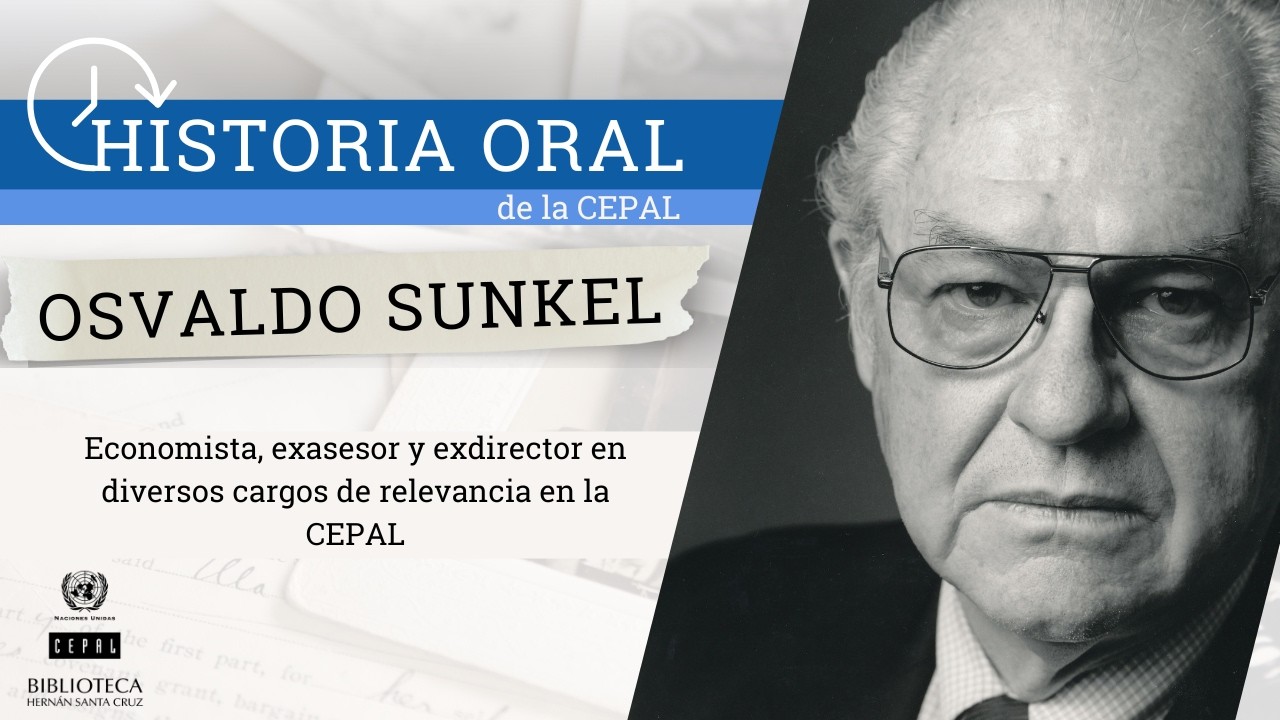
Historia Oral de la CEPAL: Entrevista a Osvaldo Sunkel
Osvaldo Sunkel, Economista, exasesor y exdirector en diversos cargos de relevancia en la CEPAL es una de las figuras más influyentes del pensamiento económico latinoamericano y un referente histórico de la CEPAL. Con una trayectoria de más de seis décadas vinculada a la institución, ha sido protagonista en la construcción del enfoque estructuralista y neoestructuralista, contribuyendo al análisis del desarrollo, la dependencia y los desafíos estructurales de América Latina.
Discípulo y colaborador de Raúl Prebisch, Sunkel formó parte de una generación clave que redefinió el pensamiento económico regional, incorporando dimensiones como la sostenibilidad, la equidad y la inserción internacional de América Latina.
En esta entrevista, comparte reflexiones sobre sus comienzos, su formación profesional, las figuras claves que conoció en el proceso, el comienzo y evolución de la CEPAL.
00:00 – Introducción y los primeros años de Sunkel en el sur de Chile
02:00 – Su llegada a Santiago y formación profesional
07:00 – Primeros pasos en la CEPAL y Jorge Ahumada
13:00 – Experiencia en el London School of Economics
16:30 – El Manifiesto de Prebisch y la teoría Centro-Periferia
19:00 – Trabajo en México con Celso Furtado
22:00 – Planificación y el enfoque histórico-estructural
26:00 – Fundando la oficina de la CEPAL en Brasil
30:00 – El nacimiento del ILPES
34:00 – Crisis política en Chile y el exilio en Sussex
38:00 – Su retorno a la CEPAL
42:00 – La evolución del pensamiento cepalino en los años 80 y 90
46:00 – La Revista de la CEPAL: De lo testimonial a lo académico
47:30 – Reflexiones finales: La CEPAL y el futuro de América Latina
ENGLISH
Osvaldo Sunkel, economist and former adviser and senior official in several key positions at the Economic Commission for Latin America and the Caribbean (ECLAC), is one of the most influential figures in Latin American economic thought and a historic reference point for the Commission. With a career spanning more than six decades linked to the institution, he played a leading role in shaping the structuralist and neo-structuralist approaches, contributing to the analysis of development, dependency and the structural challenges facing Latin America.
A disciple and collaborator of Raul Prebisch, Sunkel belonged to a pivotal generation that redefined regional economic thinking, incorporating such dimensions as sustainability, equity and Latin America’s integration into the international economy.
In this interview, he reflects on his early years, his professional training, the key figures he encountered along the way, and the origins and evolution of ECLAC.
00:00 – Introduction and Sunkel's early years in southern Chile
02:00 – His arrival in Santiago and professional training
07:00 – First steps at ECLAC and Jorge Ahumada
13:00 – Experience at the London School of Economics
16:30 – Prebisch's Manifesto and the Centre-Periphery theory
19:00 – Work in Mexico with Celso Furtado
22:00 – Planning and the historical-structural approach
26:00 – Founding the ECLAC office in Brazil
30:00 – The birth of ILPES
34:00 – Political crisis in Chile and exile in Sussex
38:00 – His return to ECLAC
42:00 – The evolution of ECLAC thinking in the 1980s and 1990s
46:00 – The ECLAC Review: From testimonial to academic
47:30 – Final reflections: ECLAC and the future of Latin America