
 United Nations
24d ago
United Nations
24d ago
▶
Russia on Ukraine - Media Stakeout | United Nations
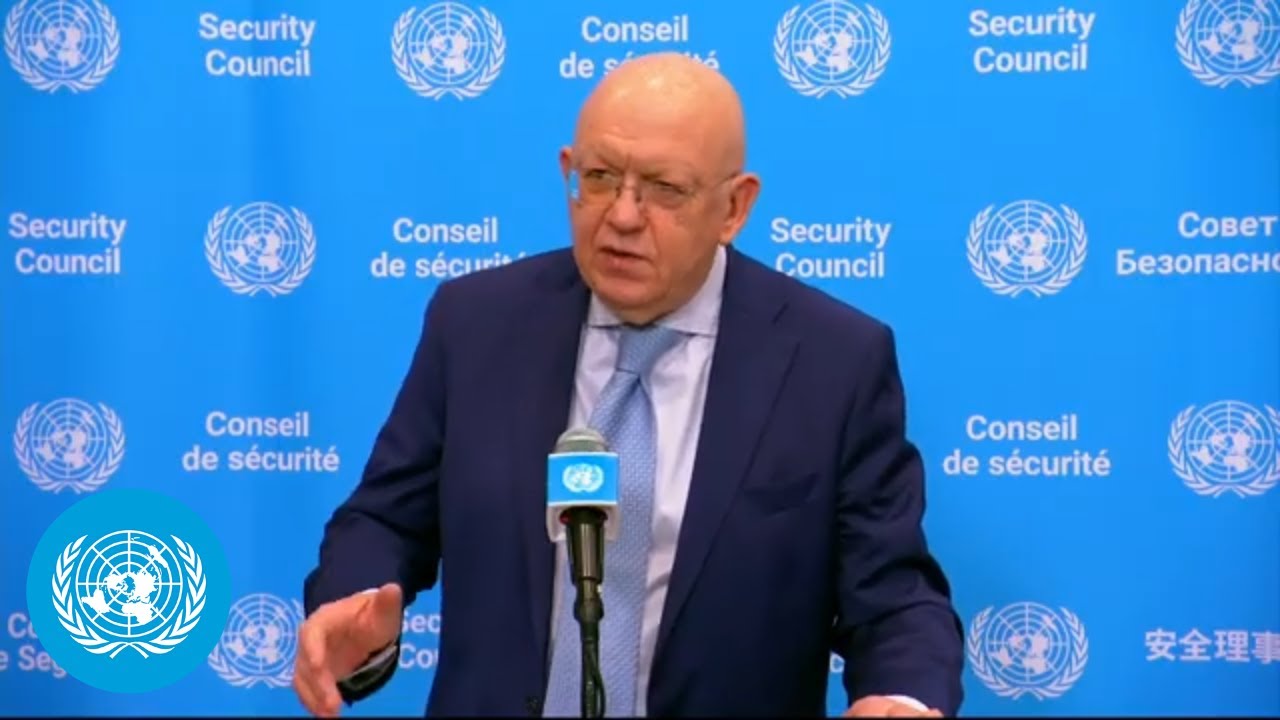
Informal comments to the media by Vasily Nebenzya, Permanent Representative of the Russian Federation to the United Nations, on the situation in Ukraine.
Ambassador Vassily Nebenzia told journalists in New York that the Russian Federation was “extremely disappointed” by the “clearly biased and politicised decision” by Secretary-General António Guterres to include the Russian Armed and Security forces in the list of parties responsible for acts of sexual violence in the UN's annual report on sexual violence in conflict zones.
Nebenzia said, “the draft in the report contains information on crimes that not only cannot be verified due to the absence of data but also do not demonstrate the systemic nature of the alleged violations, which is a key criterion for listing.”
He said, “it gives the impression that the document was prepared perfunctorily and intended to reach a predetermined outcome to discredit Russia and conceal the unlawful actions of the Kyiv regime.
The Russian Ambassador said, “the UN human rights monitoring mission in Ukraine also routinely demonstrates anti-Russian bias. Its mandate is based on an agreement between Ukraine and the office of the UN High Commission of Human Rights, which raises questions about its authority to conduct investigative activities. Moreover, it is well known that this mission works as a laundering machine for Ukrainian narratives.”
Hr said, “the open bias is also confirmed by the absence of information on hundreds of civilians who have been subjected to torture, beatings, abuse, killing, sexual violence and ill treatment by Ukrainian armed formations.”
Nebenzia said, “we consider the UN’s omission of these cases unacceptable and added that the Russian Federation has “repeatedly requested additional information regarding the allegations against our armed forces. Yet, we have never seen a response.”
Responding to a reporter’s question, the Ambassador said, “when there is another prisoners of war exchange, Ukrainian soldiers arrive to their homeland, and they are immediately made to write confessions that they were sexually abused or tortured. And then these documents come to these independent commissions which form the basis of the accusations. That's as simple as that.”