
 United Nations
24d ago
United Nations
24d ago
▶
Middle East: Hunger Risk Grows for 45 Million - Press Conference | United Nations
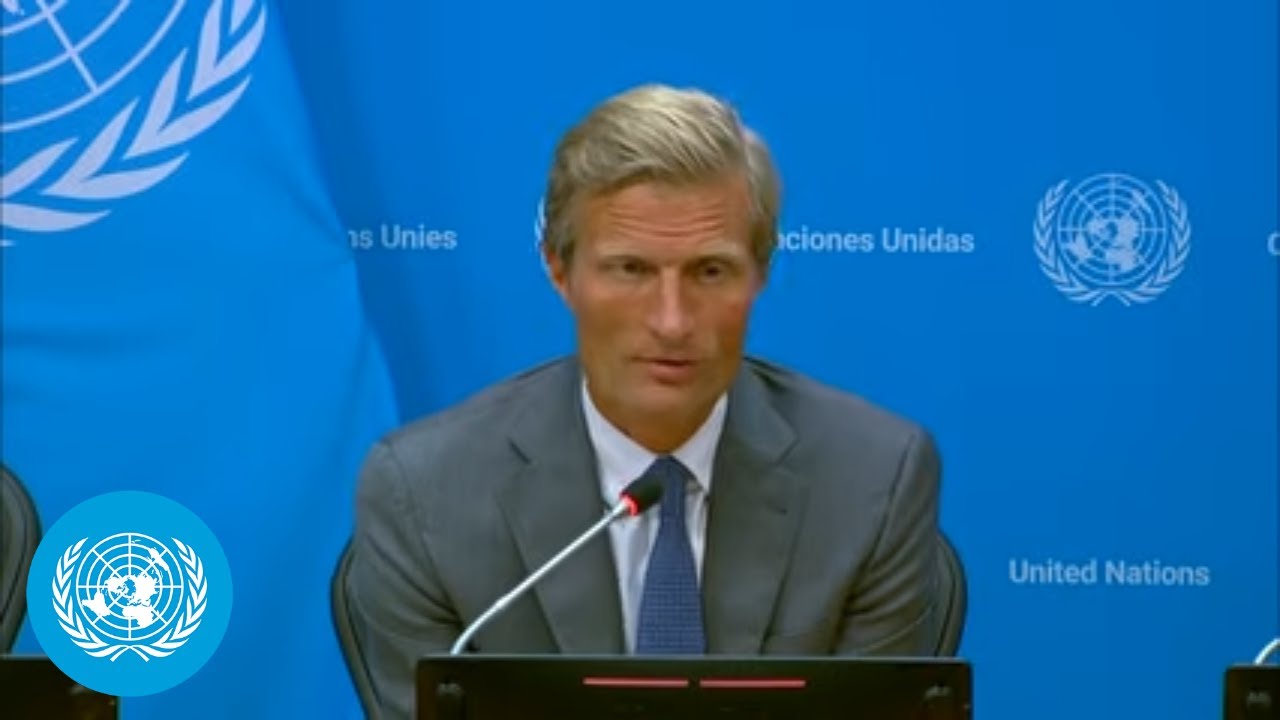
Press Conference by Carl Skau, Acting Executive Director of the World Food Programme (WFP).
Skau warned that the Middle East crisis could push some 45 million people into hunger. The escalation of geopolitical tension in the Middle East since February 28, 2026 has profound implications for global food security.
In an early projection released in March, WFP estimated that 45 million people would fall into acute food insecurity should oil prices remain around USD 100 per barrel through the end of June.
Other partners have warned of broad implications for the global food system in the short and medium term, due to the crisis’ impact on supply chains and energy and fertilizer markets.
To better ascertain country level food security dynamics, WFP worked with local partners to conduct three case studies in May in Afghanistan, Somalia, and Sri Lanka.
Addressing the press today (4 Jun) Skau said, “in Somalia, we're seeing 2.5 million people additional now being acutely food insecure. In Afghanistan the number is 2.3 million and in Sri Lanka1.3. In all three countries there is a different mix of issues that is driving this. Increased prices is one, but there is also the element of one underfunded humanitarian responses and development responses, but also that the cost of doing business, if you will, the cost of running humanitarian operations has gone up dramatically.”
On Ebola and the Eastern Democratic Republic of the Congo, Skau said, “This is really a crisis in a crisis already. In Ituri province, where the outbreak reportedly started, hundreds of 1000s of people are already displaced, and only in the past couple of months we saw additional tens of thousands of people displaced. And it's a place where a million people are also acutely food insecure, and we are just barely meeting the minimum requirements in terms of response that has been underfunded now for many years, but even more severely so over the past few months, but we are stepping up.”
On the humanitarian financing, he said “We are facing a perfect storm, with, you know, record high levels of hunger, is now, you know, risking to get even higher, and at the same time, we have seen historic drops in our funding, with a 40 percent drop year to year last year.”
He stressed, “We're not seeing the same kind of response when we also have sudden onset crisis that we used to. One example of that is Lebanon, where you basically have a greater crisis now than you did two years ago, and now we're only seeing about half of the money coming forward that we saw last time. Frankly, the government is doing all it can. It's doing all the right things. I think, as a humanitarian and UN system, we also, you know, we were well prepared and were geared up, working closely with those government and local authority efforts, and so everything is in place in a way. What is lacking is of course a ceasefire, so that we can access all the people and that people can return, but secondly it is the funding.”
Answering a question, he said, “We have been able to respond at scale in Gaza since the start of the ceasefire, but under increasing pressure over the past few weeks, I should say, or since the war in the Gulf escalated, and so you know we have been able to somewhat stabilize the food security situation.”