
 UNDP Independent Evaluation Office
217d ago
UNDP Independent Evaluation Office
217d ago
▶
Reflections Webinar: Adapting to climate change in the most vulnerable contexts
This COP30 side event and Reflections paper launch presented seven key lessons for making adaptation finance work in the world’s most at-risk settings:
1. Start with local realities. The most effective programmes invest early in local capacity, recognizing that those exposed to climate risks will need to keep adapting after external support ends.
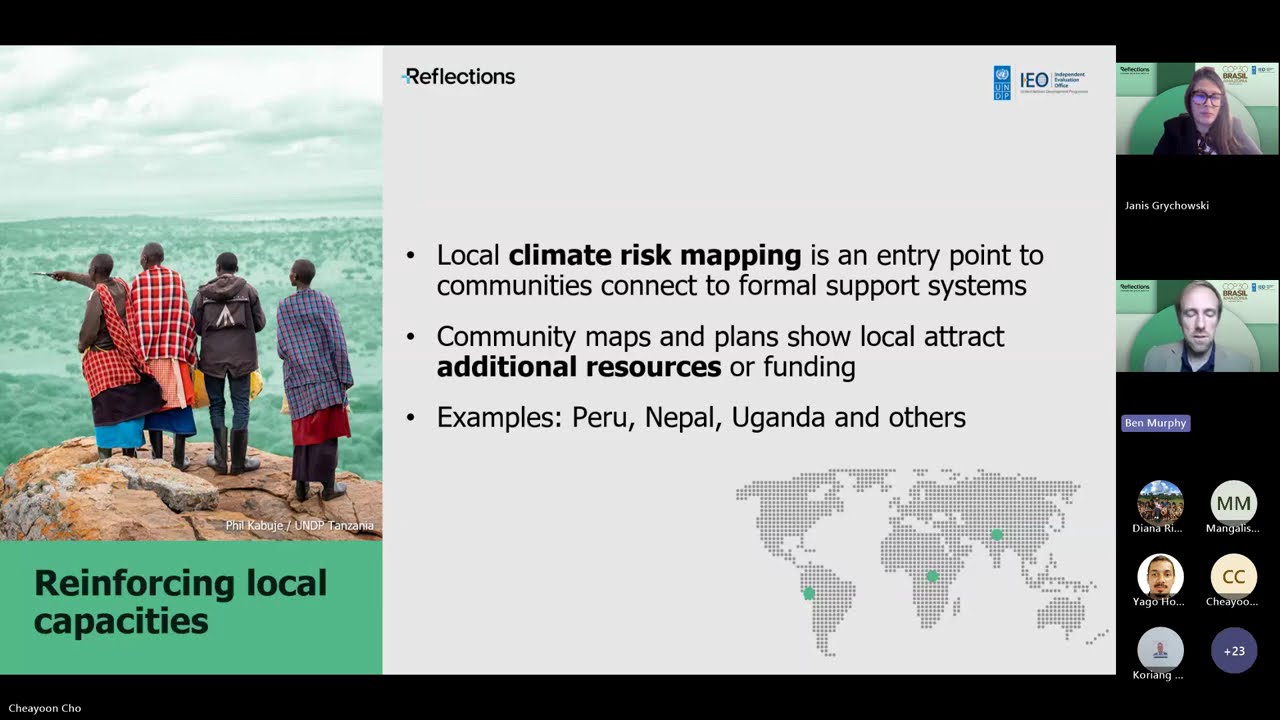
2. Helping local groups to map climate risks is an effective entry point for linking communities to formal support.
3. Climate forecasts only become actionable when science and local observation are integrated - regularly, and in local languages.
4. Plan for unintended consequences. Technology can reduce some climate change impacts, but only with careful planning. In fragile contexts, quick fixes can backfire.
5. National adaptation plans often stall due to financial and institutional hurdles. Working with central economic ministries helped to incorporate adaptation objectives in departmental budgets.
6. Understand the value chain. Higher incomes can be wiped out by climate shocks. Effective programmes look at business incentives across the value chain and pay special attention to those struggling to access markets.
7. Evaluators can better assess adaptation support by viewing resilience as a set of capacities held by the people at risk.
Read the paper: https://www.undp.org/evaluation/publications/adapting-climate-change