
 Savory Institute
72d ago
Savory Institute
72d ago
▶
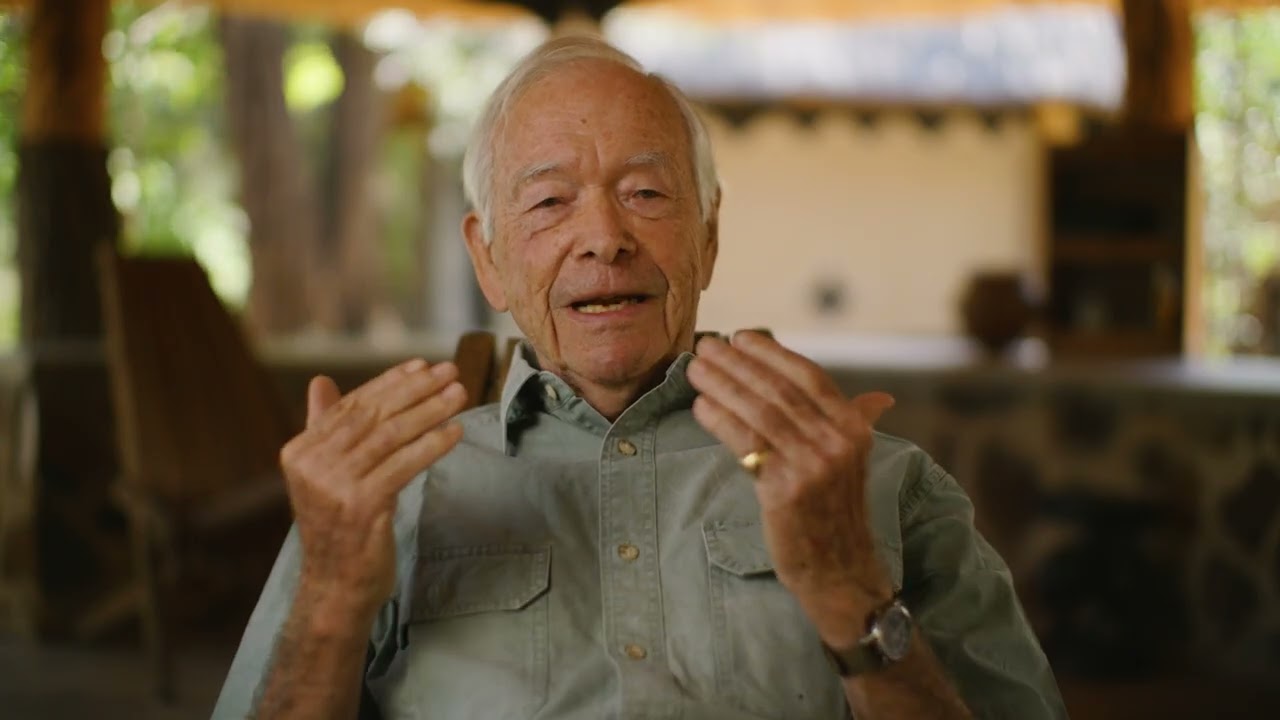
Allan Savory interview about his new memoir UnSavory
Order "UnSavory: African Stories of Wildlife, War, and the Birth of Holistic Management"
👉 https://savory.global/unsavory
For decades, Allan Savory refused to write a memoir, believing it was egotistical and risked distorting truth. He eventually agreed because the story behind Holistic Management cannot be separated from lived experiences, mistakes, and learning that led to it.
In this conversation, Savory reflects on formative moments in his life, from ecology making immediate sense to him, to what tracking taught him about observation and reality. He speaks openly about early errors, including elephant culling, and how they led to a deeper understanding of land, animals, and why many environmental approaches fail.
--
0:00 - Why write a memoir?
8:07 - Is there something innate in you that doesn’t fear to be unpopular? Where does that come from?
9:41 - This book is exceedingly honest about how different things were back in your formative years, specifically with regards to race and environmentalism. Why was it important to you to depict these time periods and the attitudes within them honestly rather than sugar-coating it?
10:50 - You’ve spent your whole life in such close connection to wildlife. What does it feel like to be misunderstood and judged by people who don't have the same level of experience and connection with these animals as you do?
12:21 - You write about your poor academic performance, and simultaneously you’re describing a child that is incredibly intelligent, resourceful, crafty, clever, and independent. How would you define "intelligence"?
15:00 - Can you describe your first encounter with ecology?
16:36 - Immediately after encountering it, you seem to have this intuitive insight about ecology, recognizing that there’s no reason to separate plants and animals that coevolved together. Can you describe how you came to that understanding? And why others seem to struggle to have this insight?
18:50 - What was the biggest lesson you learned from being a game ranger?
23:13 - You describe in the book the moment where the conditioned racism and paternalism of your time got completely flipped on its head for you. Can you talk about that?
25:50 - What did you mean when you wrote that, “The worst deterioration I observed occurred where we had taken out the people, which had somehow changed the behavior of elephants and other game.” Why is it important for humans to be an active part of their environment?
30:25 - What was the main reason for your disillusionment from the Game Department?
35:00 - Expand on this quote from the book: “Management that destroyed game habitat was far more dangerous and caused more lasting damage than any of the game culling, hunting, or poaching.”
38:49 - Can you talk about “your biggest blunder.” How soon did you start to have doubts that this recommendation was not working?
41:56 - Can you explain the context of changing your mind about livestock and what your previous views were?
51:39 - How did it feel when scientists started creating peer-reviewed refutations to your work using incorrect methods?
57:10 - In the book you describe a moment where a friend of yours confronts you, telling you that what you were saying was discrediting 8 years of his work. How did it feel knowing that you had to say what you knew to be true, even at the risk of hurting people you cared about?
01:04:45 - What was it like to live through a civil war, losing dear friends to violence?
01:05:58 - You make the distinction in the book between a war between enemy armies, and the realities of fighting your own people in a civil war. Why is that distinction important?
01:10:17 - Why is it important that Ian Smith utilized such anti-democratic tactics such as propaganda, suppression of dissent, control over military, censorship, and other tactics to secure his rule?
01:14:32 - Apart from the censorship, propaganda, and other things we discussed, what was your opposition to Ian Smith's party?
01:17:48 - What gave you the courage to enter into Parliament incognito at this time?
01:20:21 - You write of feelings of disgust and betrayal toward Ian Smith, but that you could never hate the man. Why is that?
01:22:40 - I think one of the more challenging things for a modern audience to understand might be that the Rhodesia Party, which you created, was a white-only party. Can you explain more why you made that choice?
01:25:19 - Explain this refrain: “poor land leads to poor people, social breakdown, violence and war.” Do you see this happening in the world today?
01:29:47 - Why did you go into exile?
01:33:04 - Why was exile so important to the formulation of your work - the creation of Holistic Management?
01:37:48 - What do you hope for Zimbabwe’s future? What about the future of the world?
01:40:52 - Tell us about meeting Jody. Why is this partnership so important in your life, as well as your work?
01:43:02 - If you were to do your TED talk again, what if anything would you do differently today?