

▶
Why contraception is essential health care in humanitarian crises
Contraception is often discussed as a political issue. In humanitarian settings, it is essential health care — and in many cases, lifesaving.
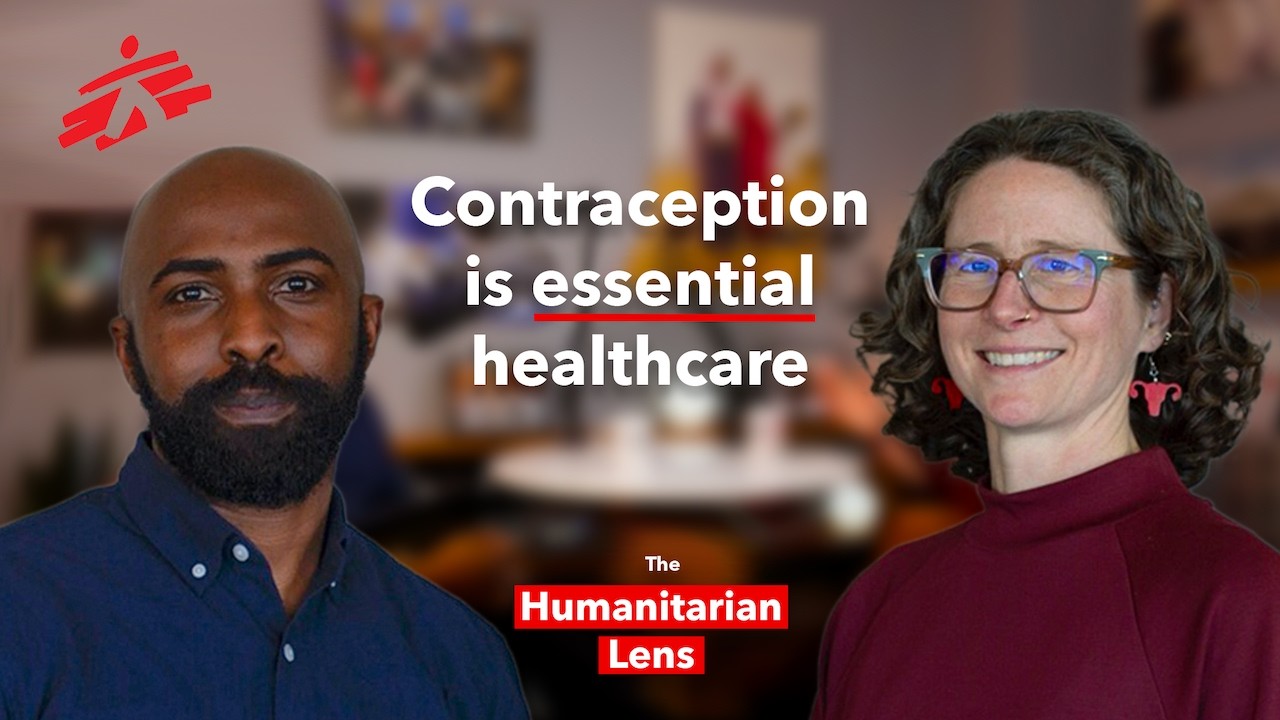
In this episode of The Humanitarian Lens, host Chigo Ahunanya speaks with Dr. Julia McDonald, a family medicine physician, about how contraception care is delivered in contexts of conflict, displacement, and limited access to health services. Drawing on her experience working with Doctors Without Borders/ Médecins Sans Frontières (MSF) in Ethiopia, Democratic Republic of Congo, Central African Republic, and Nigeria, Dr. McDonald explains the barriers patients face to access care and how MSF teams adapt services to meet people’s needs.
The conversation explores:
- Why contraception is a critical part of reproductive and maternal health care.
- Common myths and misinformation about contraception — and how MSF addresses them.
- What person‑centered and trauma‑informed care means in practice.
- How MSF contraception guidelines protect confidentiality, dignity, and patient autonomy.
- The role of community outreach and health education in expanding access to contraception.
Listen to the conversation to learn more about MSF’s work in women’s health and reproductive health care.
Make sure you don’t miss weekly video updates and ongoing series about our work in crisis zones across the world. Subscribe to our channel here: https://goo.gl/BtzdsR
Doctors Without Borders/Médecins Sans Frontières helps people worldwide where the need is greatest, delivering emergency medical aid to people affected by conflict, epidemics, disasters, or exclusion from health care. Learn more at https://www.doctorswithoutborders.org
SUBSCRIBE: https://goo.gl/BtzdsR
Chapters:
00:00–01:35 — Contraception is essential health care.
01:35–04:31 - Women and girls face barriers to accessing contraception in the places where we work, including myths and misconceptions.
04:31–07:28 - The personal benefits of contraception are different for every person, but there are clear benefits to families and communities.
07:28–14:37 - A person-centered approach to providing contraception includes providing a wide range of methods and upholding patient choice on which method to use or whether to use contraception at all.
14:37–16:51 - Patient-centered care includes taking power dynamics and trauma into account. It also includes bringing men into the conversation when it is safe to do so.
16:51–18:10 - Providing accurate information about contraception is how we fight against disinformation, using everything from social media to radio to loud speakers on cars.
18:10–19:07 - We are working to decrease the barriers to contraception by making sure health workers have the skills and resources to offer a range of methods to patients.
19:07–22:18 - Upholding patient autonomy helps make sure that people with diverse experiences and needs get the care that is right for them.
Like us on Facebook: https://www.facebook.com/doctorswithoutborders
Follow us on Instagram: https://www.instagram.com/doctorswithoutborders
Connect with us on LinkedIn: https://www.linkedin.com/company/m-decins-sans-fronti-res-msf-
Sign up for our newsletter: https://www.doctorswithoutborders.org/quick-signup-confirm