
▶
What it takes to provide medical care in Haiti
The Humanitarian Lens is a podcast from MSF USA that looks into the world's most urgent humanitarian emergencies through the experiences of MSF aid workers. https://www.youtube.com/playlist?list=PLa-oDa0bl_LNthAdA68r4zaCOHCUSY7Pb
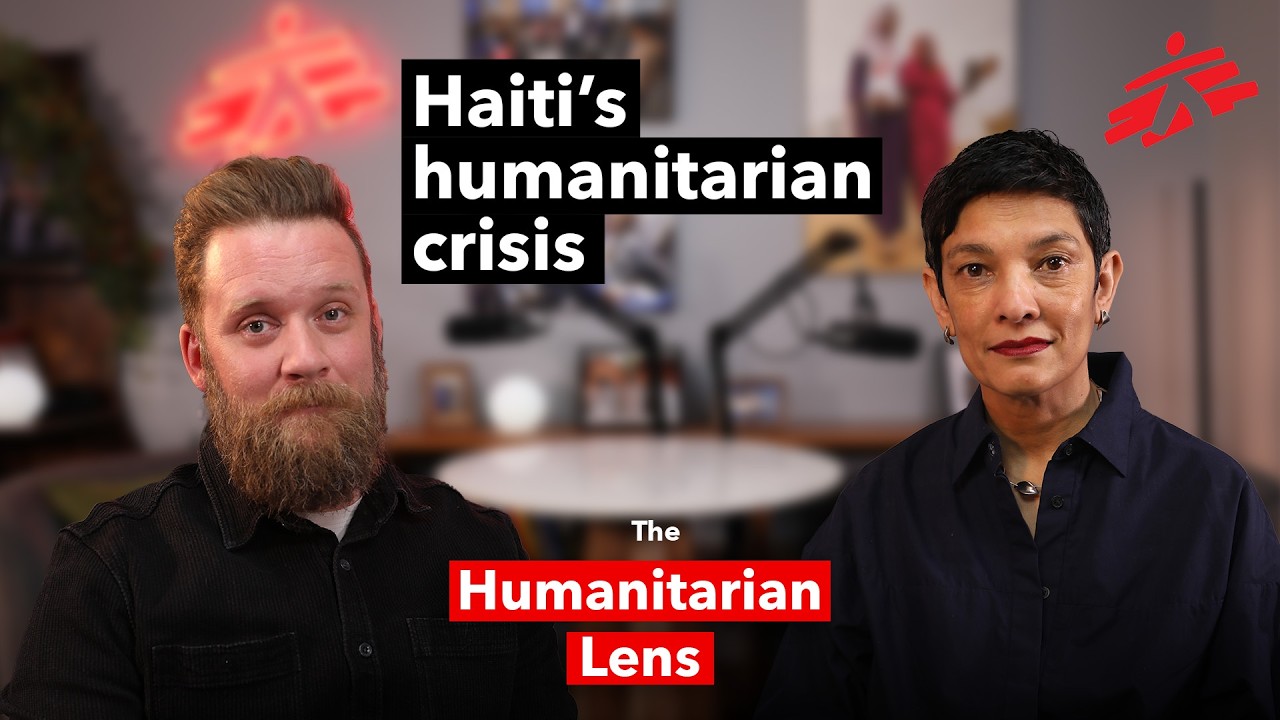
On this episode of the Humanitarian Lens podcast, host Elias Primoff speaks with Tirana Hassan, CEO of Doctors Without Borders/Médecins Sans Frontières (MSF) USA, about the deepening humanitarian crisis in Haiti and what it takes to deliver medical care amid escalating violence.
Haiti’s capital, Port-au-Prince, has been convulsed by clashes between armed groups and police. With roughly 80 percent of the city under the control of armed groups, violence has spilled into residential neighborhoods, disrupting health care access and the provision of basic services like clean water and sanitation.
During her first project visit as CEO, Hassan witnessed firsthand the scale of the crisis and its impact on civilians, and the extraordinary dedication of MSF's Haitian staff as they provide care under extremely difficult circumstances. The conversation explores:
-What it takes logistically to reach Port-au-Prince amid airport closures and ongoing insecurity.
-MSF's mobile clinics and the everyday health consequences of displacement and lack of clean water.
-MSF’s Pran Men'm, a 24-hour clinic providing comprehensive care to survivors of sexual violence and a nationwide hotline.
-MSF’s Tabarre hospital, the only burns center in Haiti, and the long road to physical and psychological recovery for patients.
-Why conditions in Haiti are unsafe for people to return if they lose Temporary Protected Status (TPS) in the United States.
(Content warning: This episode includes discussion of sexual violence.)
Subscribe for more episodes of The Humanitarian Lens: https://goo.gl/BtzdsR
#doctorswithoutborders #podcast #humanitarianaid
00:00 Intro – Courage and resilience in Haiti
01:10 Welcome to The Humanitarian Lens
02:10 Haiti’s deepening humanitarian crisis
03:40 Why Haiti’s crisis didn’t happen overnight
05:00 Introducing Tirana Hassan, CEO of MSF USA
06:10 Why Haiti was Tirana’s first project visit as CEO
08:30 MSF’s long history and scale of work in Haiti
10:10 Traveling to Haiti amid insecurity
12:30 Helicopter arrival into Port-au-Prince
14:30 Seeing Haiti from above: density, displacement, pressure
18:00 Moving through Port-au-Prince: safe areas and armed group control
21:30 Why Haiti is a critical place for MSF to work right now
24:00 Collapse of basic services: water, sanitation, health care
27:00 Inside an MSF mobile clinic in an area controlled by armed groups
31:30 How conflict affects everyday life beyond violence
34:30 Sexual violence in Port-au-Prince
36:40 Visiting the Pran Men’m clinic for survivors
40:30 Changing patterns and severity of sexual violence in Haiti
44:00 Why 24-hour comprehensive care for sexual violence survivors matters
48:00 Hotline and referral support across Haiti
51:00 Limits of shelter and protection referral options
53:30 Haitian staff at the center of MSF’s response
56:00 Tabarre Hospital: Haiti’s only burns center
59:30 A burn patient’s story and the importance of psychosocial support
01:03:30 The role of community health workers
01:07:00 Haiti, migration, and Temporary Protected Status (TPS)
01:10:30 Why Haiti is not safe to return to
01:15:00 What stayed with Tirana most from this visit
01:18:00 Courage, integrity, and resilience
01:20:00 Closing thanks and outro