
 Carnegie Endowment
7d ago
Carnegie Endowment
7d ago
▶
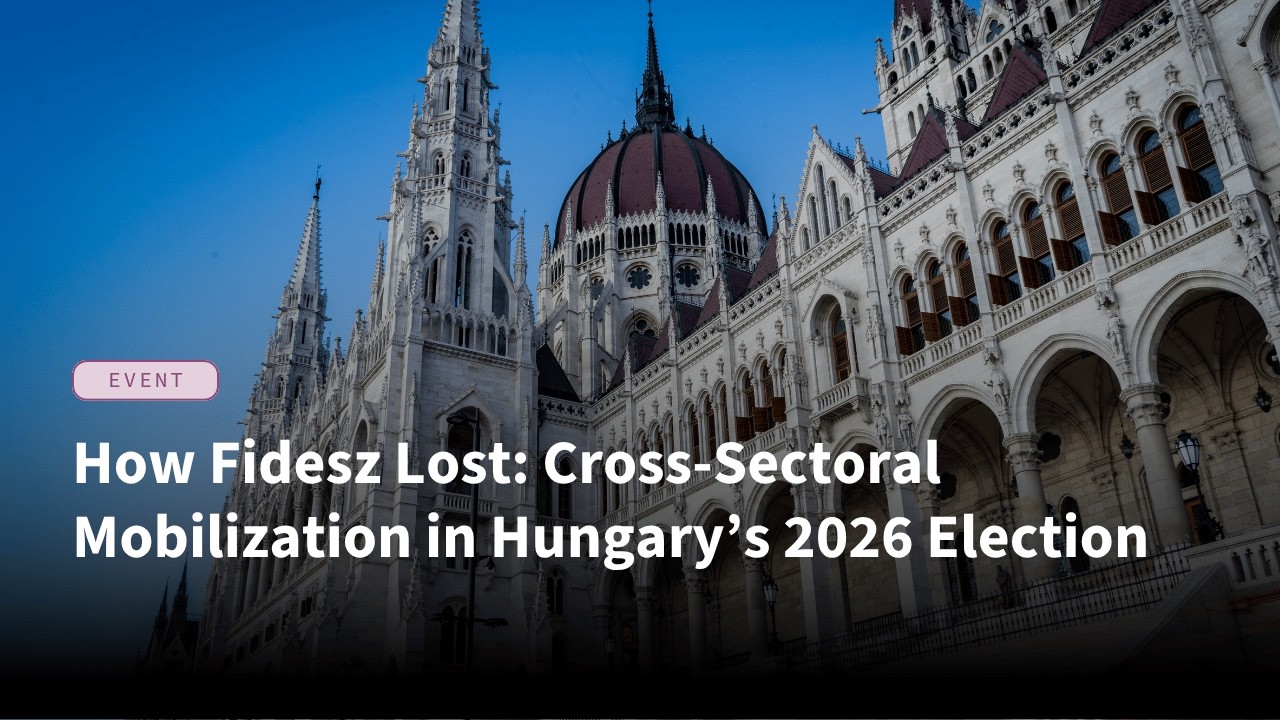
How Fidesz Lost: Cross-Sectoral Mobilization in Hungary’s 2026 Election
After sixteen years in power, Viktor Orbán’s Fidesz was defeated in Hungary’s 2026 parliamentary election by the newcomer Tisza party, led by former Fidesz member Péter Magyar. The result marked a major turning point for Hungary and offers broader lessons about the vulnerabilities of electoral autocracies.
Fidesz’s defeat became possible through the convergence of multiple actors and factors. The 2024 clemency scandal shook the Orbán regime’s moral legitimacy while its economic legitimacy was already in decline, creating fertile ground for the mobilization of dissent. In the lead up to the 2026 parliamentary election, Tisza ran a disciplined campaign centered on direct engagement and nationwide mobilization, while other opposition parties stepped back to avoid fragmenting the anti-Fidesz vote. Civil society actors sustained dissent and organized election-day monitoring to deter manipulation. Independent media gained new momentum by amplifying credible reporting and providing a platform for defectors and whistleblowers.
Please join us for a conversation with Political Capital’s Róbert László, Hungarian Helsinki Committee’s András Léderer, HVG’s Viktória Serdült, De! Action Community’s Áron Tímár, and moderator Zsuzsanna Végh of the German Marshall Fund of the United States, as they discuss the factors that set 2026 apart from earlier challenges to Fidesz, the impact of cross-sectoral mobilization on election results, and lessons for democratic actors confronting entrenched electoral autocracies elsewhere. Introductory remarks will be offered by Tom Carothers, director of the Democracy, Conflict, and Governance program at the Carnegie Endowment for International Peace.
Lessons from Global Democratic Resistance is a public panel series that brings together frontline activists, civic leaders, institutional actors, and field-informed scholars to examine how democratic actors have resisted, responded to, and learned from democratic backsliding across countries. The series aims to identify practical lessons and comparative insights for those defending democracy today and is organized by the Carnegie Endowment for International Peace in collaboration with the Ash Center for Democratic Governance at the Harvard Kennedy School; the Cornell Center on Global Democracy; Perry World House at the University of Pennsylvania; the Kellogg Institute for International Studies at the University of Notre Dame; the Democratic Futures Project at the University of Virginia; Stanford’s Center on Democracy, Development and the Rule of Law.
Like and subscribe to our channel: https://bit.ly/38sljlH
The Carnegie Endowment for International Peace generates strategic ideas and independent analysis, supports diplomacy, and trains the next generation of international scholar-practitioners to help countries and institutions take on the most difficult global problems and advance peace.
Visit our website: https://carnegieendowment.org/
Follow us on X: https://x.com/CarnegieEndow
Follow us on Instagram: https://www.instagram.com/carnegieendow/