
 Stimson Center
63d ago
Stimson Center
63d ago
▶
Engineering the Mekong: How Upstream Dams are Reshaping Cambodia’s Flooded Forest
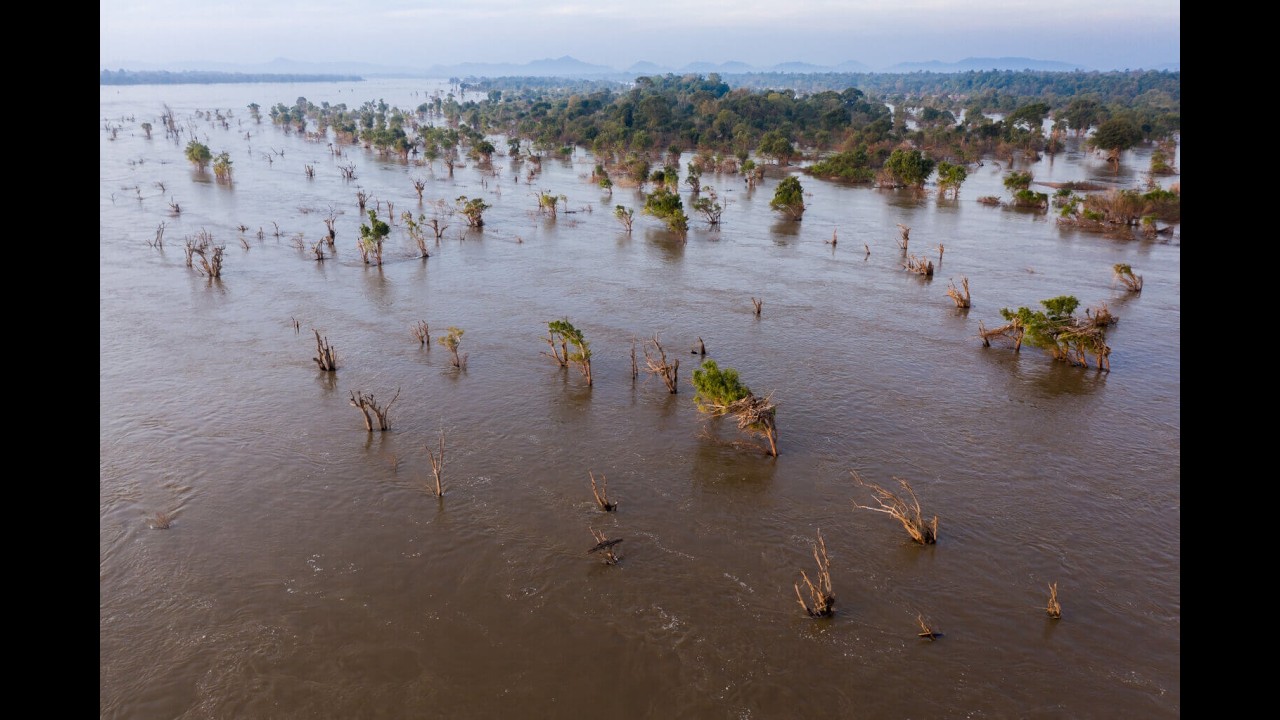
The Stung Treng Ramsar Site in northeastern Cambodia is one of the Mekong River’s most important—and most threatened—flooded forest ecosystems. Our Southeast Asia team and IUCN teamed to develop a new report, Engineering the Mekong: How Upstream Dams are Reshaping Cambodia’s Flooded Forest, which shows how upstream hydropower operations have fundamentally altered dry‑season river flows, driving widespread forest die‑off and erosion in a system that depends on seasonal low water to survive.
Combining hydrological analysis, satellite‑based dam operations tracking, remote sensing of land and vegetation change, and community observations, the report documents an 18 percent loss of flooded forest since 2018, with some hotspots losing more than half their land and tree cover. These ecological changes are closely linked to dry‑season water releases from large dams in China and Laos that now keep river levels unnaturally high for months at a time.
Beyond local impacts, the findings raise broader questions for transboundary river governance, data transparency, and the geopolitics of hydropower in the Mekong Basin. The report also outlines feasible operational adjustments that could help restore critical low‑flow windows without undermining regional energy security.
Join us for an upcoming webinar from to hear the findings, explore their policy implications, and discuss what this case means for river conservation and cooperation in an era of intensifying geopolitical competition.
Photo courtesy of Andy Ball.