
 Helvetas Vietnam
149d ago
Helvetas Vietnam
149d ago
▶
Năng lượng sạch để sấy nông sản từ lò khí hóa - Dự án EU-Cacao
Phơi, sấy là nhu cầu thiết yếu của hàng triệu nông hộ Việt Nam. Sau thu hoạch, khối lượng khổng lồ các loại nông sản như cà phê, ca cao, hồ tiêu, điều, ngô, sắn... cần được làm khô để bảo quản và chế biến.
Thế nhưng trong điều kiện khí hậu nhiệt đới ẩm, mùa mưa kéo dài, việc sấy nông sản vẫn là bài toán khó – tiêu tốn nhiều nhiên liệu, phát thải lớn và gây áp lực lên môi trường.
Làm thế nào để nông dân và doanh nghiệp có thể sấy hiệu quả hơn, tiết kiệm năng lượng hơn, mà vẫn thân thiện với môi trường?
Từ bài toán đó, Dự án “Kinh tế tuần hoàn trong sản xuất ca cao” do Liên minh châu Âu tài trợ và Helvetas Việt Nam thực hiện, đã phát triển giải pháp lò khí hóa tạo nhiệt sạch – một công nghệ có thể tận dụng các loại phụ phẩm nông nghiệp để tạo ra nhiệt năng cho sấy.
Phụ phẩm nông nghiệp được nạp vào lò bằng băng chuyền tự động, sau đó quá trình khí hóa diễn ra trong lò, tạo ra ngọn lửa 800–1.000°C.
Nhiệt này được dẫn qua bộ chuyển nhiệt, có thể điều chỉnh mức nhiệt phù hợp để cung cấp khí nóng sạch sấy cà phê, hồ tiêu, ca cao hay các loại nông sản khác. Quá trình sấy hầu như không tạo khói hay mùi, lượng khí thải giảm độc hại giảm tới 1000 lần so với đốt than, củi truyền thông.
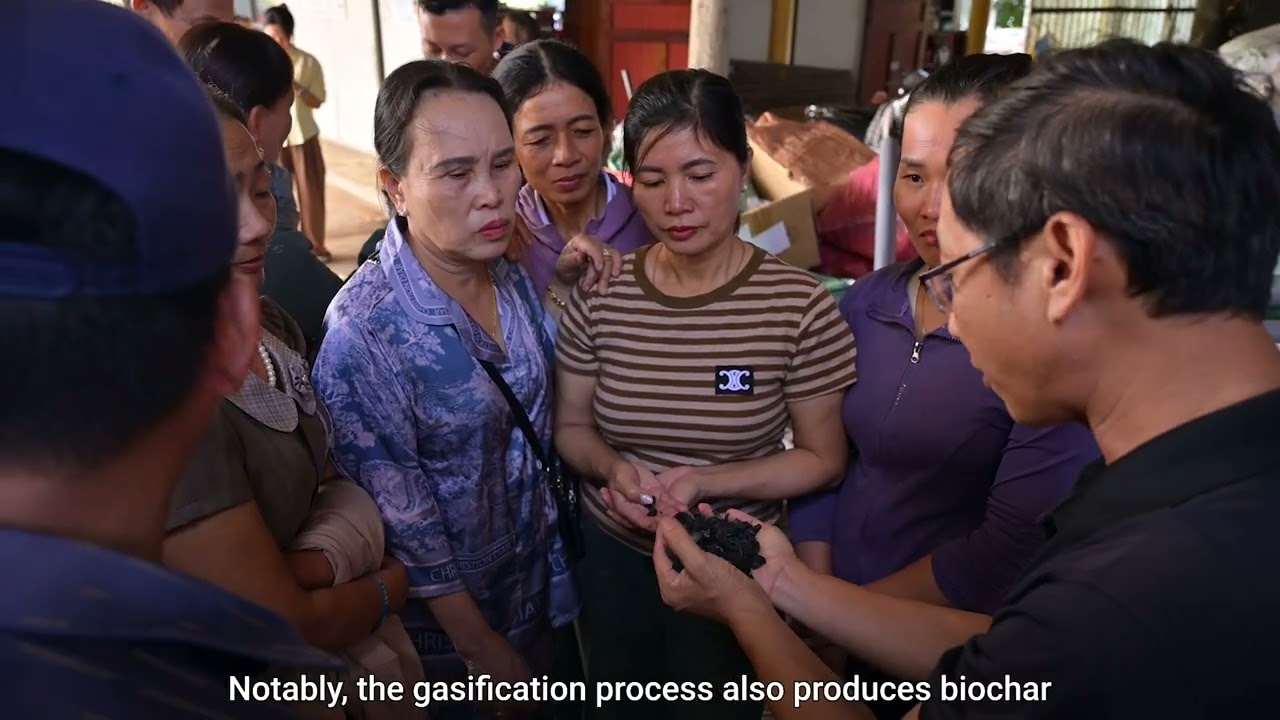
Đặc biệt, quá trình khí hóa còn tạo ra than sinh học (biochar) – một sản phẩm phụ có thể dùng để bón và cải tạo đất, đóng góp trở lại cho nông nghiệp.
So với sấy củi, chi phí nhiên liệu và nhân công giảm tới 60%. Đặc biệt, phần than sinh học thu được còn có thể bán ra, giúp bù lại chi phí và nâng tổng mức tiết kiệm lên tới 80%.
Đơn vị tiên phong áp dụng giải pháp này là HTX Dịch vụ Nông nghiệp Nhất Tâm tại Ea Kar, Đắk Lắk. Mỗi năm, HTX sấy hàng trăm tấn cà phê, ca cao, mắc ca và các nông sản địa phương khác. Được giới thiệu công nghệ lò khí hóa, họ đã mạnh dạn thử nghiệm – và kết quả vượt mong đợi.
Từ những phụ phẩm tưởng như vô giá trị, giờ đây nông dân Đắk Lắk đã tạo ra năng lượng sạch, than sinh học, và cả thu nhập mới.
---
Drying is an essential need for millions of Vietnamese farmers. After the harvest, massive volumes of agricultural produce such as coffee, cocoa, pepper, cashew, maize, and cassava need to be dried for preservation and processing.
However, in humid tropical conditions with extended rainy seasons, drying agricultural products remains a difficult challenge—consuming a lot of fuel, generating high emissions, and exerting pressure on the environment.
How can farmers and enterprises dry produce more efficiently and save more energy, while remaining environmentally friendly?
To address this issue, the "Circular Economy Cocoa" project—funded by the European Union and implemented by Helvetas Vietnam—has developed a clean-heat gasifier solution. This technology can utilize all types of agricultural by-products to generate thermal energy for drying.
Instead of burning firewood or using oil, gas, and electricity, which are fossil fuels, we now reuse agricultural by-products. This means we have shifted to using renewable energy.
Agricultural by-products are fed into the gasifier via an automatic conveyor belt. The gasification process then takes place inside, generating a flame of 800–1,000°C.
This heat is directed through a heat exchanger, where the temperature can be adjusted to supply clean hot air for drying coffee, pepper, cocoa, or other agricultural products.
Notably, the gasification process also produces biochar—a by-product that can be used to fertilize and enrich the soil, contributing back to agriculture."
Compared to traditional firewood drying, fuel and labor costs are reduced by up to 60%. Notably, the resulting biochar can also be sold, helping to offset costs and increasing total savings to 80%.
The pioneer in applying this solution is the Nhat Tam Agricultural Service Cooperative in Ea Kar, Dak Lak. Each year, the cooperative dries hundreds of tons of coffee, cocoa, macadamia, and other local produce. After being introduced to gasifier technology, they boldly trialed it—and the results exceeded expectations.
"Compared to traditional drying methods, which involved very high costs, heavy labor, and significant material waste, while also polluting the environment with a lot of smoke and dust—this gasifier technology is much better. It emits very little smoke, saves a lot of fuel, and significantly reduces labor."
At the same time, the by-products from preliminary processing also hold great potential to be converted into fertilizer to nourish crops.
The model at Nhat Tam demonstrates that gasification technology can be applied flexibly to various agricultural products—including coffee, cocoa, macadamia, and maize—opening up great opportunities for thousands of processing facilities in Vietnam.
From waste once considered worthless, Dak Lak farmers are now generating clean energy, biochar, and even new income.