
 Getty Conservation Institute
83d ago
Getty Conservation Institute
83d ago
▶
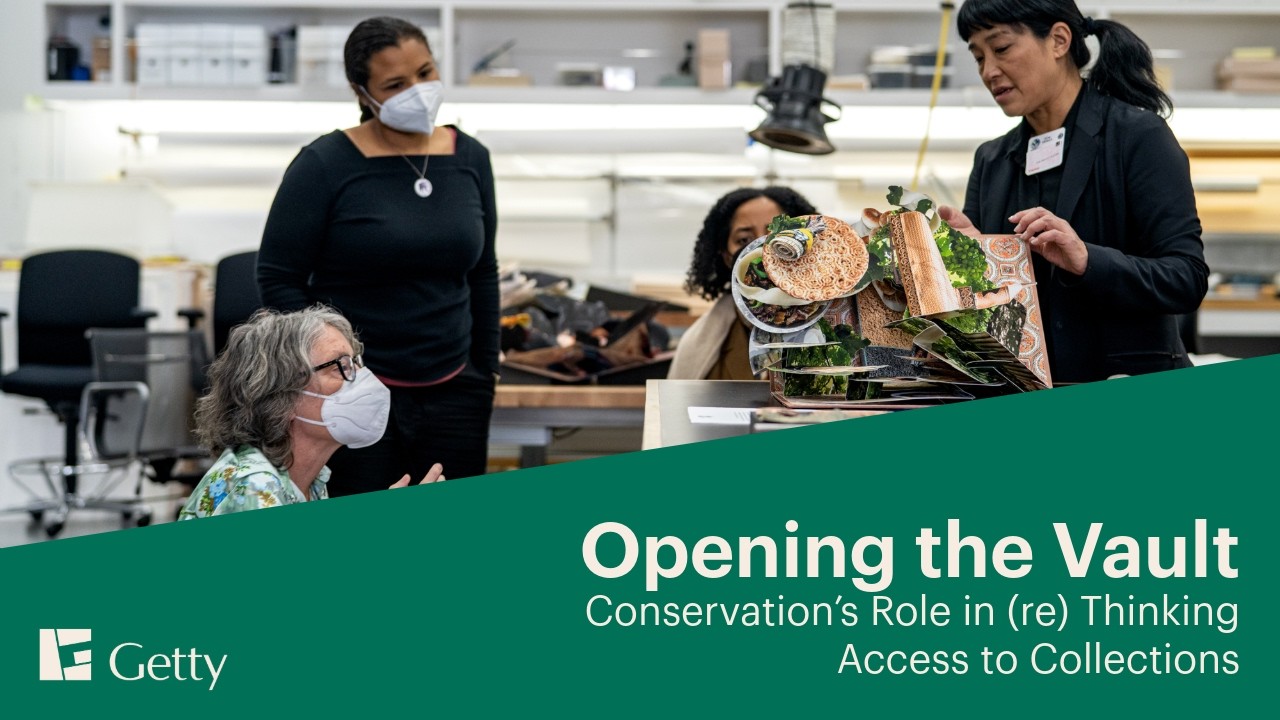
Opening the Vault: Conservation’s Role in (re) Thinking Access to Collections
This dynamic panel discussion explored how conservation can shape and expand access to museum collections.
As museums worldwide place increasing emphasis on making their collections available, whether through large-scale digitization initiatives or by opening collection storage areas to the public, the role of conservation has never been more central. With the majority of global movable heritage housed in storage rather than on display, and institutions facing growing space constraints, improving access is no longer optional; it’s an ethical and practical imperative.
Four distinguished panelists shared their perspectives on what meaningful access looks like today, how institutions are re-imagining public interaction with stored collections, and the critical ways conservators balance access with the long-term preservation of sensitive materials.
The conversation highlighted the evolving responsibilities of conservation professionals and the opportunities ahead for more open, inclusive, and sustainable access to cultural heritage.
*Panelists*
*Dr. Wayne Modest:* Director of Content, Wereldmuseum, Head of the Research Center for Material Culture, and Professor of Material Culture and Critical Heritage Studies, Vrije Universiteit, Amsterdam.
*Joe D. Horse Capture:* Vice President of Native Collections and Ahmanson, Curator of Native History and Culture, Gene Autry Museum of the American West
*Dr. Lourdes I. Ramos:* President and CEO of the Museum of Latin American Art (MOLAA,) Long Beach, California
*Dr. Rachel Rivenc:* Head of Conservation and Preservation, Getty Research Institute
Panel discussion moderated by *Dr. Stavroula Golfomitsou,* Head of Collections, Getty Conservation Institute
___________________________________________________________________________________________
Getty is a world-renowned cultural and philanthropic organization that shares and advances the world’s visual art and cultural heritage. Collectively and individually, our programs pursue our mission in Los Angeles and throughout the world. Our engagement in culture, arts, and philanthropy is achieved through our constituent programs: the Getty Conservation Institute, Getty Foundation, Getty Museum, Getty Research Institute, and Getty Trust.
The Getty Museum fosters the enjoyment and understanding of art through events, exhibitions, and education. Visit the Getty Center and the Getty Villa Museum to explore exhibitions featuring art by Leonardo da Vinci, medieval artists, and others. Admission is free! Visit Getty’s website for tickets.
Getty Museum: https://www.getty.edu/museum/
Getty Villa Museum: https://www.getty.edu/visit/villa/
The Getty Conservation Institute works internationally to advance conservation practice in the visual arts—objects, collections, architecture, and sites. The Institute serves the conservation community through scientific research, education and training, field projects, and disseminating information. In all our endeavors, we create and deliver knowledge that contributes to the conservation of the world's cultural heritage.
The Getty Foundation is responsible for funding research and preservation of visual arts projects. The Foundation partners with people and organizations throughout Los Angeles. We award grants to support art historical scholarship, conserve art and architecture, increase access to museum collections and archives, and train visual arts professionals.
The Getty Research Institute works to further the knowledge of visual arts and culture through expertise, active collecting programs, public programs, institutional collaborations, exhibitions, publications, digital services, and residential scholar programs. Our activities and resources provide a unique environment for research, critical inquiry, and scholarly exchange.
Getty: https://www.getty.edu
Getty Conservation Institute: https://www.getty.edu/conservation-institute/
Getty Foundation: https://www.getty.edu/foundation/
Getty Research Institute: https://www.getty.edu/research-institute/