
 NDC Partnership
218d ago
NDC Partnership
218d ago
▶
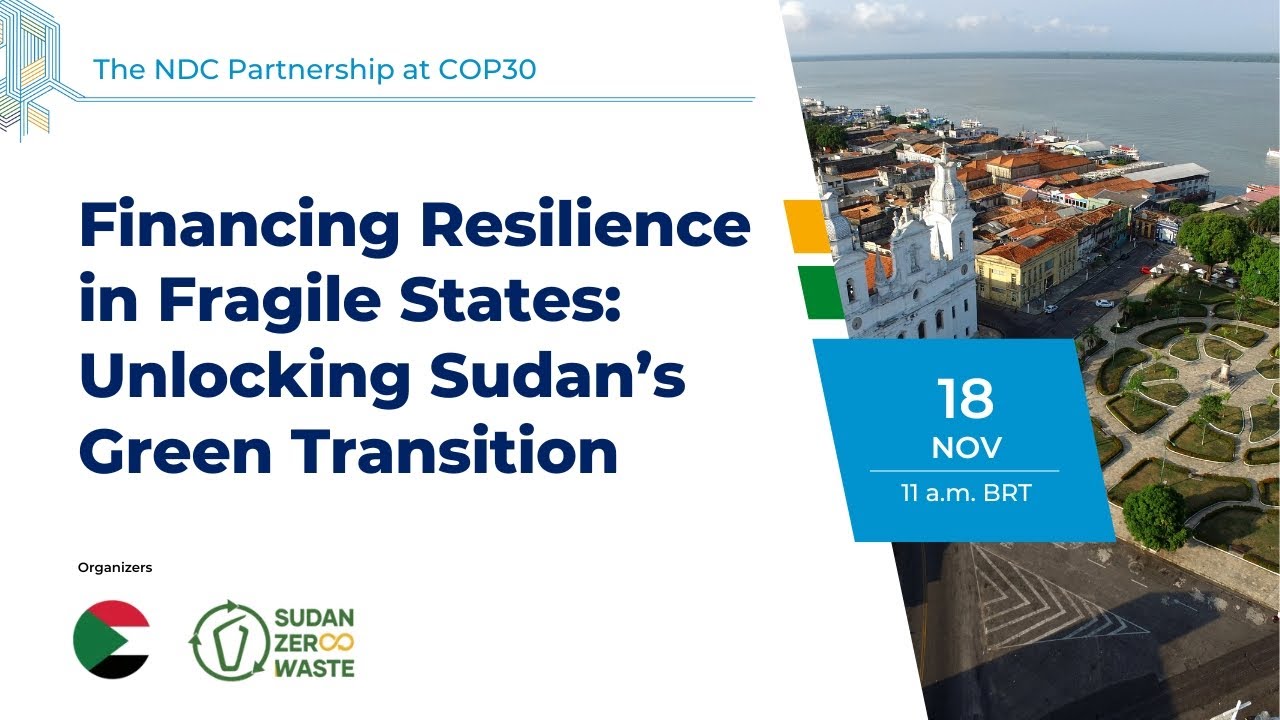
Financing Resilience in Fragile States: Unlocking Sudan’s Green Transition
Financing Resilience in Fragile States: Unlocking Sudan’s Green Transition
Sudan stands at the intersection of multiple crises—climate shocks, protracted conflict, and mass displacement—that are reshaping its development priorities and pathways to resilience. Yet, even under these fragile circumstances, opportunities exist to mobilize domestic private finance, unlock innovation-driven green growth, and strengthen the role of small and medium enterprises (SMEs) in delivering Sudan’s Nationally Determined Contributions (NDCs).
This session will explore how climate-induced displacement is altering Sudan’s social and economic landscape, creating urgent needs but also new avenues for inclusive climate action. It will spotlight the private sector’s critical role in Sudan’s green transition, from advancing renewable energy and sustainable agriculture to nurturing eco-entrepreneurship. Special emphasis will be placed on identifying equitable pathways that balance urgent development priorities with long-term climate commitments.
At the same time, Sudan faces steep barriers in accessing international climate finance—a challenge shared by many conflict-affected and least developed countries (LDCs). The discussion will address systemic hurdles while also showcasing practical strategies such as innovative financing instruments, diaspora engagement, and targeted incentives for SMEs to mobilize resources from both domestic and global actors.
A critical dimension of Sudan’s energy transition is the transboundary movement of second-hand renewable energy technologies and low-efficiency supplies. While these imports often provide affordable short-term solutions, they risk locking communities into outdated, low-performing systems that undermine NDC targets and waste scarce financial resources.