
 NDC Partnership
219d ago
NDC Partnership
219d ago
▶
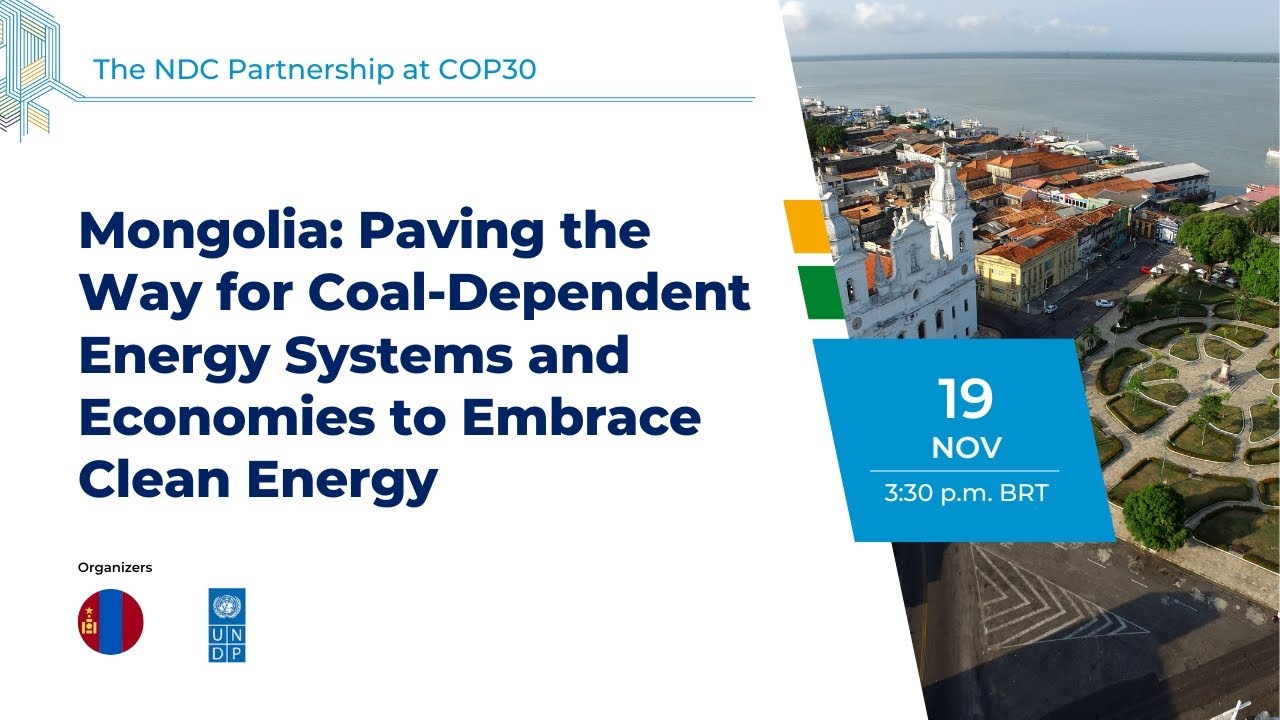
Mongolia: Paving the Way for Coal-Dependent Energy Systems and Economies to Embrace Clean Energy
Mongolia: Paving the Way for Coal-Dependent Energy Systems and Economies to Embrace Clean Energy
The world faces an urgent challenge: how to accelerate the clean energy transition while ensuring no one is left behind. For coal- and resource-dependent economies, this transition is not just a matter of technology but also about jobs, health, economic resilience, and social equity. The International Energy Agency estimates that coal still accounts for over one-third of global electricity generation, making the shift toward clean, affordable, and scalable alternatives one of the defining challenges of our time.
Mongolia exemplifies both the scale of the challenge and the promise of solutions. Over 60% of Ulaanbaatar’s winter air pollution originates from coal burning in ger district households. Indoor and outdoor pollution combined causes over 7,100 premature deaths annually and economic losses amounting to 10% of GDP. Historically, the Mongolian ger, an iconic nomadic dwelling, has always relied on chimneys for heating, reflecting a deeply embedded culture of coal and biomass use. Transitioning away from this legacy in one of the world’s harshest climates, where winters can reach -40°C, and in a coal-dependent economy, requires nothing short of a paradigm shift. Yet Mongolia, with its vast renewable energy potential and strong political commitment, is pioneering practical models for a just energy transition that could inspire other coal-dependent economies. The solution piloted for the ger districts is especially unique because it is homegrown, developed by Mongolian experts and innovators who understand the local context, cultural needs, and extreme weather conditions.
The side event will be designed as high-level dialogue combining policy perspectives, international experiences, and community voices. It will move beyond presentations to foster solutions-oriented discussions on how coal-dependent economies can embrace clean energy transitions that are both just and scalable.