
 UNEP Copenhagen Climate Centre
63d ago
UNEP Copenhagen Climate Centre
63d ago
▶
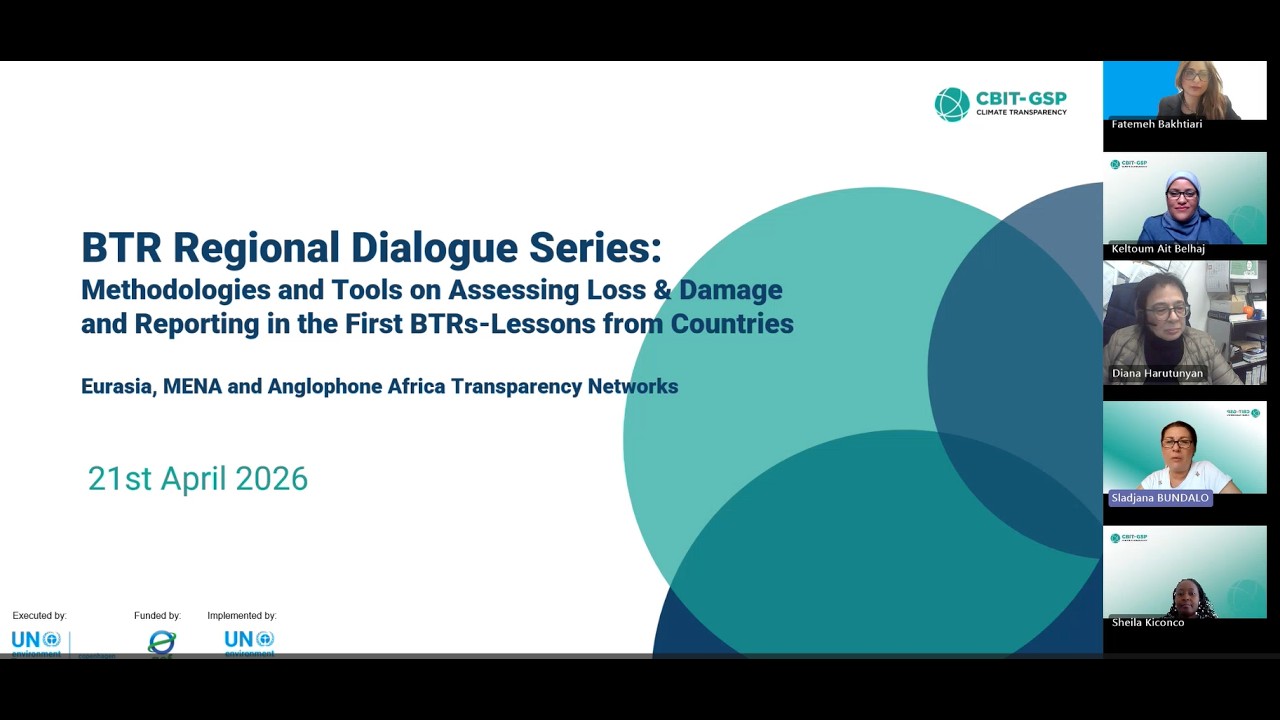
Methodologies and Tools for Assessing Loss & Damage and Reporting in the First BTRs
Background
Early experiences from countries’ first Biennial Transparency Reports (BTR1) indicate that reporting on Loss and Damage (L&D) remains at an emerging stage. While the Modalities, Procedures and Guidelines (MPGs) clearly allow Parties to report structured information on averting, minimizing, and addressing L&D within the adaptation chapter, most countries limited their reporting to qualitative references to climate‑related impacts.
Some Parties went beyond minimum requirements by more explicitly highlighting L&D‑related challenges. However, structured and detailed reporting remains rare. In particular, only a small number of countries provided quantified or costed information on L&D needs, such as estimates based on observed disaster losses or reconstruction costs.
Analysis of BTR submissions further shows that although more than 80% of countries included adaptation information, this reporting primarily focused on planning and implementation. Clear distinctions between adaptation measures and residual impacts associated with Loss and Damage were often lacking. The limited use of national or international disaster‑loss databases points to ongoing data and capacity constraints, especially for Least Developed Countries (LDCs) and Small Island Developing States (SIDS).
These early lessons highlight the need for strengthened capacity‑building, enhanced methodological guidance, and sustained peer learning on L&D assessment and reporting. This need is particularly timely as many countries are beginning preparations for their second Biennial Transparency Reports (BTR2).
Countries across Eurasia, the Middle East and North Africa (MENA), and Anglophone Africa have expressed strong interest in better understanding practical methodologies and tools for assessing both economic and non‑economic Loss and Damage. In response, an upcoming regional webinar will provide a platform for learning and exchange, featuring national experiences from Armenia and Egypt. By sharing practical approaches and lessons learned, the webinar aims to help countries improve the clarity, consistency, and usefulness of L&D information in their BTRs, thereby strengthening transparency under the Enhanced Transparency Framework.
Webinar Objectives
- Faciliate peer learning and regional exchange on methodologies and tools for assessing climate related‑ Loss and Damage, with practical examples from Armenia and Egypt.
- Support participating countries in understanding how L&D assessment approaches can enhance the clarity and robustness of L&D information reported in the adaptation components of BTRs.
Read more about the webinar here: