 UNEP Copenhagen Climate Centre
74d ago
UNEP Copenhagen Climate Centre
74d ago
▶
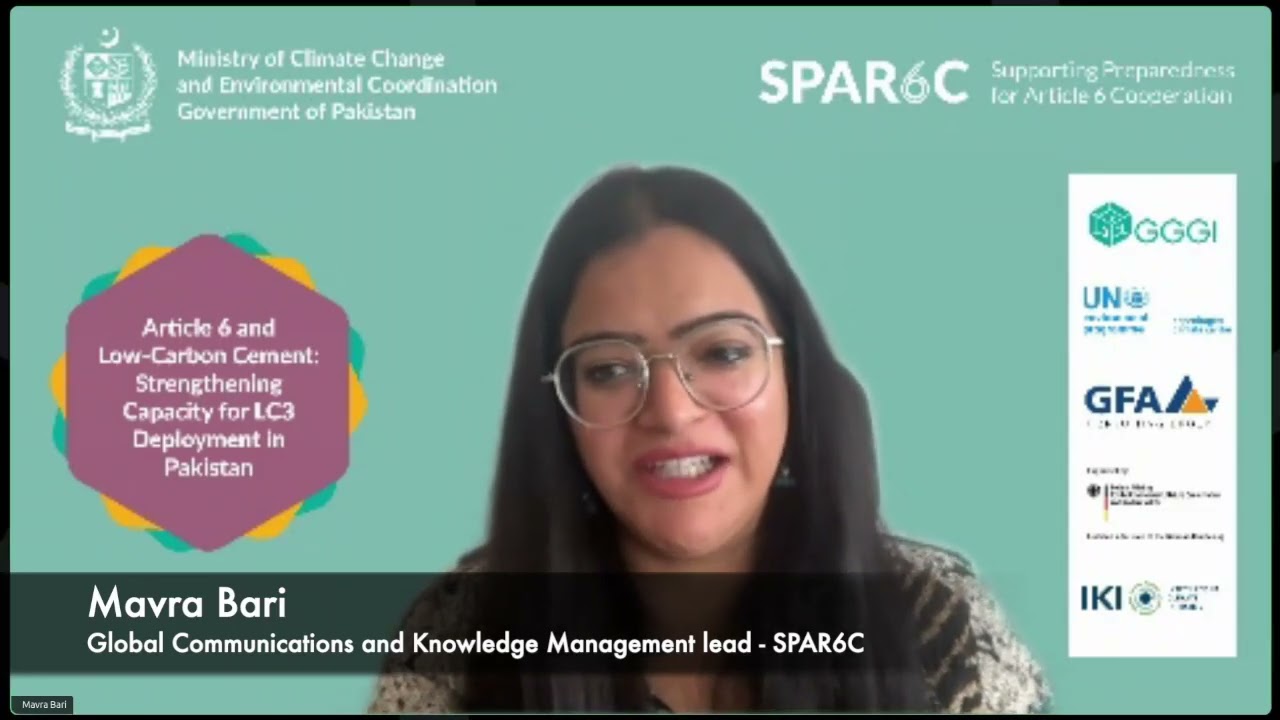
Article 6 and Low-Carbon Cement: Strengthening Capacity for LC3 Deployment in Pakistan
The fifth Spark Pakistan webinar explored how Article 6 of the Paris Agreement can support decarbonisation of Pakistan’s cement sector, bringing together policymakers, researchers, and industry leaders. Mavra Bari of the SPARK Programme opened by highlighting the sector’s climate relevance, noting that if cement were a country, it would be among the world’s largest CO₂ emitters. Denis Machnik (UNEP Copenhagen Climate Centre) outlined how Article 6 enables high‑integrity carbon markets that avoid double counting and can mobilise investment for low‑carbon transitions.
Musadik Malik, Federal Minister for Climate Change, emphasised Pakistan’s vulnerability despite contributing less than 1% of global emissions, describing carbon markets as a way to “fill the viability gap” for large industrial investments. Technical and industry experts Jonas Hagen, Tariq Jamil, and Saqib Nawaz Khan highlighted the potential of low‑carbon LC3 cement, stressing that while technical readiness exists, scaling impact now depends on policy support, financing, and market demand.
Speakers
Mavra Bari, Global Communications and Knowledge Management lead - SPAR6C, Global Green Growth Institute-GGGI (00:26)
- Denis Machnik, Senior Advisor Carbon Markets, UNEP Copenhagen Climate Centre (03:26)
- Musadik Malik, Federal Minister, Ministry of Climate Change and Environmental Coordination (13:27)
- Jonas Hagen, Sustainability Consultant, Heat International (45:56)
- Tariq Jamil, Associate Professor, NED University of Engineering and Technology (54:42)
- Saqib Nawaz Khan, Assistant General Manager and Head of Quality Control Department, Cherat Cement Co. Ltd. (01:07:33)
- Q&A (01:21:20)