
 Notpla
113d ago
Notpla
113d ago
▶
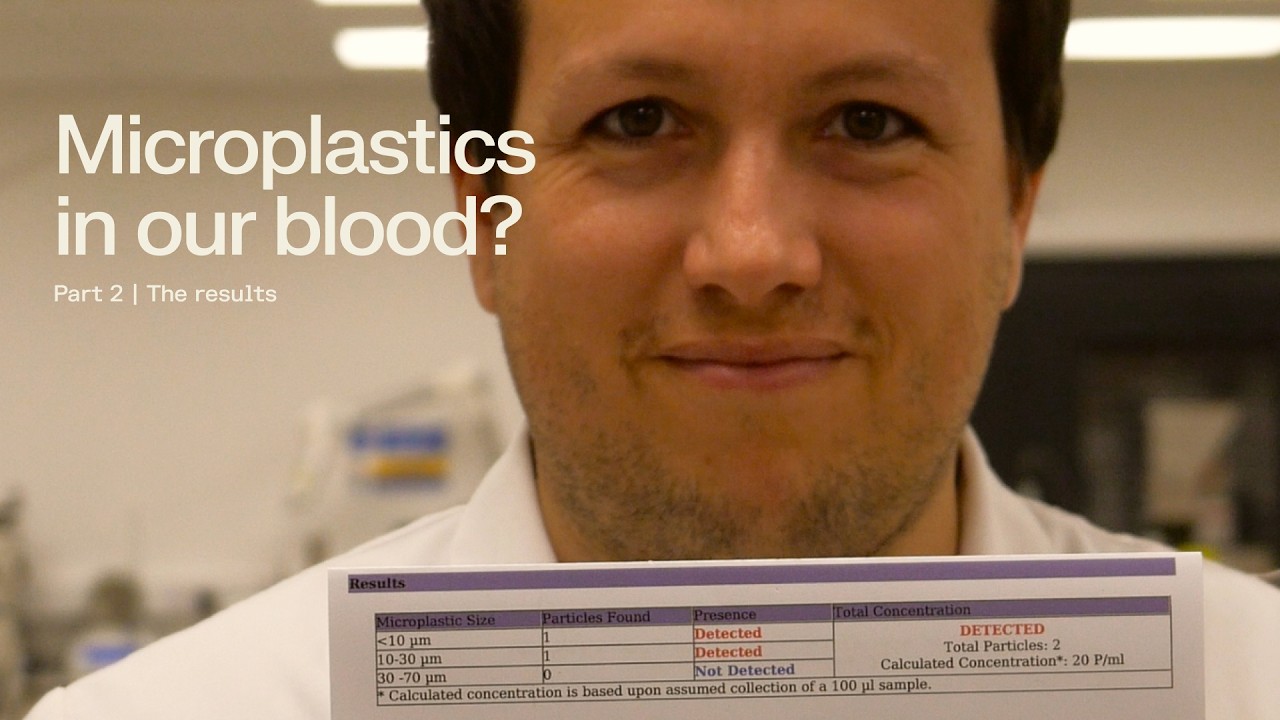
Microplastics in our blood? | Part 2: The results are in.
Last week we asked a simple question: Are there microplastics in our bloodstream?
The results were surprising.
One test showed 20 particles per millilitre of blood.
Another showed 200 particles per millilitre.
That’s the difference between roughly 100,000 and nearly 1 million microplastic particles in the human body.
What struck us most wasn’t just the number.
It was the difference.
Exposure can vary significantly. Which suggests something important: the materials around us really do matter.
Measuring microplastics in the human body is still an emerging area of science. Methods are evolving and standards are still being developed as researchers work to better understand both physical particles and the chemicals associated with plastics.
Many plastics contain additives, such as stabilisers and plasticisers, that can migrate over time. Researchers are now exploring how microplastics may act not only as particles, but also as carriers of these chemicals within the body.
Across this growing body of studies, one thing is becoming clear: microplastics are being detected in human blood and tissues.
The exact numbers may evolve as the science improves. The signal itself is clear.
For us at Notpla, it reinforces the mission.
Plastic pollution isn’t just an environmental issue anymore.
It’s increasingly part of the human health conversation.