
▶
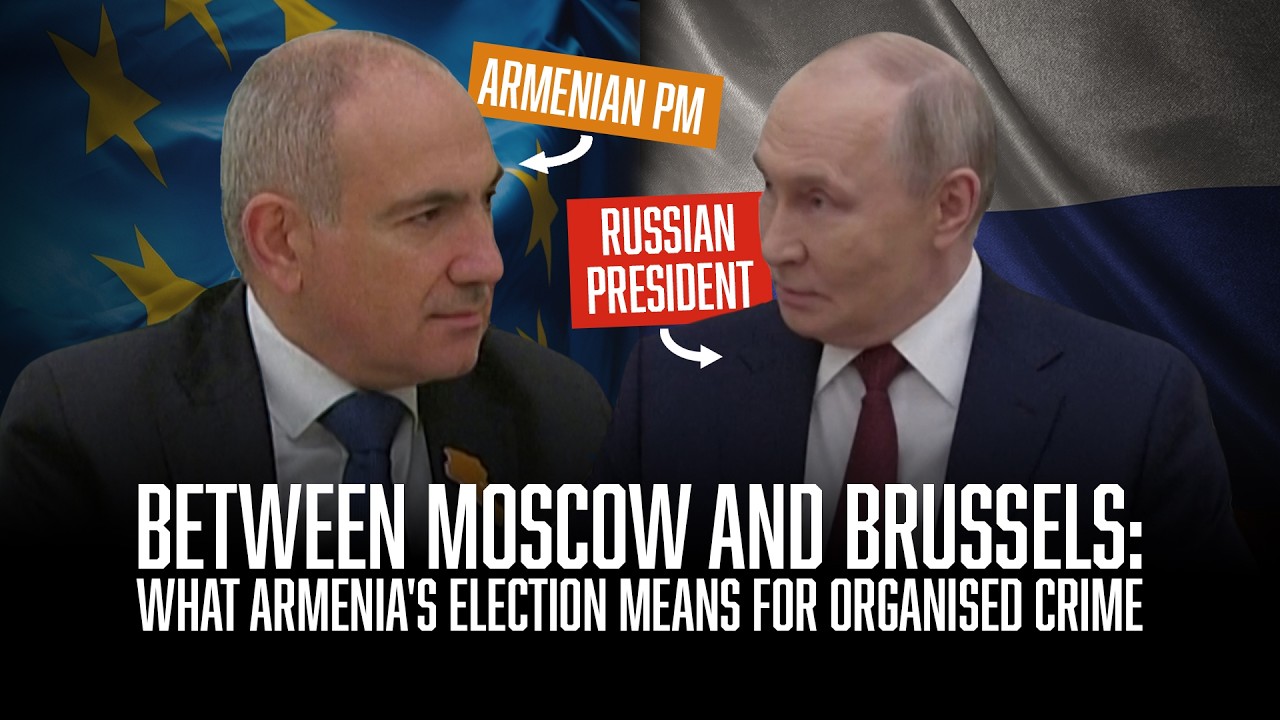
Between Moscow and Brussels: What Armenia's Election Means for Organised Crime
Armenia's recent election was about more than domestic politics. The result carries consequences for the licit and illicit trade networks running through the South Caucasus — routes that have grown significantly since Russia's full-scale invasion of Ukraine in 2022.
Since Azerbaijan's capture of Nagorno-Karabakh, Armenia has been moving away from Moscow, signing agreements with the US, pursuing EU membership, and improving relations with Azerbaijan and Turkey. Russia has responded with trade restrictions and threats to cut energy supplies. The geopolitical stakes are high. And so are the criminal ones.
Armenia has played a central role in sanctions evasion, serving as a transit point for goods, microelectronics, gold, and diamonds flowing into Russia in circumvention of Western sanctions. A government committed to Western alignment could signal a clampdown on these networks. But instability and shifting trade routes also create openings — and organised crime rarely lets a good opportunity go to waste.
For more analysis on organised crime in the South Caucasus, visit: globalinitiative.net
CHAPTER MARKERS:
0:00 — Armenia's election and the stakes for the South Caucasus
1:39 — The break with Moscow: Nagorno-Karabakh and its fallout
3:21 — Armenia's illicit economy today: gray markets, cyber crime, tobacco
4:33 — Sanctions evasion on behalf of Russia and Iran
6:00 — Gold, jewellery, and parallel trade flows
7:32 — What a pro-Western government could mean for criminal networks
10:15 — New opportunities: the Iran war and shifting trade routes