
 Just Security
67d ago
Just Security
67d ago
▶
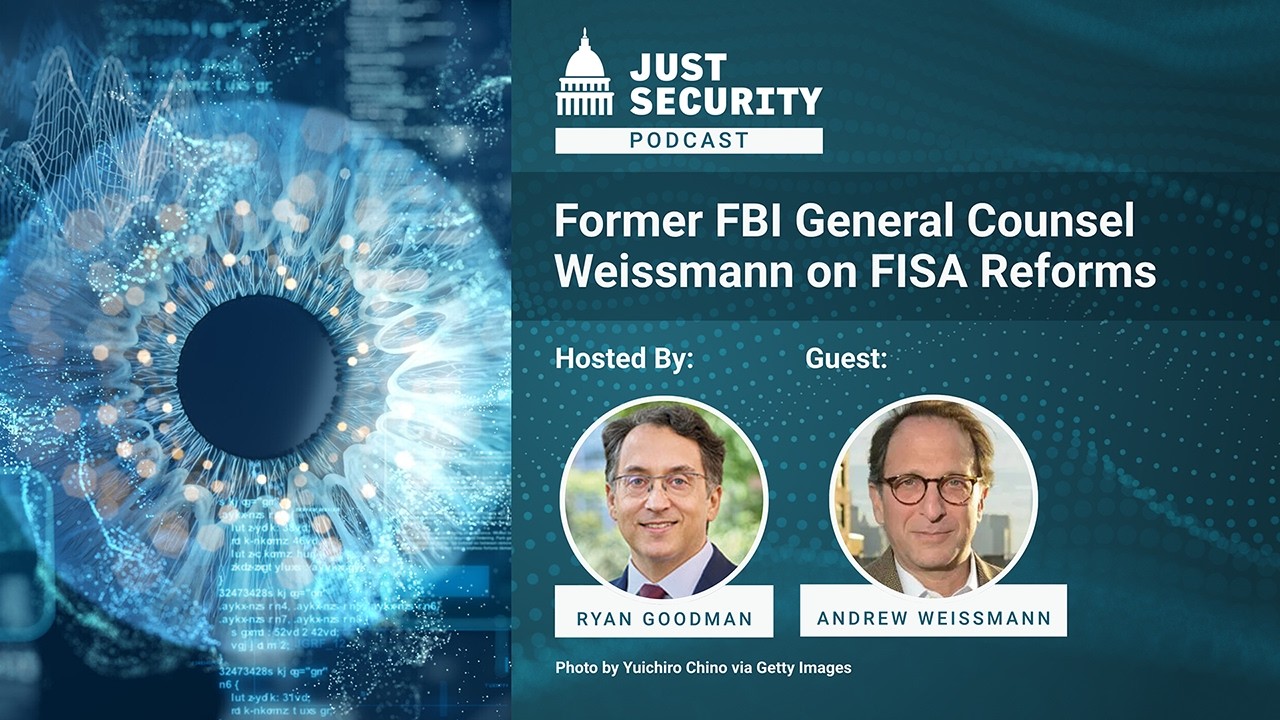
Former FBI General Counsel Weissmann on FISA Reforms
Should the FBI be allowed to access Americans’ private communications – including emails, texts, and phone calls – without a judicial warrant? As Congress faces an April 30th deadline to decide the future of a major national security surveillance tool, the debate over Section 702 of the Foreign Intelligence Surveillance Act (FISA) is at a critical crossroads.
In this detailed discussion, Ryan Goodman sits down with Andrew Weissmann (@AWeissmann ), former FBI General Counsel and DOJ veteran, to unpack the complex "three-prong fork in the road" facing lawmakers: reauthorize the tool as is, reform it with new warrant requirements, or let it sunset entirely.
About our guest: Andrew Weissmann is Professor of Practice and Distinguished Senior Fellow at the Reiss Center on Law and Security and at the Center on the Administration of Criminal Law at NYU School of Law. He served as a lead prosecutor in Robert S. Mueller’s Special Counsel’s Office (2017-19) and as Chief of the Fraud Section in the Department of Justice (2015-2019). He is a member of Just Security’s editorial board.
0:00 – Should the FBI access Americans' data without a warrant?
1:15 – The FISA fork in the road: Three options for Congress
2:48 – How Section 702 differs from traditional criminal tools
7:30 – Why the Fourth Amendment doesn't apply to foreigners overseas
10:05 – Incidental collection: Americans in the "FISA Soup"
16:45 – The "Backdoor" search: Querying the database for Americans comms
21:07 – Is a backend search a new Fourth Amendment event?
28:00 – Big data and the Supreme Court (Jones, Carpenter, and Riley)
31:16 – Litigation risk: Why the FBI should want warrants
35:12 – Addressing emergency exemptions and "paperwork" concerns
45:00 – Potential solutions: Lower thresholds and judicial oversight
53:08 – The dangers of "reverse targeting" and lack of transparency
1:02:35 – Closing thoughts