
 Climate Home News
246d ago
Climate Home News
246d ago
▶
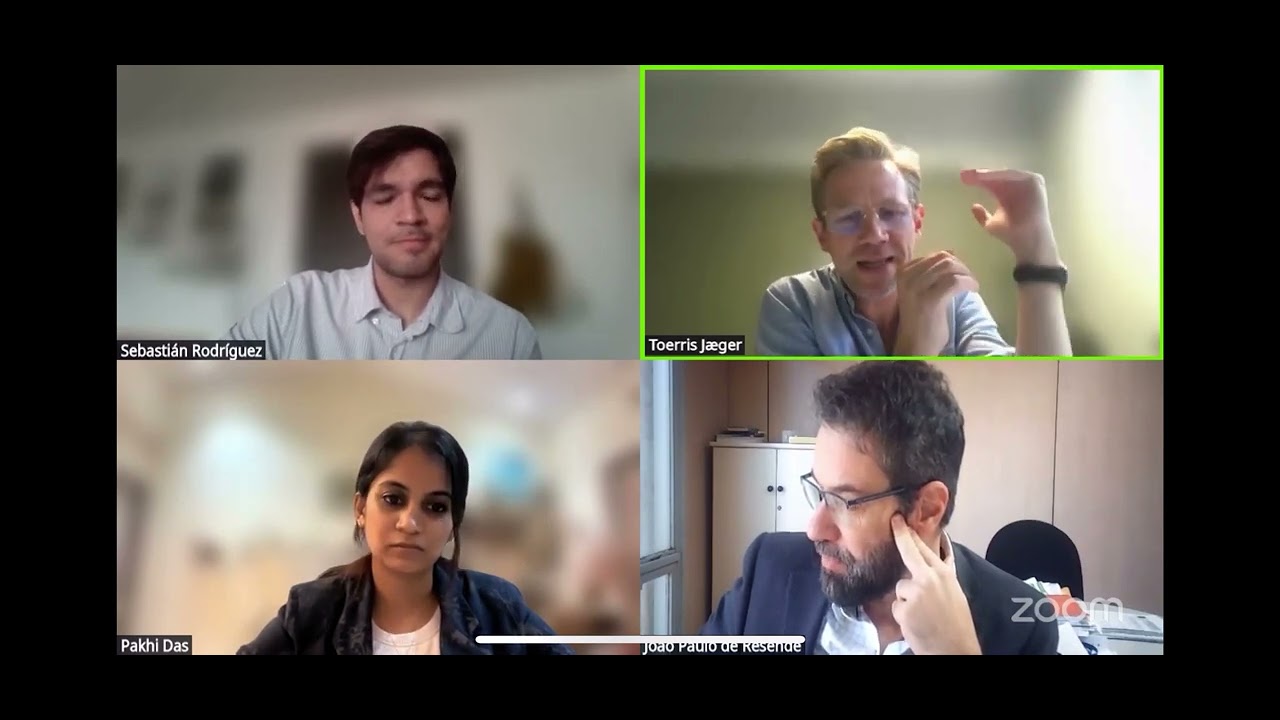
Financing the rainforests: What’s next for the TFFF?
As countries prepare for COP30, the newly launched Tropical Forest Forever Facility (TFFF) is set to play a key role in defining the next phase of climate finance. Join our panel of experts to discuss what’s at stake: How can the TFFF be implemented? What gaps could it fill? And what challenges lie ahead?
Speakers:
Juan Carlos Jintiach, a Shuar leader from the Ecuadorian Amazon and Nobel Peace Prize nominee, is the Executive Secretary of the Global Alliance of Territorial Communities. He defends indigenous rights and territories, challenges oil and mining operations, and represents indigenous voices in global climate discussions. Born into a lineage of Amazonian leaders, he has played key roles, including Co-Chair of the Indigenous Caucus of the UNFCCC. Despite his global role, he remains committed to his community in Napo province, Ecuador, continuing to fight against mining threats.
Tørris Jæger, the Executive Director of the Rainforest Foundation Norway since 2021. Prior to joining RFN he worked for over 20 years in the humanitarian sector with armed conflict and disasters, mostly with the Red Cross and Red Crescent Movement. He is experienced in rights-based approaches, policy development and advocacy, as well as operational, strategic and change leadership. He holds a masters’ degree in political science from Berlin Free University and completed the Business Sustainability Management course at the University of Cambridge.
João Paulo de Resende,
Lead expert on TFFF from the Brazilian Ministry of Finance.
Special Advisor for Climate Change Economics, Ministry of Finance, Brazil. He graduated with a PhD in economics from IE/UFRJ (2018), with a thesis on the quantitative assessment of concentration control in the fuel sector. He also has a master's degree in economics from CEDEPLAR/UFMG (2007), with a dissertation on the effects of income inequality on crime
Pakhi Das, Public Policy Advisor at Plant-for-the-Planet, where she codifies policy positions and advancing them through the writing of policy papers, lobbying work and public campaigns.