
 GIZ Indonesia & ASEAN
202d ago
GIZ Indonesia & ASEAN
202d ago
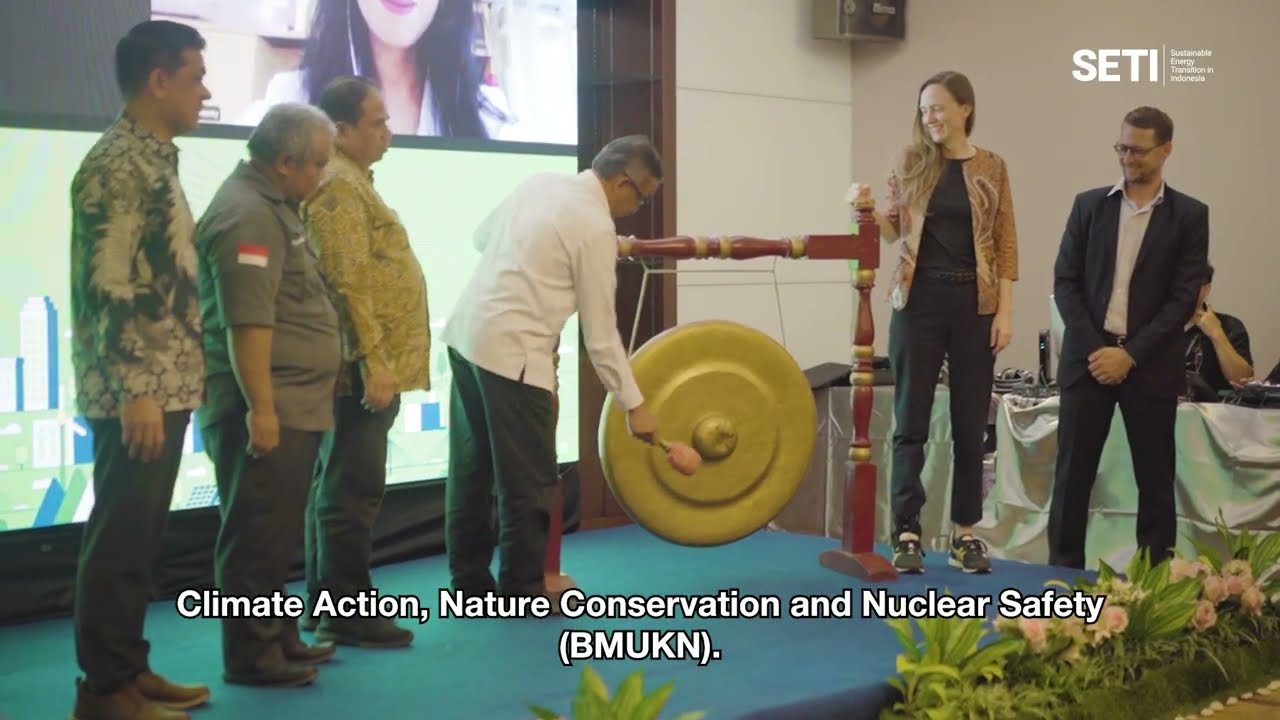
▶
SETI Full Profile: Accelerating Indonesia’s Sustainable Energy Transition
The year 2020 marked a pivotal moment in Indonesia’s journey toward accelerating clean energy for all. This national commitment aligns with Indonesia’s long-term development vision and is strengthened by cross-sector collaboration involving government, industry, civil society, and research institutions.
The Sustainable Energy Transition in Indonesia (SETI) project is part of a broader effort to support the Government of Indonesia in speeding up the transition toward a low-carbon and sustainable energy system. The initiative is funded by the International Climate Initiative (IKI) of the German Federal Ministry for the Environment, Nature Conservation, and Nuclear Safety (BMUV).
SETI is implemented in close collaboration with the Ministry of Energy and Mineral Resources (MEMR) of Indonesia, particularly through the Directorate General of New, Renewable Energy and Energy Conservation (EBTKE). The project is executed by a consortium consisting of:
GIZ, World Resources Institute (WRI) Indonesia, Indonesia Research Institute for Decarbonization (IRID), Institute for Essential Services Reform (IESR), Hivos, and LPEM Universitas Indonesia.
The project focuses on industrial decarbonization and energy-use decarbonization in two major sectors that contribute significantly to national emissions. According to the latest data from the Ministry of Industry (2022), the industrial sector accounts for approximately 238 million tons of CO₂e, or 18–20 percent of Indonesia’s total greenhouse gas emissions.
Over the next five years, SETI aims to accelerate emissions reduction through:
• policy dialogues with industrial associations
• energy efficiency audits
• deployment of low-carbon technologies
• strengthening green industry leadership
• showcasing best practices from frontrunner companies
Through these efforts, SETI supports industries in meeting global market demands, building resilient sustainable-energy networks, and advancing innovation toward a greener and more competitive future.