
 Islamic Relief Bangladesh
100d ago
Islamic Relief Bangladesh
100d ago
▶
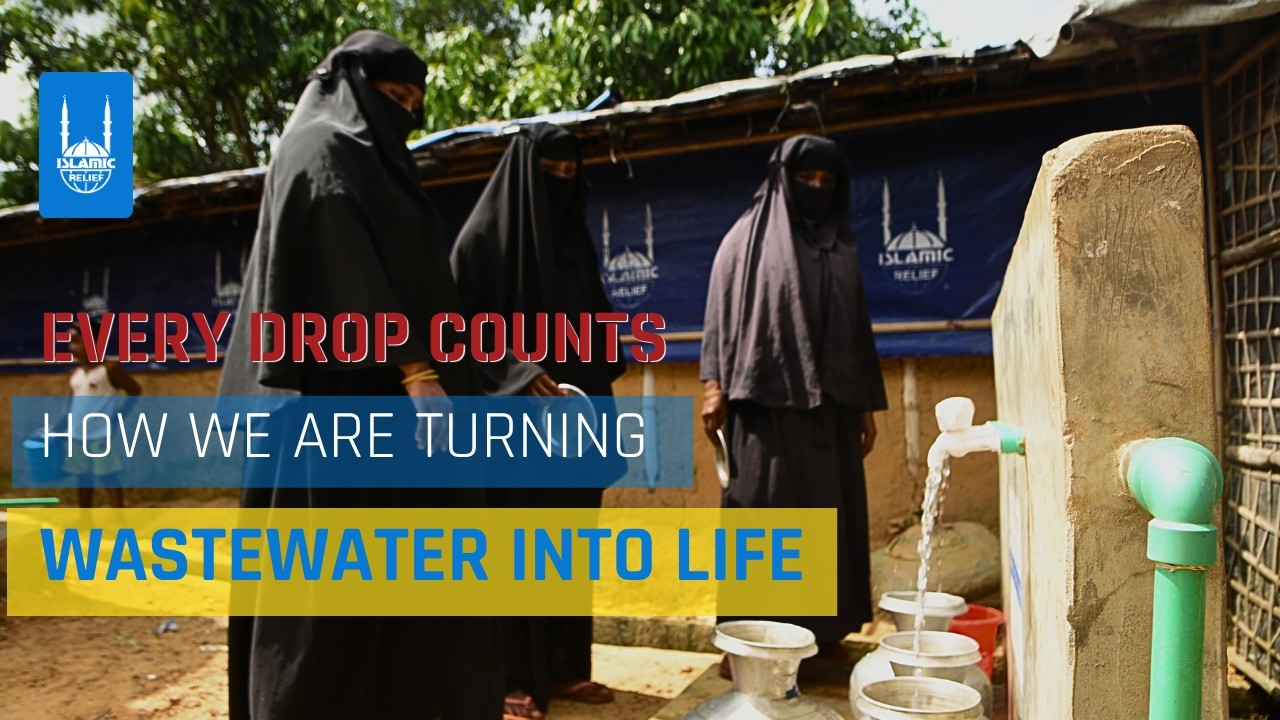
Turning Wastewater into Hope | Mini Wastewater Treatment Plant in the Rohingya Camps
In the Rohingya camps of Cox’s Bazar, access to safe water is becoming increasingly difficult. While many of us use 9–12 litres of water with every toilet flush, displaced families often struggle to secure just 20 litres of water per person per day for all their daily needs.
With around 30,000 Rohingya refugees living in densely populated shelters in Camp 2W, the pressure on groundwater is immense. The community relies almost entirely on groundwater, but water levels are dropping rapidly, and salinity is rising due to the camp’s proximity to the coast.
To address this crisis, Islamic Relief Bangladesh is operating a Mini Wastewater Treatment Plant (MWWTP) in Camp 2W. This innovative system collects wastewater from bathing cubicles, treats it through screening, coagulation, flocculation, sedimentation, chlorination, and multi-stage filtration, and transforms it into clean, reusable water.
✅ The plant recycles 5,000 litres of water every day
✅ Helps reduce pressure on depleting groundwater sources
✅ Prevents pollution and promotes a cleaner camp environment
✅ Provides a sustainable and cost-effective water solution
This is more than a treatment process — it is a lifeline for families facing severe water scarcity. With your generous support, we can continue bringing hope, dignity, and sustainable water solutions to communities that have already lost so much.
👉 Watch the video to see how wastewater is transformed into clean, usable water — and how together, we can make a difference.