
 Islamic Relief Bangladesh
201d ago
Islamic Relief Bangladesh
201d ago
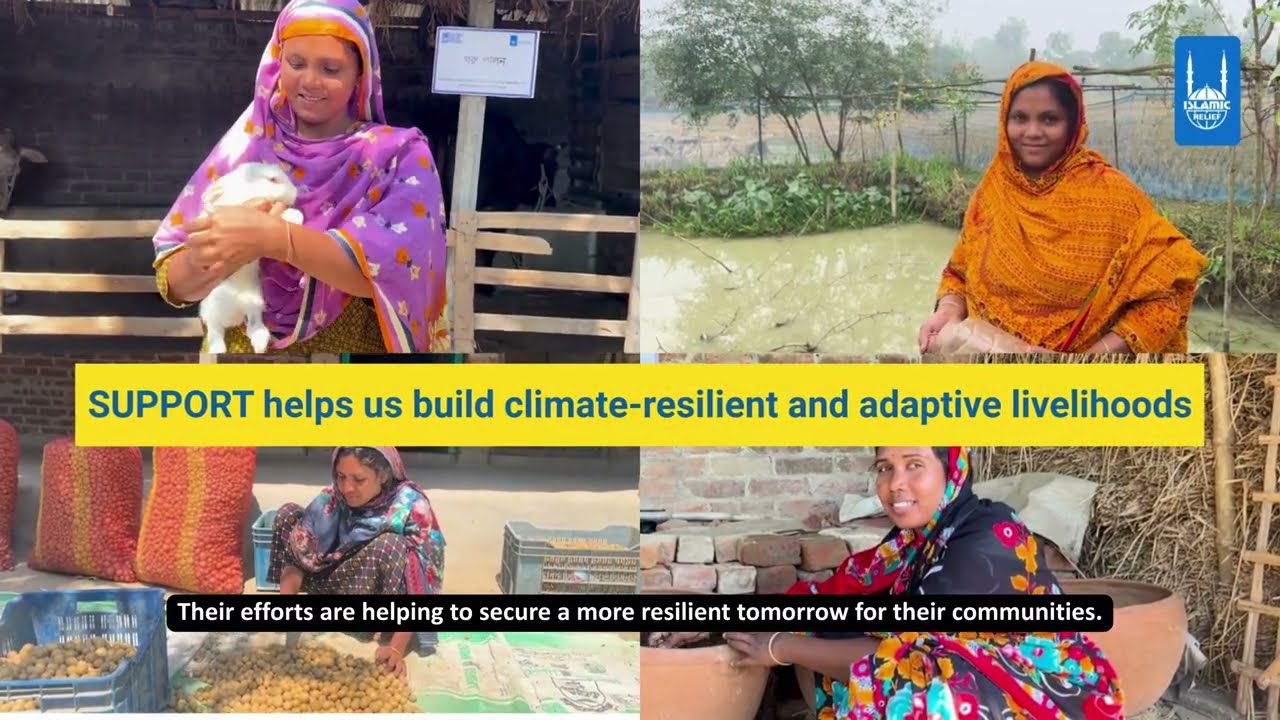
▶
𝗕𝘂𝗶𝗹𝗱𝗶𝗻𝗴 𝗮 𝗥𝗲𝘀𝗶𝗹𝗶𝗲𝗻𝘁 𝗧𝗼𝗺𝗼𝗿𝗿𝗼𝘄 𝘁𝗵𝗿𝗼𝘂𝗴𝗵 𝗦𝗨𝗣𝗣𝗢𝗥𝗧
The SUPPORT Project in Nawabganj, Dinajpur, funded by Islamic Relief Canada and implemented through Islamic Relief Bangladesh’s Economic Empowerment and Governance Programme, is helping marginalised ethnic minorities and extremely poor households overcome poverty, food insecurity, and climate risks.
Through self-help groups (SHG) and partnerships with government agencies, the project introduced climate-smart, evidence-based farming systems that strengthen adaptive livelihoods and ensure food security. These include improved livestock and poultry rearing, fodder cultivation and silage production, integrated fish–crop farming, climate-resilient crop varieties, vermicomposting, and homestead vegetable gardening with IPM and better irrigation.
The project also promotes short-duration crops like Challisha potato and BRRI Dhan-89 rice, as well as sack-based ginger cultivation. Altogether, these interventions aim to boost productivity, use resources efficiently, and build the climate resilience of farming households.