
 FIAN International
145d ago
FIAN International
145d ago
▶
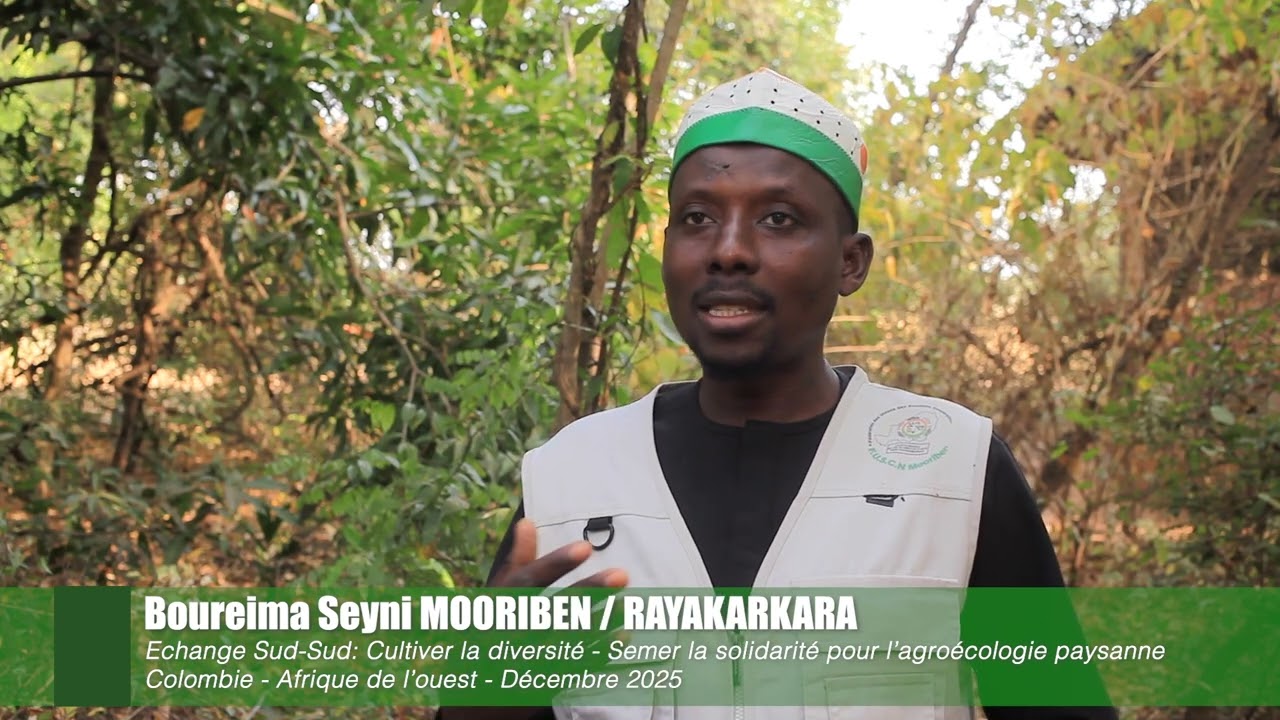
Boureima Seyni. Seeds of Resistance: Historic Peasant Exchange in West Africa
GMOs vs. Peasant Seeds: The Battle for Agricultural Biodiversity
Genetically modified organisms (GMOs) threaten peasant seed systems and agricultural biodiversity. In Colombia, a center of origin of maize, GMO maize was introduced in 2006. Since then, traditional varieties have disappeared as peasant and Indigenous communities are displaced by agribusiness, and native maize has been contaminated through and grain mixing in local markets. In response, peasant, Indigenous, and civil society organizations launched the campaign Colombia libre de transgénicos, promoting the recovery and protection of traditional maize, education, and policy advocacy.
In West Africa, after a failed GMO cotton experiment in Burkina Faso, both Nigeria and Burkina Faso are now conducting field trials of GMO cowpea, a key local food and livelihood crop. Peasant organizations in neighboring countries like Benin fear contamination and are carrying out advocacy and awareness work. At the same time, a peasant-led research project in northern Benin has recovered over twenty local cowpea varieties and developed climate-resilient growing techniques to resist new pests and diseases.