
 TheUSDANRCS
25d ago
TheUSDANRCS
25d ago
▶
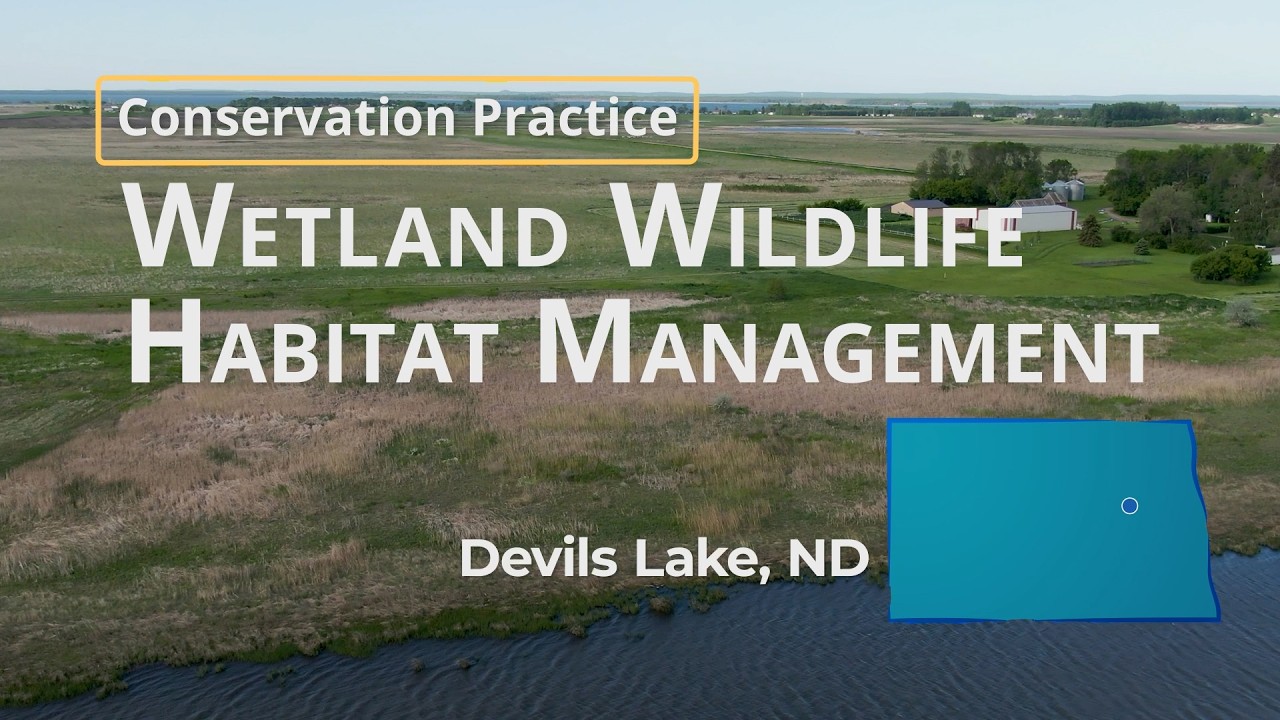
Wetland Wildlife Habitat Management
The Wetland Wildlife Habitat Management practice improves existing wetland habitat – like the restored 523-acre wetland on Paula Ramsey’s farm in Devils Lake, North Dakota. The goal of this practice is to improve existing habitat by improving what limits wildlife or plant health, helping connect important habitat areas, or reducing things that cause stress to key species or ecosystems. This can be done by:
• Adjusting vegetation to improve the mix of plant species and the variety of plant structure
• Planting each year to provide food or shelter
• Changing when or how crops are planted and harvested
• Changing when or how current farm operations are managed and maintained
The Ramseys worked with NRCS to develop a conservation plan tailor made for their restored wetland. NRCS offered their expertise and suite of conservation practices to make their restored wetland even more beneficial to wildlife and the environment.
The Conservation at Work video series was created to increase producer awareness of common conservation practices and was filmed at various locations throughout the country. Because conservation plans are specific to the unique resource needs on each farm and also soil type, weather conditions, etc., these videos were designed to serve as a general guide to the benefits of soil and water conservation and landowners should contact their local USDA office for individual consultation.