 ICRICT
153d ago
ICRICT
153d ago
▶
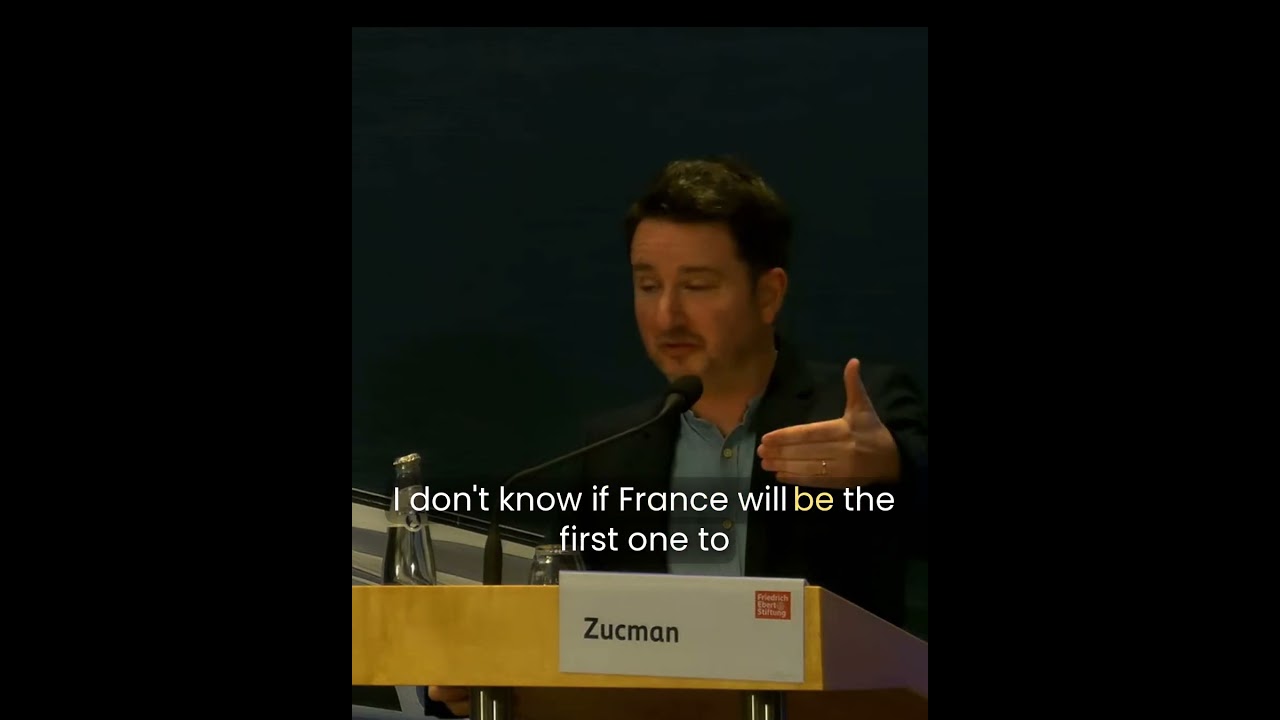
Taxing Billionaires & Defending Democracy, Gabriel Zucman Berlin 27 jan 2026
Panel Discussion in Berlin | Taxing Billionaires & Defending Democracy
At a panel discussion organised by the Friedrich-Ebert-Stiftung (FES) in Berlin, economist our commissioner and EU Tax Observatory director Gabriel Zucman laid out a compelling case for why taxing billionaires is not just a fiscal issue—but a democratic one.
"Wealth for the super rich is power. An extreme concentration of wealth always means an extreme concentration of power."
What power?
✅ To influence politics.
✅ To shape electoral processes.
✅ To set the ideology through media.
✅ To dominate markets by buying competitors.
This creates a fundamental tension in democracies. To resolve it, extreme wealth must come with incompressible duties to society.
Gabriel's proposal?
A minimum tax on extreme wealth: an annual levy of 2% on fortunes above €100 million, ensuring that the very wealthy contribute at least a minimum amount each year—regardless of how their income is reported.
The principle is clear:
Whatever your merits,
Whatever your circumstances,
Whatever the nature of your wealth,
If you're in the world, you pay a minimum tax. Every year. No exceptions.
It's about preserving democracy from the distorting force of concentrated power.
Gabriel showed that billionaires systematically pay far less tax relative to their true economic income than middle- and working-class citizens.
This is not the result of illegal behaviour, but of tax systems that rely on income taxation while allowing extreme wealth to generate little or no taxable income.
The consequences are profound:
• A violation of the principle of equality before the law
• Significant losses in public revenue at a time of growing public needs
• Accelerating wealth concentration, translating into political and economic power that threatens democratic balance
The minimum tax on the super-rich has already gained remarkable public support across political lines and has entered parliamentary debate in several countries. The question is no longer whether reform will happen, but when.