
 ECFR
10d ago
ECFR
10d ago
▶
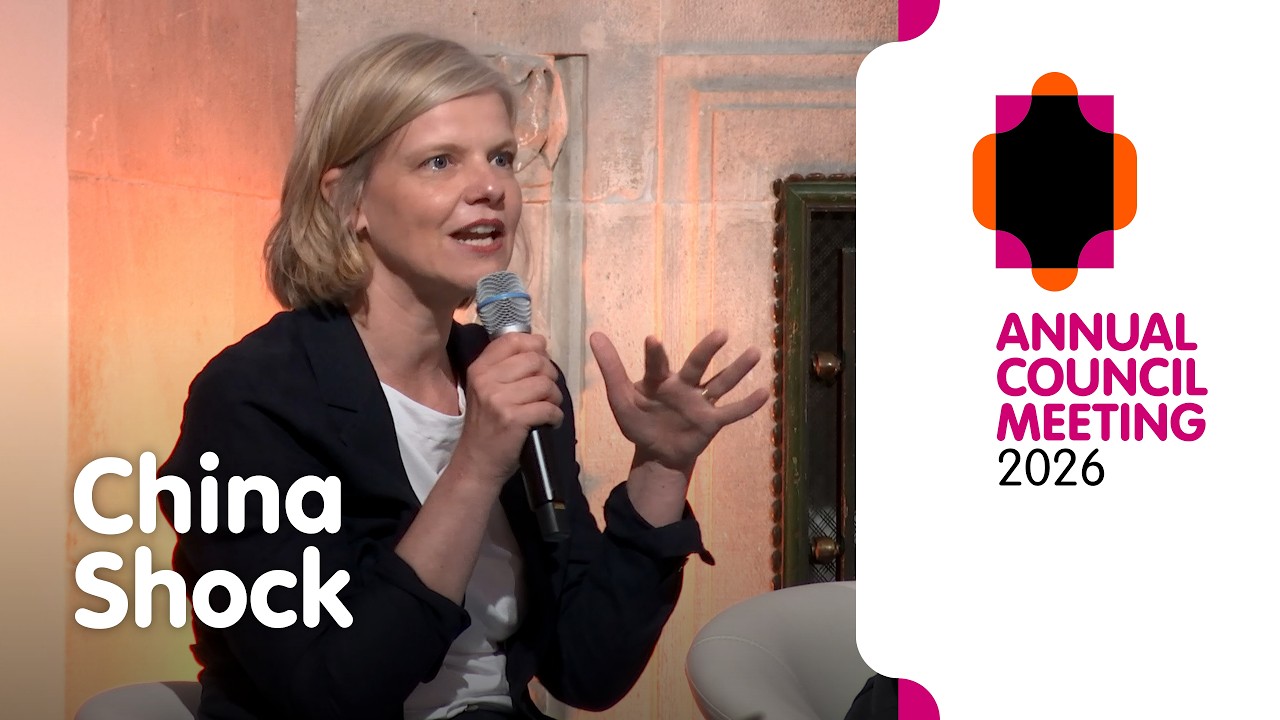
Welcome to the China Shock
Welcome to the China shock: can Europe afford to stay open?
This panel focuses on the strategic choices confronting Europe as it faces a new China shock. The combination of Chinese industrial overcapacity, redirected exports and mounting pressure in decisive sectors—especially clean tech—means that Europe can no longer rely on default openness without defining its terms. The discussion should help policymakers navigate the core choices ahead: where to defend domestic industrial capacity, where to absorb competitive pressure, how to balance speed against legal and institutional constraints, and which trade-offs Europe is prepared to accept. Above all, it asks: is Europe willing to act strategically before market outcomes foreclose its options?
SPEAKERS:
Clément Beaune, high commissioner for strategy and planning, France
Brando Benifei, member of European Parliament, Democratic Party (PD)
Wadia Fruergaard, senior director, head of policy and EU affairs, Vestas
Norbert Röttgen, member of parliament, German Bundestag
Moderator: Janka Oertel, distinguished policy fellow, European Council on Foreign Relations
00:00 — Opening and panel introductions
00:50 — Report: The Chinese Steamroller (French strategy commission)
02:33 — Debate on French and European awareness of China challenge
06:04 — German political and industrial shift on China
07:30 — German Chancellor’s position and EU-wide response
11:20 — Parliament’s view: WTO relevance and reform
14:01 — EU trade tools: steel safeguards and e-commerce measures
16:12 — Industry perspective: Vestas on European wind sector pressures
19:59 — China market access loss and reciprocity issues
21:25 — Critique: protectionism versus green transition goals
24:51 — Solar panel example and cost-gap analysis (40 %)
26:17 — Speeding up EU decision-making before 2027
28:52 — EU agency, resources and short-termism
33:19 — Security dimension: critical infrastructure and 5G/wind parallels
34:52 — Supply-chain case-by-case approach and CRM risks
36:44 — Audience Q&A begins: raw-materials retaliation risk
37:43 — Job-loss impact on European politics
38:23 — Transatlantic alignment and European-preference debate
39:03 — Africa raw-materials cooperation (German view)
39:43 — Airbus-style industrial policy example
40:15 — Wind-sector retaliation preparedness and CRM alternatives
42:15 — Transatlantic CRM/semiconductor cooperation outlook
44:32 — Political costs, democratic trust and US–China squeeze
48:19 — Closing: united EU stance, reverse dependencies, domestic honesty