
 iiha fordham
38d ago
iiha fordham
38d ago
▶
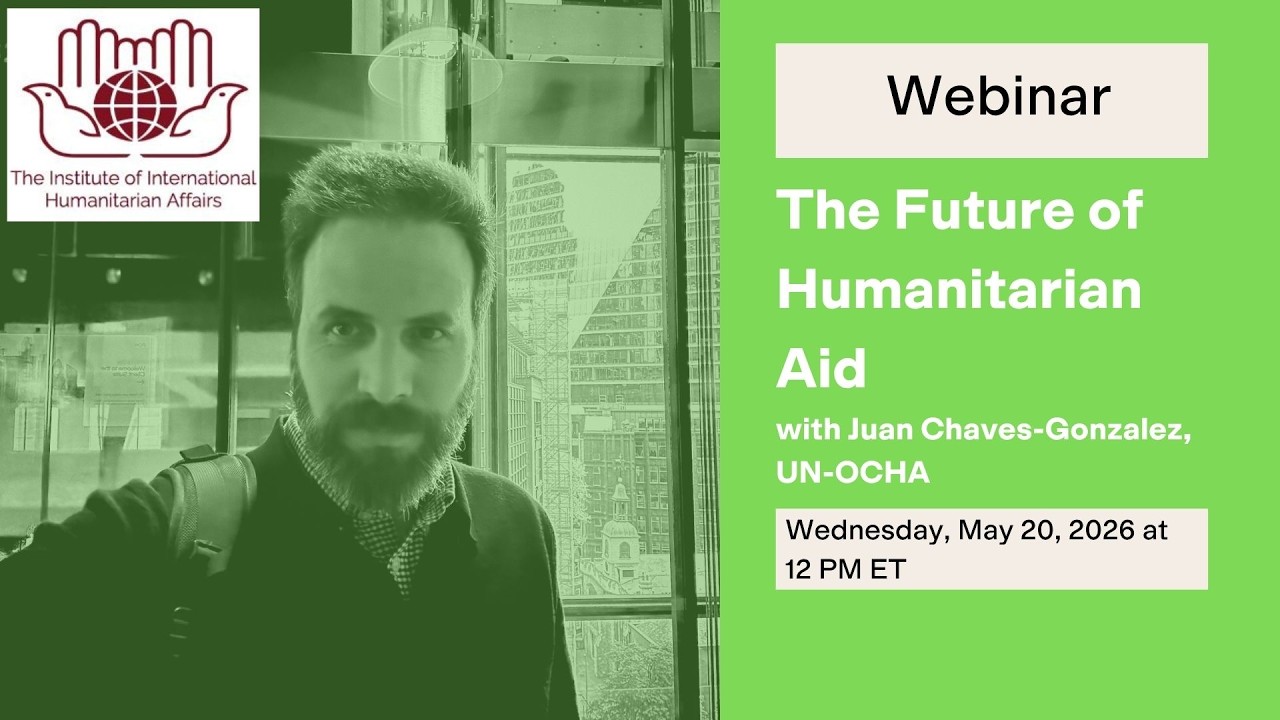
The Future of Humanitarian Aid, The Series: Juan Chaves - Gonzales, UN-OCHA
This webinar is the third part of The Future of Humanitarian Aid series by the Institute of International Humanitarian Affairs at Fordham University
About the webinar
Since 2025, the humanitarian has been grappling with new challenges due to political
change, shifting global priorities and donor policies and evolving humanitarian crises.
USAID was dismantled, the trend towards national interests has grown, and disregard for
IHL along with fragmentation and erosion of multilateralism have increased. At the same
time, humanitarian needs have only increased primarily driven by conflicts. As advisor
on the Future to the Emergency Relief Coordinator, Mr Chaves-Gonzalez moderates
OCHA’s Listening Channel Listening channel | OCHA A place to imagine what
humanitarian action should look like by 2035 and will share some of the trends emerging
from these conversation.
About our speaker
Juan Chaves-Gonzalez is a political scientist with over 20 years of experience in conflict prevention, peace building, development, and humanitarian action. He is the Lead Advisor for Crisis Risk Financing at the U.N. Office for the Coordination of Humanitarian Affairs (OCHA) and Adviser on the Future to the Emergency Relief Coordinator. At OCHA’s Climate and Innovation Section—established in 2026 to strengthen anticipatory action, climate, and crisis risk financing—Juan develops financing solutions to make humanitarian response more efficient and adaptive. He has previously supported humanitarian pooled funds, localization efforts, and initiatives linking public health and crisis response. Earlier in his career, he worked on peace building and recovery in Colombia, his home country. He writes on humanitarian ethics, innovation, climate, and humanitarian finance.
Access the listening channel on the U.N. website here: https://www.unocha.org/listening-channel
Ruth Mukwana, Helen Hamlyn Senior Fellow and Director of Humanitarian Graduate Studies, moderates the presentation.
This webinar was produced by Fordham University's Institute of International Humanitarian Affairs (IIHA). Learn more at iihaglobal.org.
Time Stamps:
*
**00:00** — Introduction & Welcome by Moderator Ruth Mukwana
*
**02:31** — Guest Presentation: Reimagining the Future of Humanitarian Aid (Juan Chavez-Gonzalez)
*
**04:00** — Inspiration Behind the OCHA Listening Channel & Civic Engagement
*
**14:44** — Core Insights: The 4 Strategic Response Groups Identified
*
**16:28** — Structural & Financing Shifts Needed by 2035
*
**19:39** — Summary of Main Recommendations for the UN Relief Chief
*
**25:29** — **Q&A Intro:** Opening the Floor for Audience Questions
*
**25:50** — **Question 1:** Who is actively participating in the listening channel, and are we reaching beyond the usual actors?
*
**29:00** — **Question 2:** How do we navigate the paradox of dwindling national/international funding alongside ever-increasing humanitarian needs?
*
**36:06** — **Question 3:** How is the data gathered from the listening channel translating into actionable changes within the broader humanitarian architecture?
*
**42:21** — **Question 4:** Clarification on recent major funding announcements (e.g., funding flows from the U.S. through OCHA pool funds).
*
**49:16** — **Question 5:** How can individuals safely and confidently step forward to practice personal and community-level solidarity?
*
**51:26** — **Question 6:** Could radical transparency around funding flows expose uncomfortable dependencies that the sector isn't ready to confront?
*
**55:31** — Outro & Closing Remarks