
 Global Land Tool Network
354d ago
Global Land Tool Network
354d ago
▶
Lessons learnt on biodiversity and drought resilience: UNCBD & UNCCD COPs’ outcomes (Arabic)
[This session is recorded in the Arabic language]
Organizers: International Land Coalition (ILC) and Food and Agriculture Organization of the United Nations (FAO)
The Arab countries are facing big challenges fighting climate change and preserve their biodiversity. The desertification of Arable land and lack of water is affecting the region food security. While the Rio convention is trying to address the two issues through the UNCBD and the UNCCD, land tenure component is the key to sustainability in these two elements.
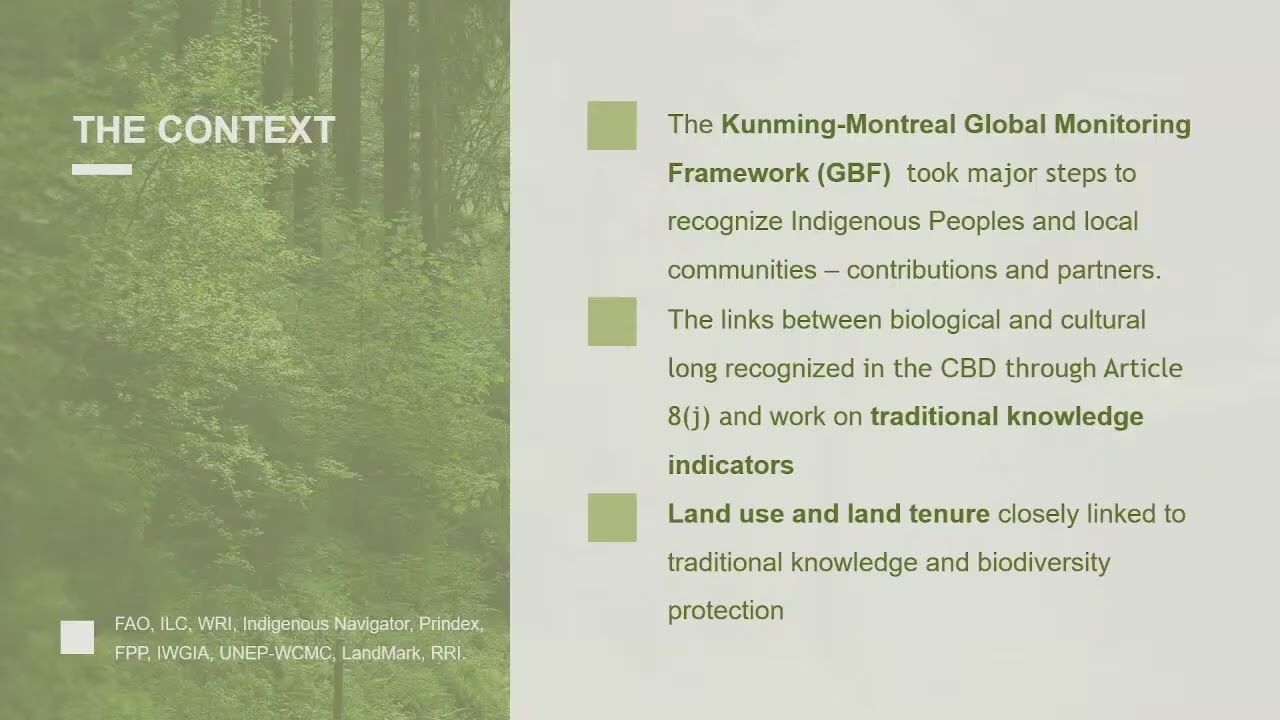
At COP 16-UNCBD, governments tasked with reviewing the state of implementation of the Kunming-Montreal Global Biodiversity Framework. Parties to the Convention are expected to show the alignment of their National Biodiversity Strategies and Action Plans (NBSAPs) with the Framework. COP 16 will develop the monitoring framework and advance resource mobilization for the Global Biodiversity Framework, also due to finalize and operationalize the multilateral mechanism on the fair and equitable sharing of benefits from the use of digital sequence information on genetic resources.
UNCCD COP16, are informed by the recommendations experts have drafted in the aftermath of Drought Resilience +10 guidance on core issues. With its 197 signatories, UNCCD is the only legally binding instrument that addresses land degradation and drought at the global level. The goal is mobilizing political, financial, and human capital to adequately anticipate, reduce, prepare for, and recover from drought risks. The objective is to communicate the messages and outcomes of these two events in an informative way to build synergies to mobilize resources and capacity to ensure secure tenure rights. Governments are expected to address their resilience in their National Action Plan. While NBSAP’s and NAPS’s are overlapping, the session will also aim to explain the two and distinguish between them. Highlighting the importance of centered land governance and tenure security as a key to make NBSAP’S and NAP’s work to realize their objectives.