
 Transparency International Zimbabwe
213d ago
Transparency International Zimbabwe
213d ago
▶
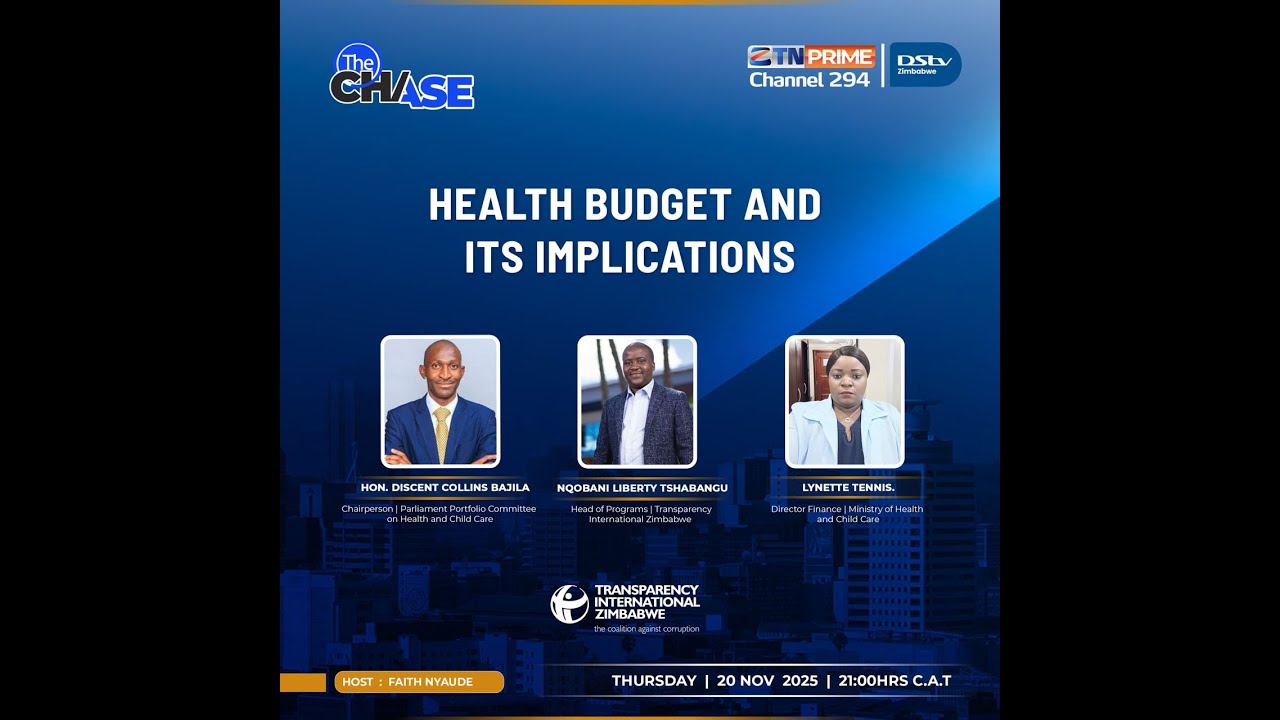
Zimbabwe Health Budget And Its Implications
Transparency International Zimbabwe (TI Z) is implementing the Improving Service Delivery and Accountability (ISDA) project, a four-year regional initiative implemented in five African countries: Zimbabwe, Ghana, Madagascar, Rwanda, and the Democratic Republic of Congo. The project is led by Transparency International’s Global Health Programme (TI-GHP) with funding from Transparency International Canada.
The ISDA project aims to strengthen transparency, accountability, and citizen participation in the delivery of health and education services. Its primary goal is to improve access to quality services for women, girls, and marginalized populations by tackling corruption-related barriers that limit equitable access.
In Zimbabwe, the ISDA project has identified corruption within the health sector’s budgeting, procurement, and distribution systems as a key driver of poor service delivery. Findings from the TI Z research “Corruption Risks in the Medicines Supply Chain in Zimbabwe’s Public Health System” (2024) revealed systemic weaknesses across the supply chain.
Corruption is a cross-cutting driver of these challenges. In health care, informal payments and favoritism restrict access to essential medicines and maternal care services. When medicines are unavailable or when informal fees are demanded at clinics, mothers and caregivers must bear the financial and emotional costs, often sacrificing household income or delaying treatment.
Challenges Identified through ISDA in Zimbabwe’s Health Sector
● Limited budget transparency: Citizens and even local health officials often lack access to timely information on how much funding has been disbursed to their facilities.
● Corruption in procurement and resource allocation: There have been recurring reports of inflated procurement costs.
● Underfunding and inequity: The health sector continues to receive below the Abuja Declaration target of 15% of the national budget, resulting in persistent gaps in human resources, medical supplies, and infrastructure.
● Gendered impact: Women and girls bear the brunt of weak health systems, facing poor healthcare, long travel distances to facilities, and out-of-pocket payments for basic services.
Why Health Budgeting Matters
Health budgeting determines how resources flow from Treasury to clinics, hospitals, and communities. It defines what services can be provided, and what medicines are available. When the process is opaque or mismanaged, the entire system suffers leading to shortages, inequality, and corruption.
The ISDA project recognizes that citizen engagement in health budgeting is essential for improving accountability. However, the budgeting process is often seen as highly technical and inaccessible to many ordinary citizens. To bridge this gap, TI Z seeks to use television as a strategic advocacy tool to simplify complex budget issues, promote transparency, and bring diverse voices into the national conversation on health budgeting.
2. Purpose of the Programme
The programme seeks to unpack the health budgeting and financing landscape in Zimbabwe, shedding light on how public resources are planned, allocated, and used within the health system. It will explore how corruption and inefficiencies in budgeting and procurement processes undermine service delivery and citizens’ trust in public health institutions.
The discussion aims to foster constructive engagement between policymakers, civil society, and citizens, highlighting reform opportunities for a more transparent, equitable, and efficient health system.
In line with the ISDA project, the programme will serve as both an advocacy and accountability platform amplifying citizen voices and presenting TI Z’s evidence-based findings on corruption risks within the health financing and medicines supply chain.