

▶
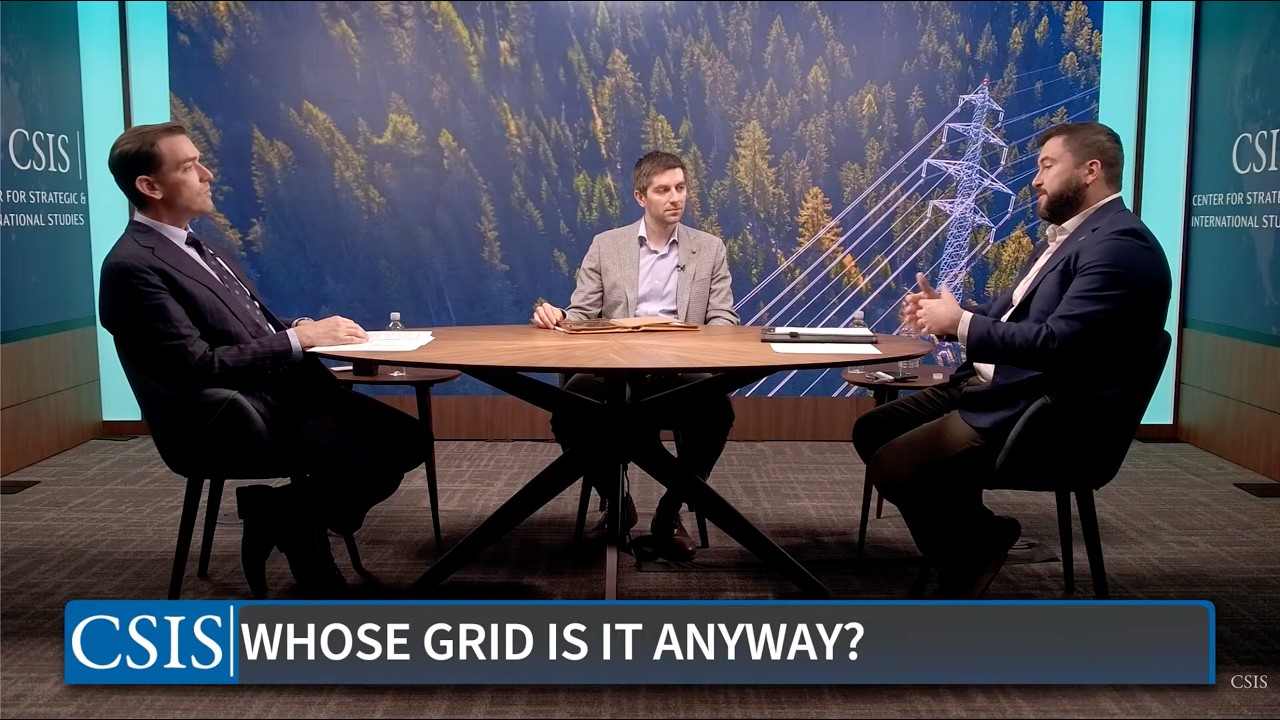
Whose Grid Is It Anyway?
The grid was historically planned by utilities and regulators and financed by ratepayers. Now, rapid load growth from data centers, electrification, and reshored manufacturing has large customers stuck in interconnection queues and pushing for reform. One answer says they should be allowed to build their own generation behind the meter and exit the public system entirely — faster to power, with limited stranded-cost risk to existing ratepayers. The other says the public grid is still the cheapest and most reliable way to serve everyone, and the real work is rebuilding our capacity to permit, plan, and pay for long-distance transmission.
Join the CSIS Energy Security and Climate Change Program for a conversation with Travis Fisher and Daniel Palken on competing visions of the U.S. power grid and its policy future. The conversation will be moderated by Joseph Majkut, Director of the CSIS Energy Security and Climate Change Program.
This event is made possible by general funding to CSIS and the CSIS Energy Security and Climate Change Program.
---------------------------------------------
A nonpartisan institution, CSIS is the top national security think tank in the world.
Visit https://www.csis.org to find more of our work as we bring bipartisan solutions to the world's greatest challenges.
Want to see more videos and virtual events? Subscribe to this channel and turn on notifications: https://cs.is/2dCfTve
Follow CSIS on:
• Twitter: https://twitter.com/csis
• Facebook: https://facebook.com/CSIS.org
• Instagram: https://instagram.com/csis/