
 OPCW
55d ago
OPCW
55d ago
▶
What does it take to become an OPCW inspector?
Learn about OPCW collects samples during inspection and investigations for chemical analysis.
The OPCW is the Organisation for the Prohibition of Chemical Weapons. With 193 Member States and a Technical Secretariat, the OPCW is responsible for implementing the Chemical Weapons Convention.
Learn more: https://www.opcw.org/
Chemical Weapons Convention – https://www.opcw.org/chemical-weapons...
________________________________________
VIDEO TRANSCRIPT
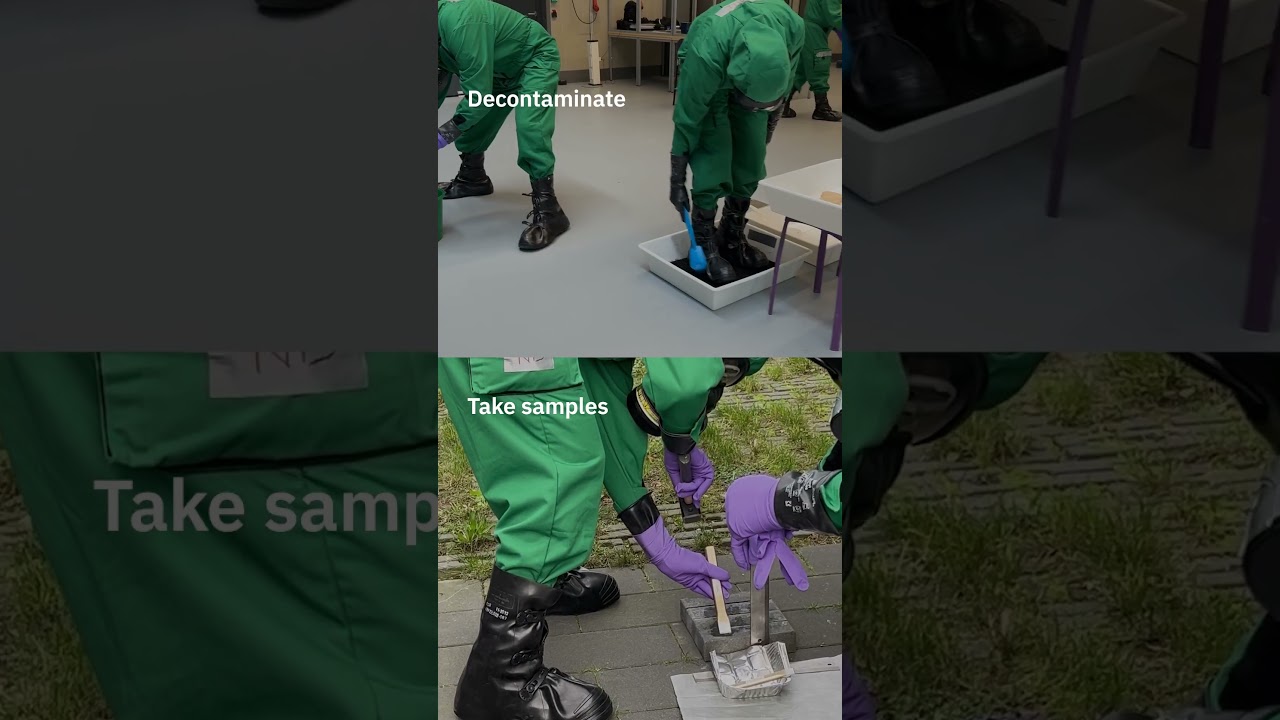
OPCW inspectors use hand-held detectors to check for toxic chemicals and determine where to take a sample.
Multiple technologies and tools are used.
Here are some of them.
Ion mobility spectrometry is used to scan the air for nerve, blister, blood, or choking agents.
Tools like the LCD use this technology to compare what is found in the air to a built‑in library in real time.
Flame atomic emission spectroscopy is used to detect vaporous elements commonly found in chemical warfare agents, including sulfur, phosphorus, arsenic, and nitrogen.
The AP4C and other tools use this technology to detect unknown or modified agents.
Since they only work on vapors, scraper tools like the SP4E are used to collect solid or liquid samples and then convert them into vapors for analysis through the AP4C.
And then there’s CALID‑3 paper.
Simple but effective.
It changes color when it touches liquid G‑ or V‑class nerve agents or blister agents, giving a fast signal.
Each of these tools plays a critical role, helping OPCW verify compliance with the Chemical Weapons Convention and support a world free of chemical weapons.