
 UNDP Business and Human Rights
153d ago
UNDP Business and Human Rights
153d ago
▶
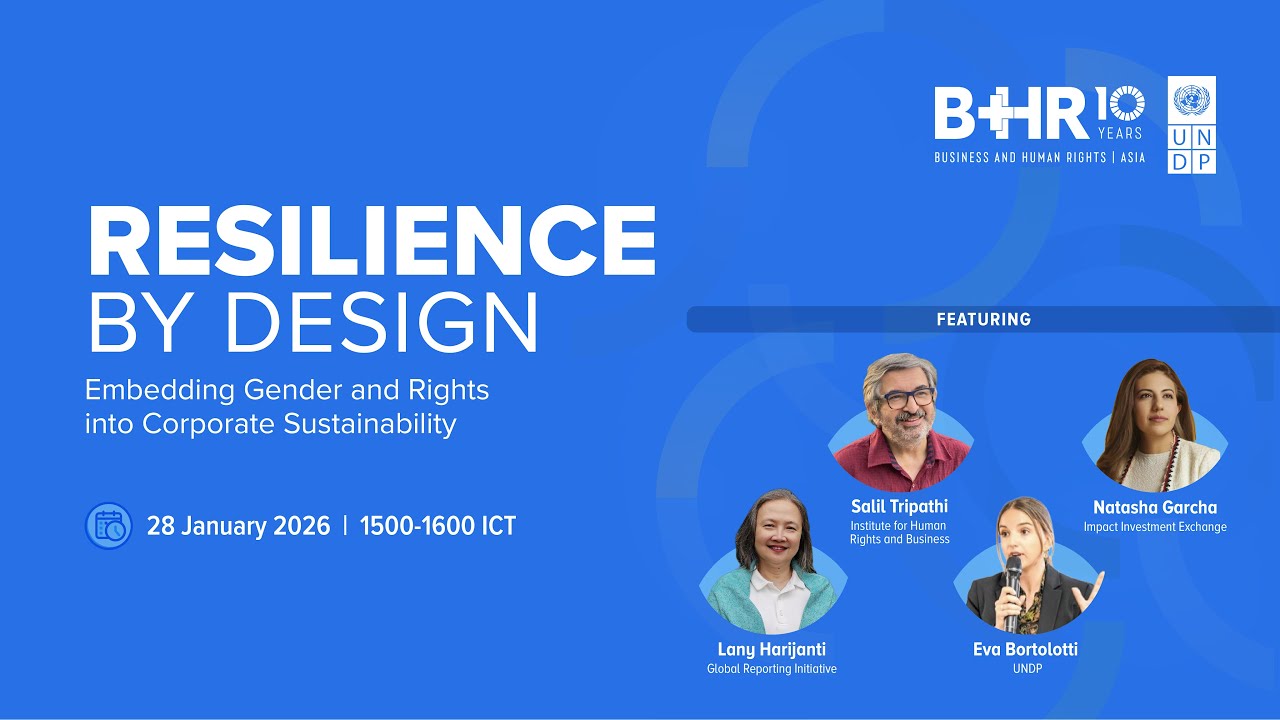
Resilience by Design: Embedding Gender and Rights into Corporate Sustainability
As climate change, biodiversity loss and environmental degradation intensify across Asia, businesses are facing growing operational, supply chain and market risks. This has translated to voluntary and mandatory reporting regimes on climate, nature, and even human rights risks and impacts. Yet one critical dimension of environmental risk remains consistently overlooked: gender.
According to the World Benchmarking Alliance, fewer than one in four companies publicly disclose basic sex-disaggregated data on issues such as pay gaps, career progression, or grievance mechanisms. This gap matters. For example, women make up an estimated 43 percent of the global agricultural workforce, and represent a significant share of workers in manufacturing, waste management, and informal supply chains — sectors that are highly exposed to climate risk, resource disruption, and market volatility. When gender-differentiated environmental impacts are not captured in risk assessments, companies overlook early warning signals — from labour shortages and productivity losses to supplier instability and community conflict. In nature-dependent sectors such as agriculture, extractives and manufacturing, this can directly affect continuity of supply, operational stability and long-term growth.
This webinar unpacked why understanding gender-differentiated impacts is essential to credible sustainability strategies, and how rights-based, gender-responsive approaches can help companies strengthen resilience.
Featuring:
– Lany Harijanti, Regional Program Implementation Manager – ASEAN, Global Reporting Initiative @GRISecretariatGlobal
– Salil Tripathi, Senior Adviser – Global Issues, Institute for Human Rights and Business @IHRBorg
– Eva Bortolotti, Programme Specialist, Environmental Finance, UNDP
– Natasha Garcha, Senior Director, Impact Investment Exchange @iixglobal