
 CARE Bangladesh
159d ago
CARE Bangladesh
159d ago
▶
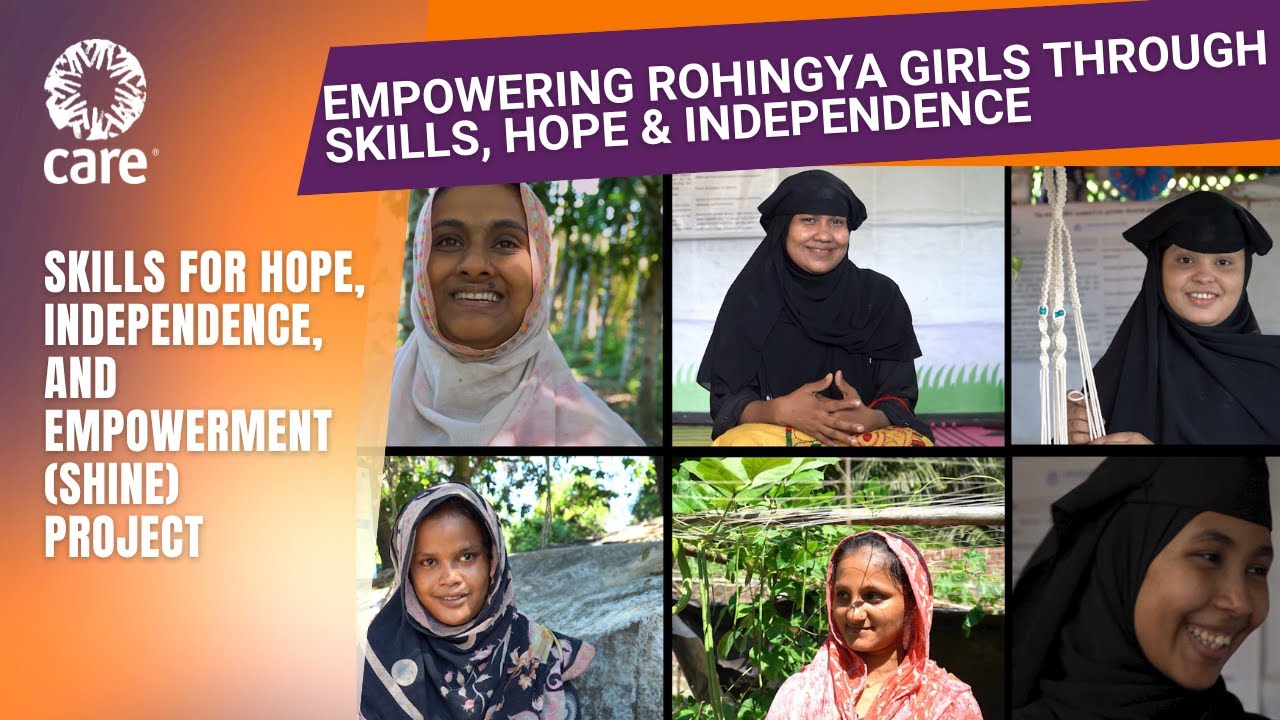
SHINE Project: Empowering Rohingya Girls Through Skills, Hope & Independence | CARE Bangladesh
This is CARE Bangladesh’s official documentary on the SHINE Project, an empowering initiative funded by the Girls Opportunity Alliance (GOA) Fund/Obama Foundation that supports sustainable livelihoods, skills development, and resilience among adolescent’s girls and young women from Rohingya refugees and the host communities in Cox’s Bazar, Bangladesh. In this documentary, we explore how community-led interventions are creating real opportunities for change through protection and livelihood (both off-farm and on-farm) activities e.g. soft skills, integrated agriculture and climate-smart farming practices, non-formal technical training to build employable skills; climate-smart model village development promoting sustainability, income-generating initiatives that strengthen economic empowerment etc. The documentary also highlights the impact on adolescent’s girls and young women, showcasing how tailored training, confidence-building opportunities, and access to income skills are shifting traditional norms and opening pathways for leadership, independence, and social inclusion. CARE has a long history of working in Bangladesh, especially in humanitarian and resilience-building programs that place women and girls at the center of sustainable development and empowerment strategies. In alignment, the SHINE project tells us more stories of resilience, empowerment, and community-led transformation.
About SHINE Project:
Adolescent girls and young women in Rohingya refugee camps and host community face several pressing needs and gaps that hinder their development and well-being. To reduce the gaps, the Skills for Hope, Independence, and Empowerment (SHINE) project aimed to empower adolescent girls (ages 10–19) and young women (15-24) in the Rohingya refugee camps and host communities through targeted soft and hard skills development. The project emphasizes practical non-formal technical skills such as handicrafts, tailoring, and climate-smart agricultural cultivation to provide economic empowerment and reduce vulnerability to violence. In parallel, the Adolescents Life Skills Model is applied to enhance decision-making capabilities and raise awareness of rights. Overall, the project is enhancing the self-reliance and economic resilience of both communities in Cox’s Bazar through context-appropriate skill development and livelihood opportunities, while promoting social cohesion and psychosocial well-being.