
 Geneva Environment Network
12d ago
Geneva Environment Network
12d ago
▶
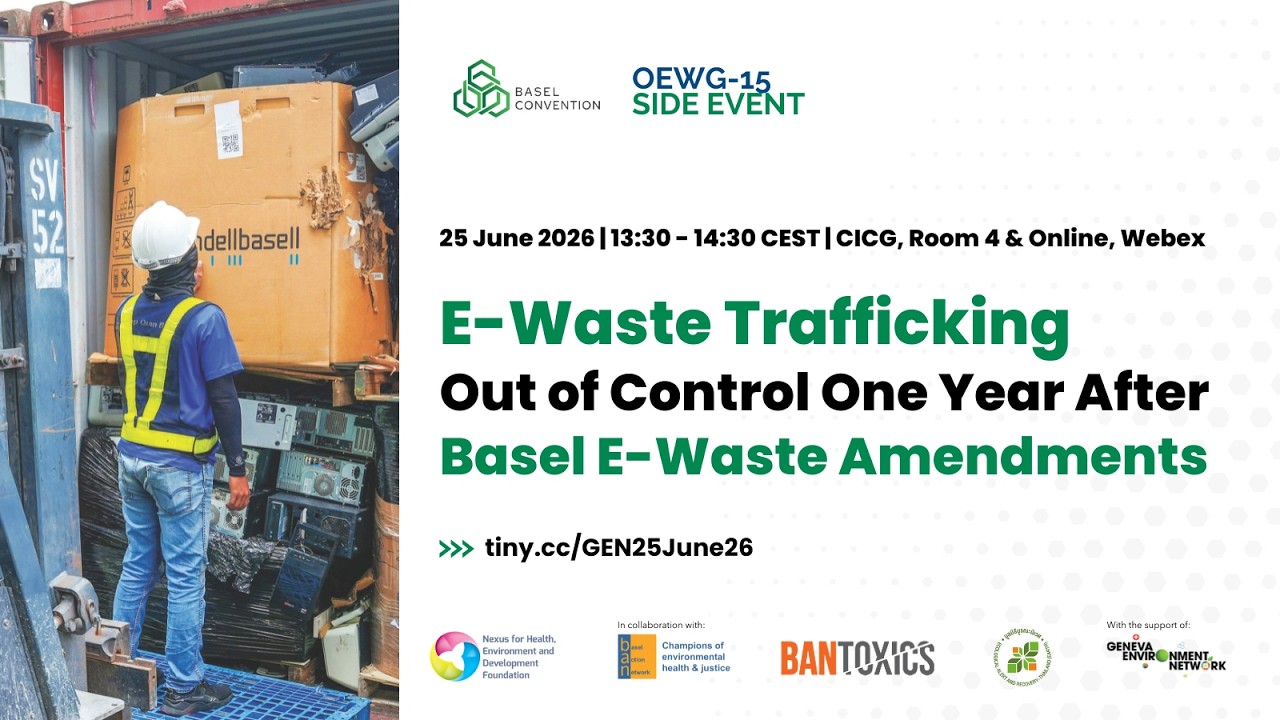
E-Waste Trafficking Out of Control One Year After Basel E-Waste Amendments
The Basel Convention E-Waste Amendments (EWA), which entered into force in January 2025, were intended to strengthen controls on transboundary movements of e-waste by bringing all e-waste exports under the Prior Informed Consent (PIC) procedure. By providing greater clarity on the distinction between waste and non-waste electrical and electronic equipment, the amendments were expected to improve transparency, traceability, and enforcement of existing Basel obligations, including the right of importing countries to refuse shipments, take-back obligations, and measures against illegal traffic. However, one year after their entry into force, poorly controlled and often illegal transboundary movements of e-waste continue to pose significant challenges for destination countries seeking to implement and enforce the Convention.
Southeast Asia remains at the center of this challenge. The region continues to experience a sustained influx of e-waste shipments, placing increasing pressure on ports, customs authorities, and environmental enforcement agencies. As countries strengthen inspections and enforcement actions, trafficking routes and processing operations frequently shift across borders, creating a “whack-a-mole” dynamic in which brokers and recyclers relocate from one country to another. Recent years have seen such shifts between Thailand, Indonesia, Malaysia, and the Philippines, underscoring the need for stronger regional cooperation and more effective implementation of Basel controls.
Particular challenges remain in addressing shipments originating from non-Parties to the Basel Convention, especially the United States. As documented in Basel Action Network’s report Brokers of Shame: The New Tsunami of American E-Waste Exports to Asia, large volumes of e-waste continue to move from the United States into Asian countries. Once illegally traded shipments enter the territory of Basel Parties, questions arise regarding the effectiveness of existing mechanisms for ensuring repatriation, accountability, and enforcement of return-to-origin obligations.
At the same time, the region faces emerging challenges that may further increase e-waste generation and trade. The rapid expansion of data centres, accelerating electrification, growing volumes of end-of-life batteries and electric vehicles, and increasing demand for critical minerals recovery are expected to place additional pressure on waste management systems. Against this backdrop, the roundtable will examine whether current Basel mechanisms are sufficient to address evolving e-waste flows and explore practical solutions to strengthen enforcement, regional cooperation, and environmentally sound management of both imported and domestically generated e-waste.
More information: https://www.genevaenvironmentnetwork.org/events/e-waste-trafficking-out-of-control-one-year-after-basel-e-waste-amendments-basel-oewg-15-side-event/