
 Geneva Environment Network
4d ago
Geneva Environment Network
4d ago
▶
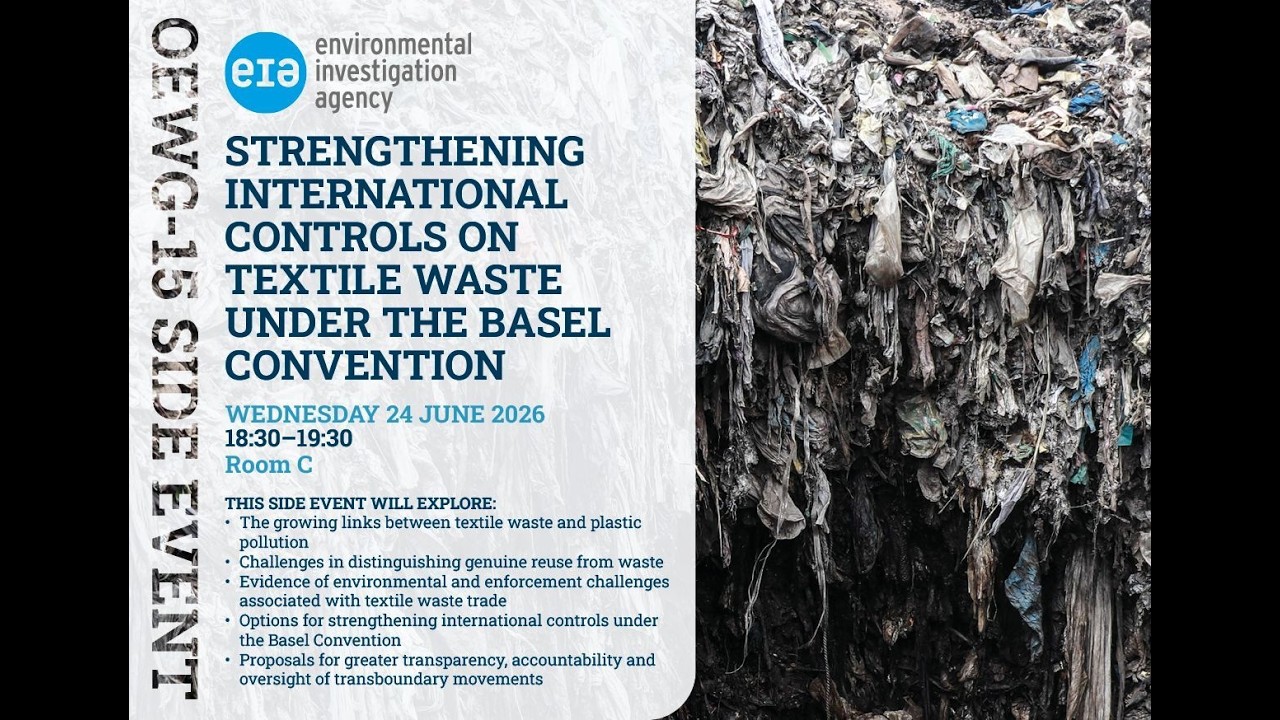
Strengthening International Controls on Textile Waste under the Basel Convention
The international trade in used textiles and textile waste has expanded rapidly alongside growing textile consumption and waste generation. While trade in used textiles grows, evidence indicates that a proportion of shipments contain low-value, contaminated or non-reusable materials. This undermines legitimate trade, creates management challenges for recipient countries and raises questions regarding the appropriate classification and control of textile waste.
Textiles represent a growing gap in the Basel Convention framework. Despite increasingly containing synthetic fibres and other plastic materials, textile waste is not explicitly addressed under the Plastic Waste Amendments. As a result, Parties face challenges in distinguishing between genuine reuse and waste, and in ensuring effective oversight of transboundary movements.
This side event will examine options for strengthening international controls on used textiles and textile waste under the Basel Convention, including proposals for a new Annex II listing and clearer criteria to distinguish reusable textiles from waste. Drawing on recent evidence and country experiences, it will explore classification challenges, enforcement issues and environmental impacts associated with textile waste management.
The session aims to support Parties by:
identifying regulatory gaps in existing control frameworks;
examining legal and technical options to improve oversight of textile waste; and
facilitating dialogue on proportionate and effective control measures.
By addressing textiles within the Basel Convention framework, Parties have an opportunity to strengthen environmentally sound management and improve transparency and oversight of transboundary movements.
More information: https://www.genevaenvironmentnetwork.org/events/strengthening-international-controls-on-textile-waste-under-the-basel-convention-basel-oewg-15-side-event/