
 Geneva Environment Network
4d ago
Geneva Environment Network
4d ago
▶
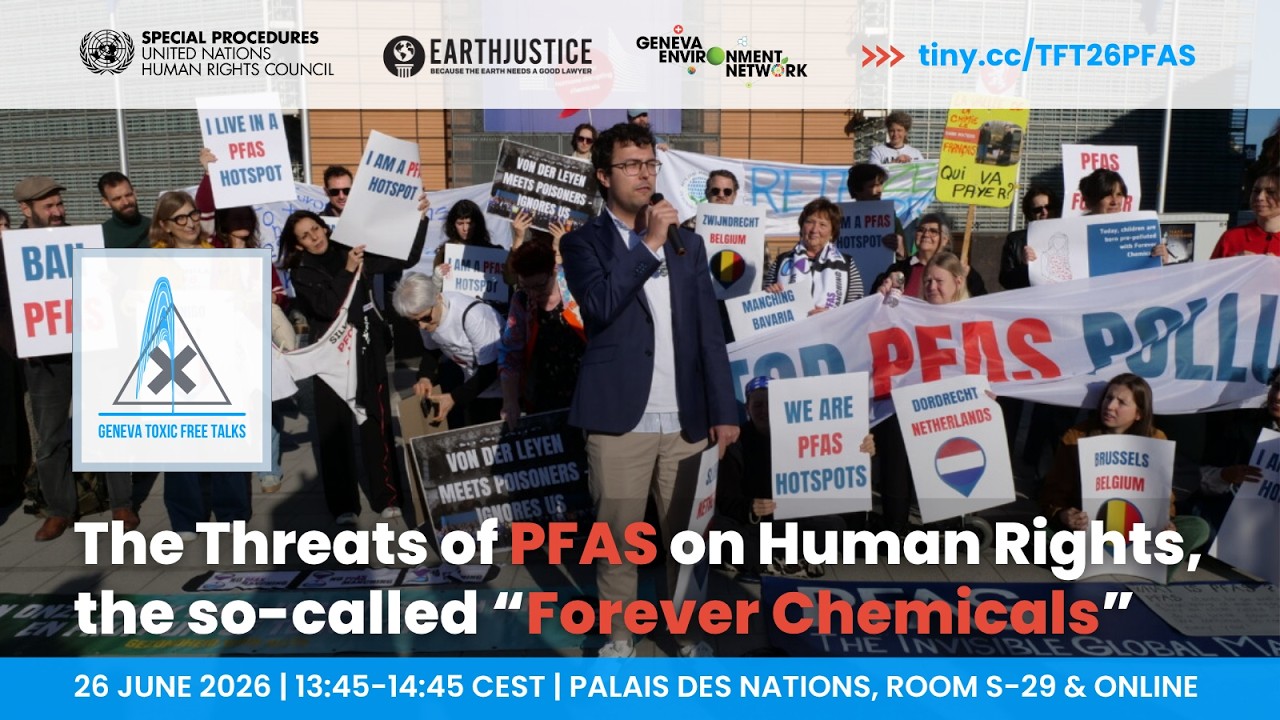
The Threats of PFAS on Human Rights, the so-called “Forever Chemicals” | Geneva Toxic Free Talks
PFAS (per- and polyfluoroalkyl substances) are thousands of synthetic chemicals. Called “forever chemicals,” they are virtually indestructible (persistence), spread throughout the environment (water, air, soil), and accumulate in the human body (bioaccumulation).
Their water-repellent, stain-resistant, and slip-resistant properties, make them ubiquitous in our daily lives: in our kitchens, our clothes, our packaging, and the products we apply to our skin.
PFAS contamination can compromise the rights to physical integrity, the highest attainable standard of health, to safe drinking water and adequate sanitation, and to a healthy environment, including a safe and healthy working environment, among others, by contaminating drinking water supplies, food chains and household environments.
For communities with limited access to environmental monitoring, healthcare, or remediation resources ability to identify or address exposures is largely reduced, perpetuating unequal health risks and environmental burdens. Such inequities reinforce longstanding power imbalances in the global chemicals economy and raise pressing questions about shared responsibilities, capacity-building and the obligations of States to prevent transboundary harms.
In this discussion, including the UN Special Rapporteur on toxic substances and human rights — whose report will be presented at the 63rd session in September — we will examine the significance of the threats and adverse impacts of PFAS for the effective enjoyment of human rights, as well as the legal and institutional responses already developed and the persistent challenges to ensuring fundamental rights, including the right to health, to life, to a clean, healthy, and sustainable environment, to equality, to information, and to justice.