
 Border Criminologies
286d ago
Border Criminologies
286d ago
▶
Refugee Protection and AAA and others (2023-4) | Panel 3: Enabling Refoulement?
Refugee Protection and AAA and others (2023-4) | Panel 3: Enabling Refoulement? The UK-Rwanda Agreement and Safety of Rwanda (Asylum and Immigration) Bill
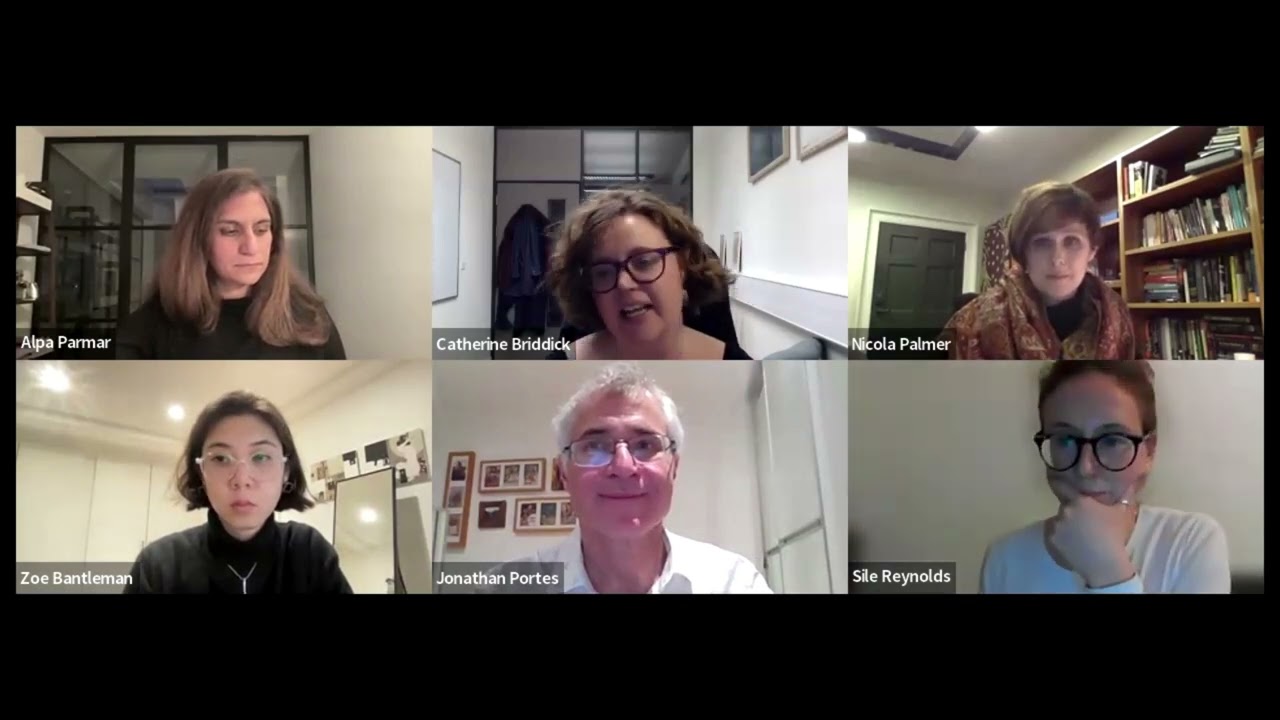
Sile Reynolds (Freedom from Torture), Professor Jonathan Portes (King’s College London), Zoe Bantleman (Immigration Law Practitioners’ Association) and Dr. Catherine Briddick (Refugee Studies Centre)
Chaired by Dr. Alpha Palmer (University of Cambridge)
Convenors:
Nicola Palmer, Reader in Criminal Law, King's College London.
Catherine Briddick, Andrew W Mellon Associate Professor of International Human Rights and Refugee Law, Refugee Studies Centre.
Hosted by Border Criminologies and the Refugee Studies Centre (University of Oxford) with The Dickson Poon School of Law (King’s College London).
This panel is the third and final of a series which examines the Supreme Court’s judgment in R (on the application of AAA and others) v SSHD.
Background
In April 2022, the UK Government and Rwanda entered into a Migration and Economic Development Partnership (MEDP) through a Memorandum of Understanding (MoU). This political agreement seeks to enable the ‘transfer’, or forced removal, of asylum-seekers from the UK to Rwanda to have their claims determined there.
In May and June 2022, a group of asylum-seekers who arrived irregularly were told that their asylum claims were not going to be decided in the UK. Instead, they were to be removed to Rwanda to have their claims determined there, in accordance with Rwandan asylum law and procedure. Following the intervention of the European Court of Human Rights, no removals to Rwanda have taken place.
The appellants in AAA and others are asylum-seekers from Syria, Iraq, Iran, Vietnam, Sudan, and Albania and the charity, Asylum Aid. They challenge both the lawfulness of the Rwanda policy in general, and the decisions made in each individual case. On 29 June 2023 a majority of the Court of Appeal ruled that the Government’s plan to deport asylum-seekers to Rwanda was unlawful. The Supreme Court’s judgement on the appeal is expected in early 2024.