
 Data & Society Research Institute
182d ago
Data & Society Research Institute
182d ago
▶
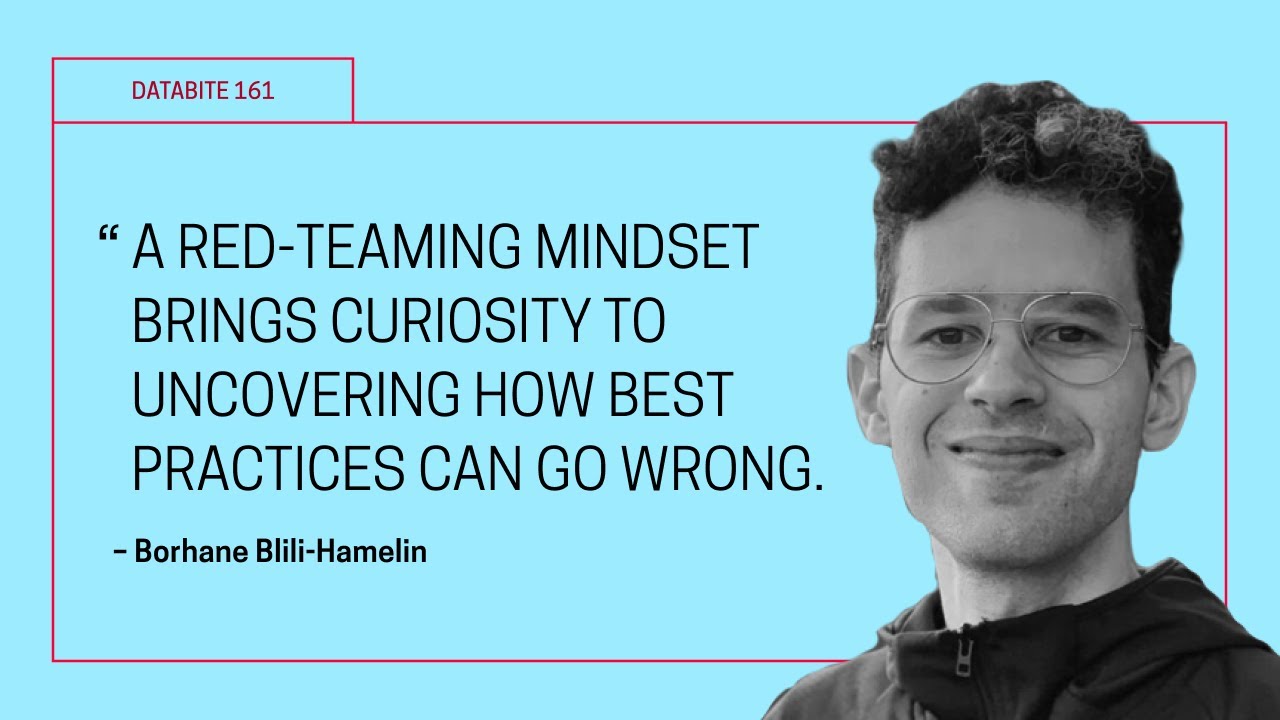
Databite No. 161: Red Teaming Generative AI Harm
What exactly is generative AI (genAI) red-teaming? What strategies and standards should guide its implementation? And how can it protect the public interest? In this conversation, Lama Ahmad, Camille François, Tarleton Gillespie, Briana Vecchione, and Borhane Blili-Hamelin examined red-teaming’s place in the evolving landscape of genAI evaluation and governance.
Our discussion drew on a new report by Data & Society (D&S) and AI Risk and Vulnerability Alliance (ARVA), a nonprofit that aims to empower communities to recognize, diagnose, and manage harmful flaws in AI. The report, Red-Teaming in the Public Interest, investigates how red-teaming methods are being adapted to confront uncertainty about flaws in systems and to encourage public engagement with the evaluation and oversight of genAI systems. Red-teaming offers a flexible approach to uncovering a wide range of problems with genAI models. It also offers new opportunities for incorporating diverse communities into AI governance practices.
Ultimately, we hope this report and discussion present a vision of red-teaming as an area of public interest sociotechnical experimentation.
00:00 Opening
00:12 Welcome and Framing
04:48 Panel Introductions
09:34 Discussion Overview
10:23 Lama Ahmad on The Value of Human Red-Teaming
17:37 Tarleton Gillespie on Labor and Content Moderation Antecedents
25:03 Briana Vecchione on Participation & Accountability
28:25 Camille François on Global Policy and Open-source Infrastructure
35:09 Questions and Answers
56:39 Final Takeaways