
▶
VETIVER - THE KEY TO THE DEVELOPMENT OF A FOOD FOREST IN INDIA
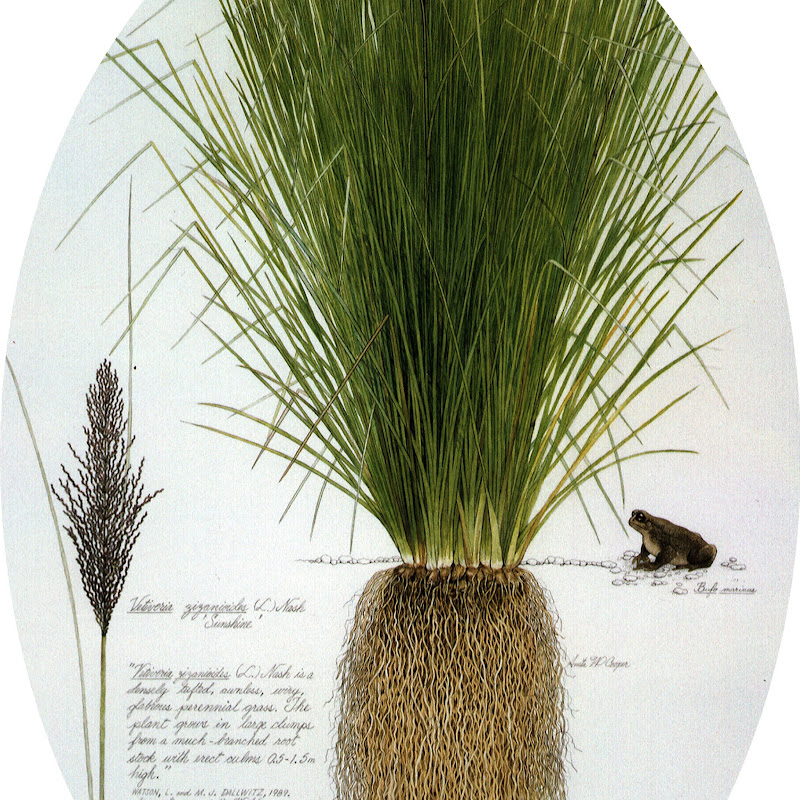
Vanya Farms in Madhya Pradesh, India — a 40‑ha organic farm located near the Narmada River — began its transformation in 2012 as a severely eroded, degraded landscape. By 2026 it has become a mature, multi‑layered food forest that is now measurably and dramatically different from its surroundings on every axis satellites can observe. The farm is owned and developed by Patanjali Jha, India's leading Food Forest farmer. Vetiver grass plays a vital role in the food forest development process.
A four‑season NDVI comparison against an adjacent conventional farm (Sentinel‑2, 2025) shows the contrast starkly: Vanya maintained an April NDVI of 0.59, while the neighbouring farm dropped to 0.32 — an 84% greenness advantage at the peak of the dry season.
Across 25 years of Landsat thermal data (2000–2024), Vanya’s summer surface temperature has diverged from the regional baseline: from roughly matching its surroundings in 2000–2003 to 6–8 °C cooler in 2013–2024, with the cooling trend strengthening as the canopy matured.
A six‑year dry‑season moisture analysis (Sentinel‑2 NDMI, April 2020–2025) reinforces the pattern. Vanya’s mean NDMI was +0.175, compared with −0.015 in the surrounding 5‑km ring — a 0.190‑unit moisture advantage that decayed smoothly with distance and appeared consistently in every year.
Three satellites, three physical variables, and three independent time windows all converge on the same conclusion: Vanya’s food forest has not merely recovered — it has actively restructured its local microclimate over two decades.