
 CERN
182d ago
CERN
182d ago
▶
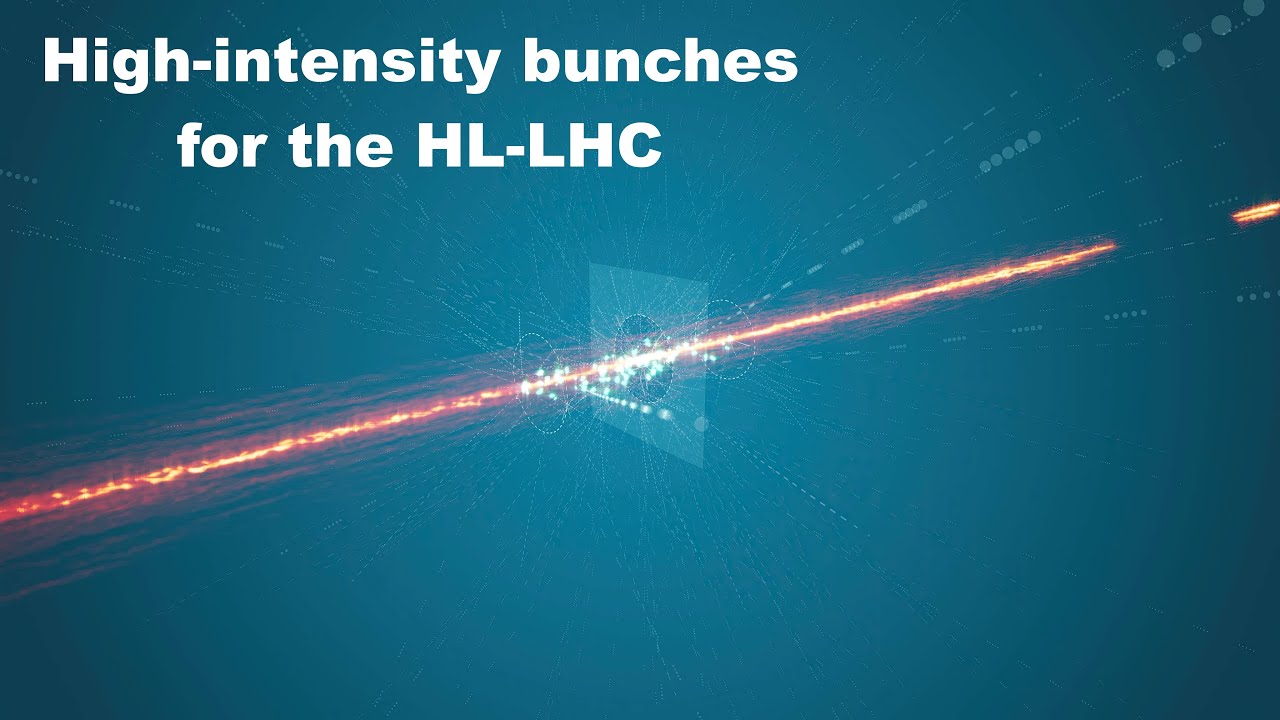
High-intensity bunches for the HL-LHC
The performance of particle colliders is usually quantified by the beam energy and the luminosity. By increasing luminosity, there will be more particle collisions, meaning more data, and a greater probability for discoveries. Currently, the ATLAS and CMS detectors capture approximately 60 collisions every 25 nanoseconds, or 2.4 billion collisions per second.
To prepare the LHC for its next phase, the High-Luminosity LHC, in 2021, the LHC Injector Upgrade (LIU) programme was completed. In 2025, the injector chain delivered bunches of 230 billion protons, this is 40% more than the standard bunches used in the LHC.
The next milestone will come in 2026 with the Reliability Run, where the injector chain will operate daily with LIU beams for months at a time, demonstrating that the upgraded system can reliably fill the collider for the High-Luminosity era.
Using new high-field quadrupole magnets to focus the beams, and innovative crab cavities, these new upgrades will allow the High-Luminosity LHC to increase its performance by a factor of ten beyond the original design.