

▶
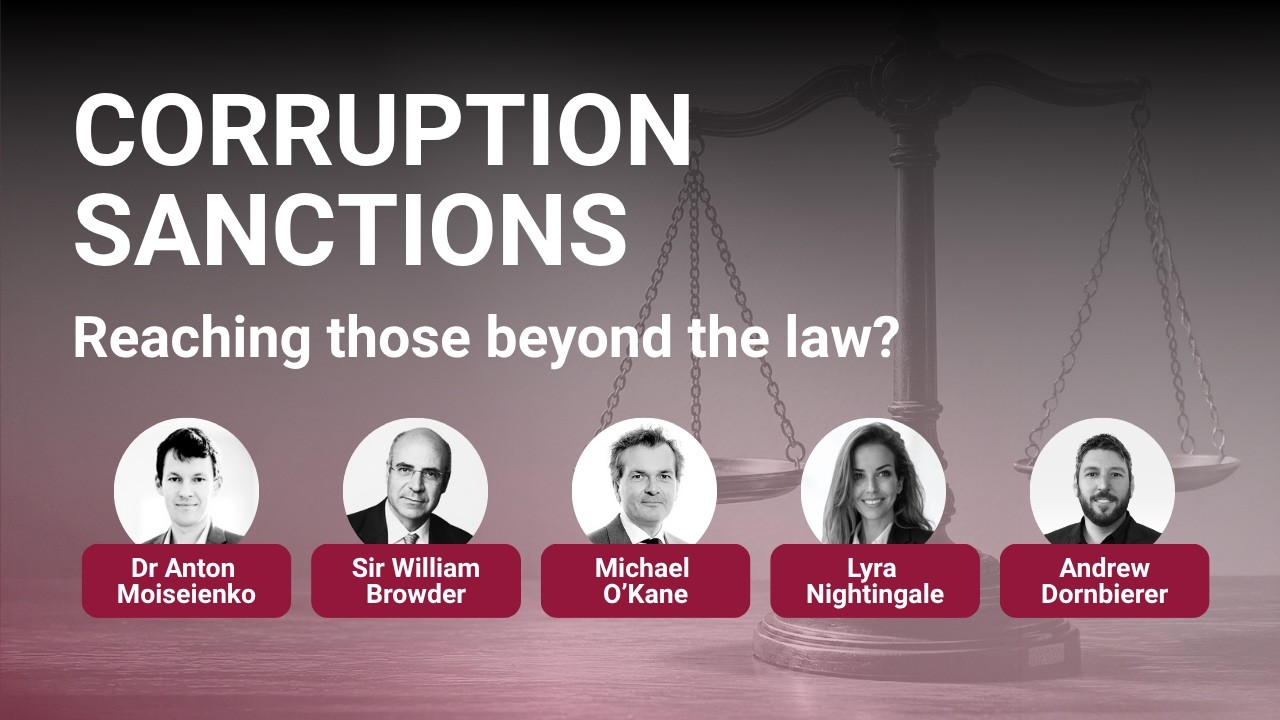
Corruption sanctions: what governments need to know | Publication launch & expert discussion
Can sanctions help hold corrupt individuals accountable when domestic justice systems fail? In this webinar marking the launch of the Basel Institute on Governance's working paper Corruption sanctions: what governments need to know, leading experts discuss the promise, limitations and future of corruption sanctions.
Written by Dr Anton Moiseienko and commissioned by the Basel Institute's International Centre for Asset Recovery (ICAR), the paper examines the growing use of targeted anti-corruption sanctions and explores how governments can use them more strategically as part of wider anti-corruption efforts.
Moderator Andrew Dornbierer, Head of Policy and Research ICAR at the Basel Institute on Governance, is joined by:
• Dr Anton Moiseienko, Associate Professor of Law, Australian National University
• Sir William Browder, CEO of Hermitage Capital and Head of the Global Magnitsky Justice Campaign
• Michael O'Kane, Senior Partner, Peters & Peters
• Lyra Nightingale, Senior Legal Advisor and Head of the Financial Accountability Team, REDRESS
Drawing on perspectives from academia, civil society, legal practice and sanctions advocacy, the panel explores whether corruption sanctions are living up to their promise and what reforms may be needed to strengthen their impact.
Key themes include:
• Why corruption sanctions emerged as a response to situations where domestic justice systems are unwilling or unable to hold powerful individuals accountable
• Whether sanctions genuinely deter corruption, disrupt illicit activity and support victims, or whether their impact is often more symbolic than practical
• The global legacy of the Magnitsky movement and the challenges of expanding and harmonising sanctions regimes across different jurisdictions
• The growing tension between sanctions as tools of accountability and sanctions as instruments of foreign policy
• Concerns about politicisation, due process and the risks that inconsistent or selective use could undermine the credibility of sanctions regimes
• The realities of asset tracing, asset recovery and compensation for victims, and whether sanctions can achieve meaningful outcomes without broader enforcement strategies
• The role of lawyers, financial professionals and other enablers in facilitating corruption and whether sanctions should increasingly target those networks
• How governments can make sanctions more transparent, strategic and effective while maintaining public confidence in their legitimacy
The discussion features a lively exchange of views between panellists, including differing perspectives on the effectiveness of existing sanctions regimes, the challenges of implementation and the future direction of Magnitsky-style sanctions.
Quick links:
Part 1: History and objectives
04:32 – What are corruption sanctions? (Dr Anton Moiseienko)
09:41 – The story behind Magnitsky sanctions (Sir William Browder)
17:26 – What can sanctions achieve for victims? (Lyra Nightingale)
23:01 – Why do governments use corruption sanctions? (Dr Anton Moiseienko)
Part 2: Effectiveness and legitimacy
27:55 – Do corruption sanctions actually work? (Michael O'Kane)
37:30 – How effective have corruption sanctions been? (Sir William Browder and Lyra Nightingale)
46:51 – How can sanctions remain credible and avoid politicisation? (Michael O'Kane and Dr Anton Moiseienko)
56:31 – Audience question: How problematic is the lack of harmonisation between different sanctions regimes, and what is the best approach to issues such as ownership and control rules? (Michael O'Kane and Sir William Browder)