
 UNRISD
144d ago
UNRISD
144d ago
▶
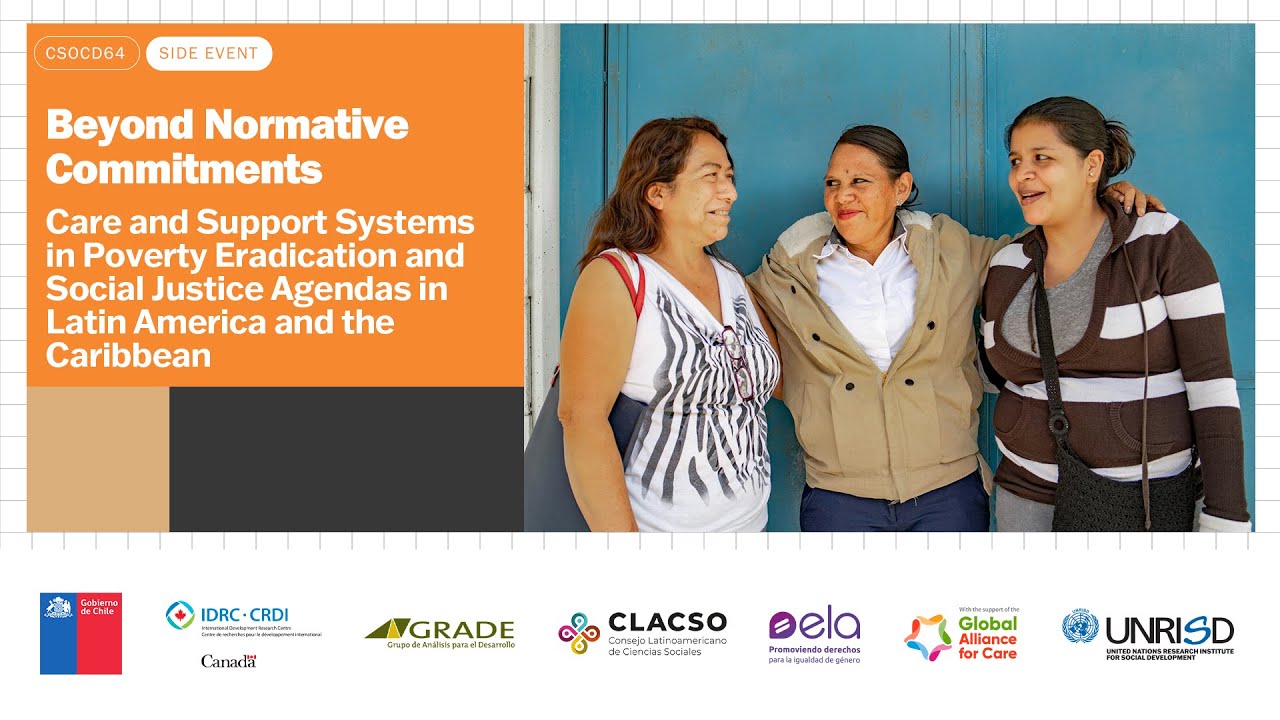
Beyond Normative Commitments: Care Systems in Poverty Eradication and Social Justice Agendas in LAC
*Side Event at the 64th Session of the Commission for Social Development*
While the recognition of care as a central pillar of social development is growing, significant challenges remain regarding how care and support systems are framed, discussed and operationalized in poverty eradication and social justice agendas. This high-level side event convenes experts, policymakers and civil society actors to explore how recent normative milestones—such as the Tlatelolco Commitment and the Inter-American Court’s Advisory Opinion No. 31—are shaping care debates and policies in Latin America and the Caribbean.
Rather than reaffirming known principles, this session offers a critical lens to assess tensions, assumptions and gaps in how care is addressed within coordinated social development strategies. It explores the role of care in advancing resilience, dignity and inclusion—and the financing and governance tools required to realize that vision.
Speakers
Opening and framing
Magdalena Sepúlveda, Director, UNRISD
Financing care and support systems
Carolina Robino, Programme Specialist, IDRC
Care as a right and public responsibility: Implications of Advisory Opinion No. 31
Natalia Gherardi, Executive Director, ELA
Evidence on care, poverty and inequality
Lorena Alcázar, Senior Researcher, GRADE
Care, climate and social justice: Academic perspectives from LAC
Pablo Vommaro, Director, CLACSO
Care within governmental social development and poverty reduction agendas
Javiera Toro, Minister of Social Development and Family, Government of Chile
Dialogue and key takeaways
Ana Moreno, Executive Secretary, Global Alliance for Care
Closing
Magdalena Sepúlveda, Director, UNRISD