
 IWGIAtube
43d ago
IWGIAtube
43d ago
▶
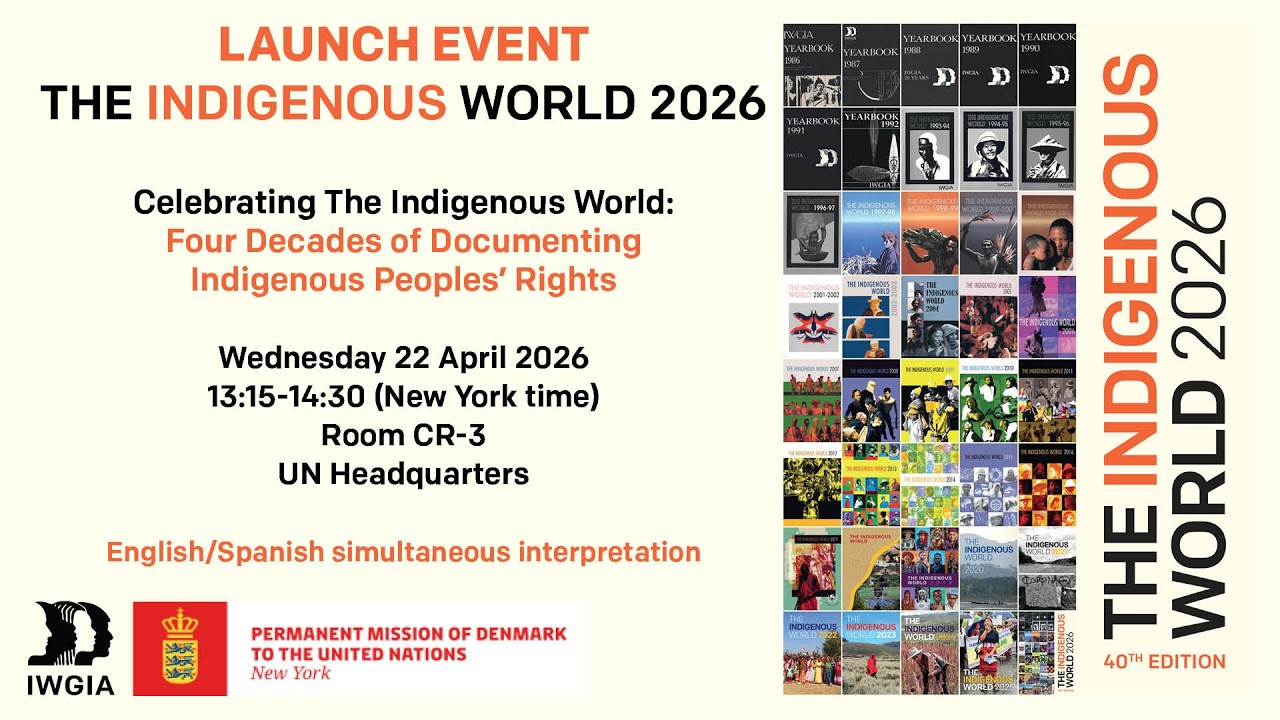
IWGIA The Indigenous World 2026 launch at 25th session of UN Permanent Forum on Indigenous Issues
The annual launching of The Indigenous World provides a unique opportunity for IWGIA to organize a panel with Indigenous leaders, UN mechanisms and other key stakeholders to address some of the core trends and developments with regards to Indigenous Peoples rights over the past year.
The 2026 edition marks the 40th anniversary of this unique publication — a milestone that highlights both the enduring value of long-term documentation and the importance of centering Indigenous perspectives in global discussions.
Speaker panel:
• Kathrin Wessendorf – Executive Director, IWGIA (moderator)
• Ambassador Christina Markus Lassen – Permanent Representative of • Denmark to the United Nations in New York
• Dwayne Mamo – General Editor, The Indigenous World, IWGIA
• Dr. Sara Olsvig – Chair, Inuit Circumpolar Council, co-author of Arctic Council article
• Honourable Commissioner Dr. Litha Musyimi-Ogana – Chairperson, Working Group on Indigenous Populations / Communities and Minorities in Africa, ACHPR
• Toni Chiran – President, Bangladesh Indigenous Youth Forum (BIYF) and Deputy Chairperson, Asia Indigenous Youth Platform (AIYP)
• Joan Carling – Executive Director, Indigenous Peoples Rights International (IPRI)
We are delighted to once again having the Permanent Mission of Denmark to the UN in New York join us as co-sponsor for the launch of the book.
Download The Indigenous World 2026:
English: https://iwgia.org/en/resources/indigenous-world.html
Spanish: https://iwgia.org/es/recursos/mundo-indigena.html
In light of the main theme of the 25th session of the UN Permanent Forum on Indigenous Issues, “Ensuring Indigenous Peoples’ health, including in the context of conflict,” the editorial theme of the 40th edition of The Indigenous World—"Peace and Security”’—offers a timely and relevant lens to explore how conflict continues to undermine the rights, wellbeing, and safety of Indigenous Peoples.
In a time when democratic and civil society spaces are shrinking and conflict rhetoric is heightening, the peace and security of Indigenous Peoples and their rights, particularly to land, territories and resources is increasingly becoming threatened. It is crucial to emphasize that Indigenous Peoples must not be rendered invisible in today’s peace and security discourses. Many Indigenous communities and their territories are disproportionately and devastatingly affected by armed conflicts, civil unrest, militarization, the war against illegal cartels, and territorial sovereignty disputes between States. In many cases, their steadfast defense of their lands, rights, and ways of life places them in direct opposition to all parties involved in conflict — State forces, armed groups, private interests, and criminal networks — making them targets of violence, displacement, and persecution. These dynamics often unfold without acknowledging Indigenous Peoples in policy frameworks or peacebuilding strategies. Their exclusion perpetuates cycles of violence and undermines efforts toward sustainable peace in all societies.