
 Devex
3d ago
Devex
3d ago
▶
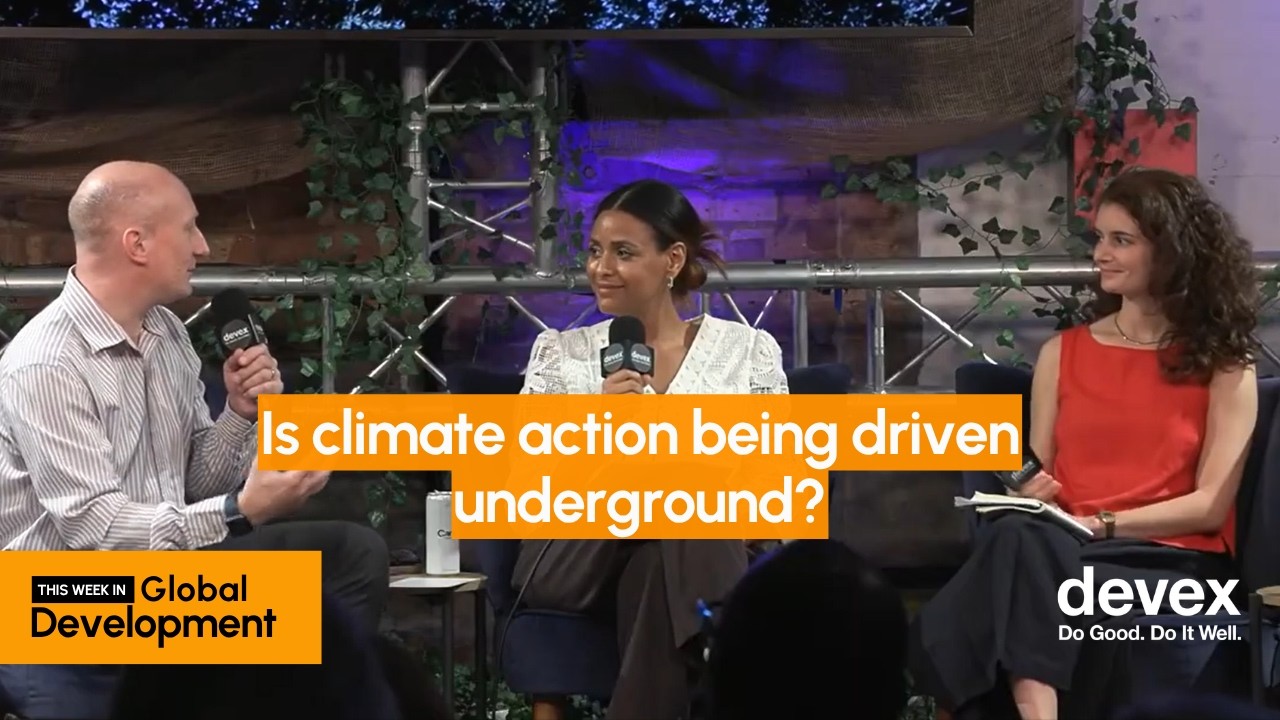
#151: Live from London Climate Action Week
As London Climate Action Week gets into full swing, we break down the key talking points from the conference so far. With the city in the midst of a scorching heat wave, the discussion of climate change feels even more urgent than usual.
We explore the transactional landscape that developing nations face, where much-needed capital is increasingly tied to the private sector.
Beyond the balance sheets, one of the current tensions is the collision between green ambitions and economic survival. From the push for rapid electrification to the rollout of Europe’s Carbon Border Adjustment Mechanism, African nations are being forced to thread a near-impossible needle: industrializing their economies while navigating low-carbon mandates.
Complicating matters is a growing communications crisis within the sector itself. To secure funding and dodge political blowback, many NGOs are camouflaging their climate work under the banners of health, food, or energy security. However, driving the climate conversation underground risks leaving the communities most vulnerable to extreme weather out of the spotlight when they need it most.
To bring you the latest from London Climate Action Week, Devex Business Editor David Ainsworth sits down with global development reporters Ayenat Mersie and Jesse Chase-Lubitz for the latest episode of our weekly podcast series.
Against a backdrop of record-breaking heat in Europe and growing political pressure to slow climate ambition, Marcene Mitchell, senior vice president of climate change at WWF USA, joins Devex Executive Editor and Executive Vice President Kate Warren to make the case for staying the course. Marcene challenges the “small drop” argument — the idea that individual countries acting on climate don’t matter — and reframes clean energy and nature-based solutions not as a cost, but as an economic and strategic imperative. She breaks down how electrification and the AI-era’s energy demand can be decoupled from fossil fuels, why energy security is itself a climate argument, and what WWF USA — an organization most people associate with conservation — is quietly doing on climate finance and supply chains around the world. Learn how WWF USA is working globally to turn climate ambition into investable pipelines, and why the solutions to get there already exist.
Sign up to the Devex Newswire and our other newsletters:
https://www.devex.com/account/newsletters