
 Heinrich-Böll-Stiftung
32d ago
Heinrich-Böll-Stiftung
32d ago
▶
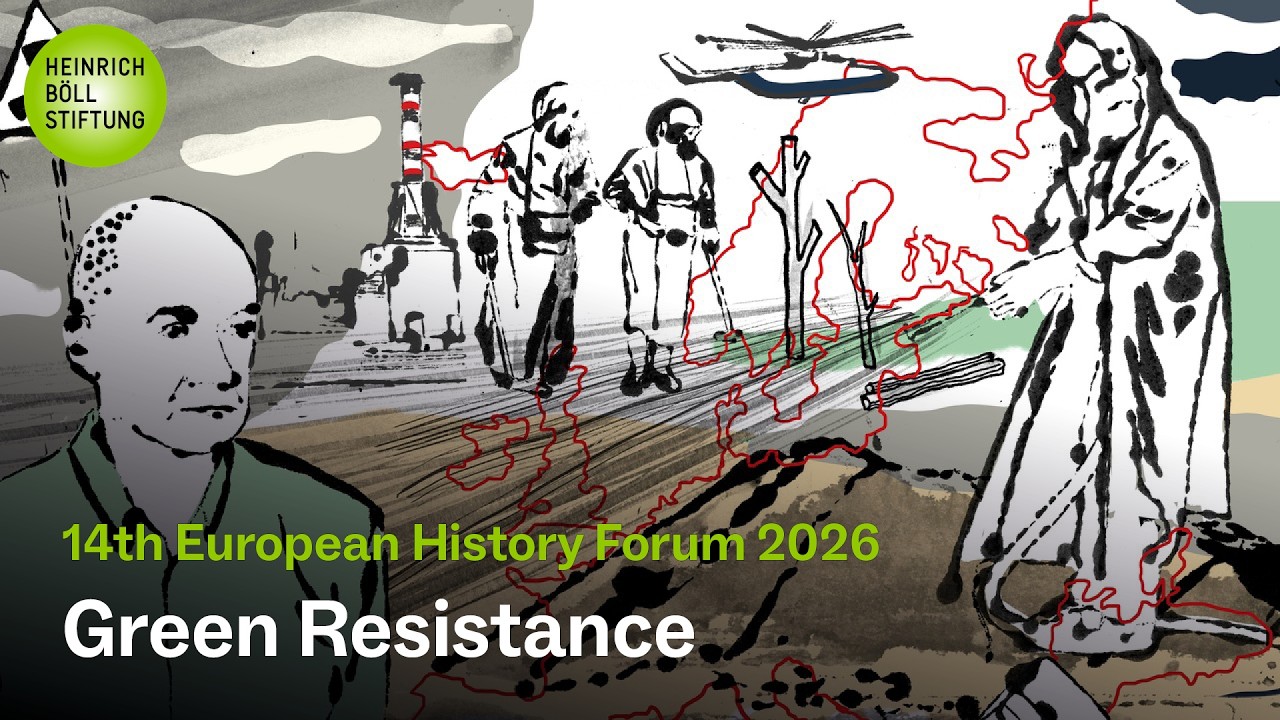
European History Forum 2026 - Green Resistance: The Post-Soviet Case
Fishbowl
Green Resistance: Environmental Movements between Anti-Establishment Opposition and Democratic Transformation (Ecology “from below”)
- What role did environmental concerns and movements play within oppositional politics under state socialism?
- In what ways was environmental activism interconnected with other social and political struggles (for democratisation, civil rights, national self-determination)?
- When did the demands of environmental movements combine with anti-liberal and nationalist tendencies?
- How did the relationship between ecological movements and post-socialist states evolve, particularly in terms of institutionalisation, co-optation, or opposition to neo-liberal agendas?
- How and under what conditions did green parties emerge, and in which political and national contexts were they able to achieve sustained electoral or policy success?
- How were environmental concerns institutionalised within the political and administrative frameworks of post-socialist states following the collapse of the Eastern Bloc?
With:
- Avet Vardanyan, GWZO Leipzig. Focus: Environmental activism and civic engagement in the late Soviet and post-Soviet periods, comparative analysis of anti-nuclear movements in Armenia and Eastern Europe
- Giorgi Tsintsadze – Brown University, USA. Focus: Modern Europe; intellectual history; environmental history; history of science; Eastern Europe; the Russian Empire
- Anna Ackermann - policy analyst for IISD’s Energy team. Focus: green reconstruction of Ukraine, energy, environmental policy, and just transition
Host: Nina Happe, hbs Berlin
14th European History Forum
Marking the 40th anniversary of Chornobyl, the 2026 European History Forum examines, from a historical perspective, the origins and development of environmental movements across Europe and their entanglements with the legacy of the nuclear disaster. The primary focus lies on socialist and post-socialist states, while also adopting a comparative perspective on West Germany and reunified Germany.