
 RedR UK
5d ago
RedR UK
5d ago
▶
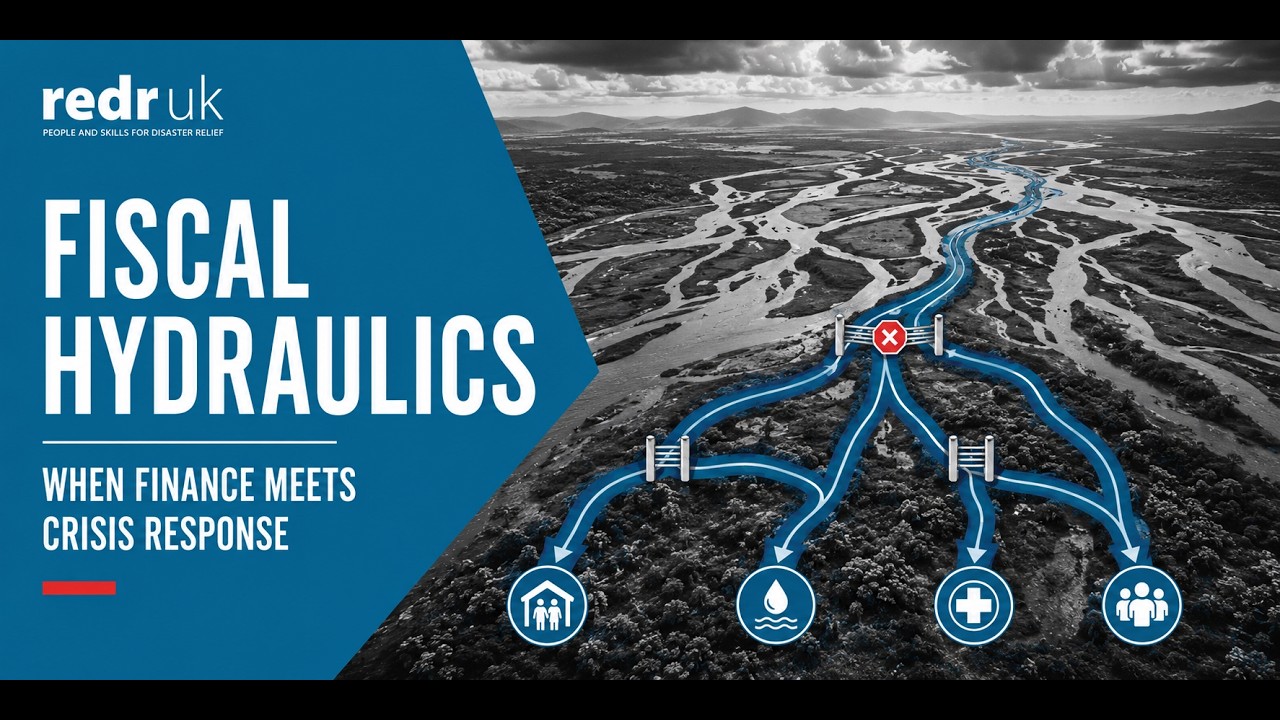
RedR Talks: Fiscal Hydraulics – Evaluating Fiscal Flows under Pressure
As part of London Climate Action Week, RedR hosted a focused discussion on how financial systems function under pressure in humanitarian, climate, and recovery contexts.
Fiscal hydraulics in a humanitarian crisis helps to show whether money can actually move fast enough, through the right channels, to reach affected people when it is needed most. While commitments to finance are often strong, the reality is that funding does not always reach affected populations quickly or efficiently. This session explored how we can better understand, and improve, these flows.
What the session covered:
- Map how emergency funds are triggered and released after a shock such as conflict, flooding, displacement, or disease outbreak.
- Track how resources move from donors, governments, multilaterals, or humanitarian agencies through national and local systems to frontline delivery.
- Identify bottlenecks, for example where funds are delayed by approvals, weak institutions, unclear mandates, procurement issues, or poor coordination.
- Assess “flow readiness”, whether the system can turn financial commitments into action on the ground.
- Support better crisis response and recovery planning by showing where system strengthening is needed before the next emergency.
Why this matters:
In a refugee crisis or post-disaster response, fiscal hydraulics could help answer questions like:
- How are emergency funds supposed to move from central government or donors to local responders?
- Which agencies have authority to approve spending?
- Where are the delays happening?
- Are local delivery systems ready to use the funds quickly and effectively?
- What changes would make the system more responsive next time?
- At a time when climate-related shocks and complex emergencies are increasing, improving how financial systems operate is essential to delivering timely, effective assistance.
Speaker:
Sam Woodbridge – Strategy and resilience adviser working across infrastructure, public systems, and crisis recovery. Sam has worked across 13 countries in both operational and advisory roles, including:
Coordinating shelter response during the Rohingya refugee crisis
Leading regeneration programmes in Kabul
Advising the World Bank, UN agencies, and governments on regulatory reform and emergency preparedness
His current work focuses on how finance, authority, and decision-making flow through systems under stress, including the development of Fiscal Hydraulics and related tools.
Facilitator:
Angela Khudonazarova – Water and wastewater engineer. Angela is a chartered environmentalist and chartered water and environment manager, contributing expertise to discussions on infrastructure, systems, and crisis contexts. Angela has over 25 years of international experience, having worked across more than 19 countries with governments, multilateral agencies, and international financing institutions. She specialises in managing complex water and infrastructure programmes across the full project lifecycle, with expertise in integrated water resource management, risk assessment, and delivery in humanitarian and development contexts.