
 Council on Foreign Relations
106d ago
Council on Foreign Relations
106d ago
▶
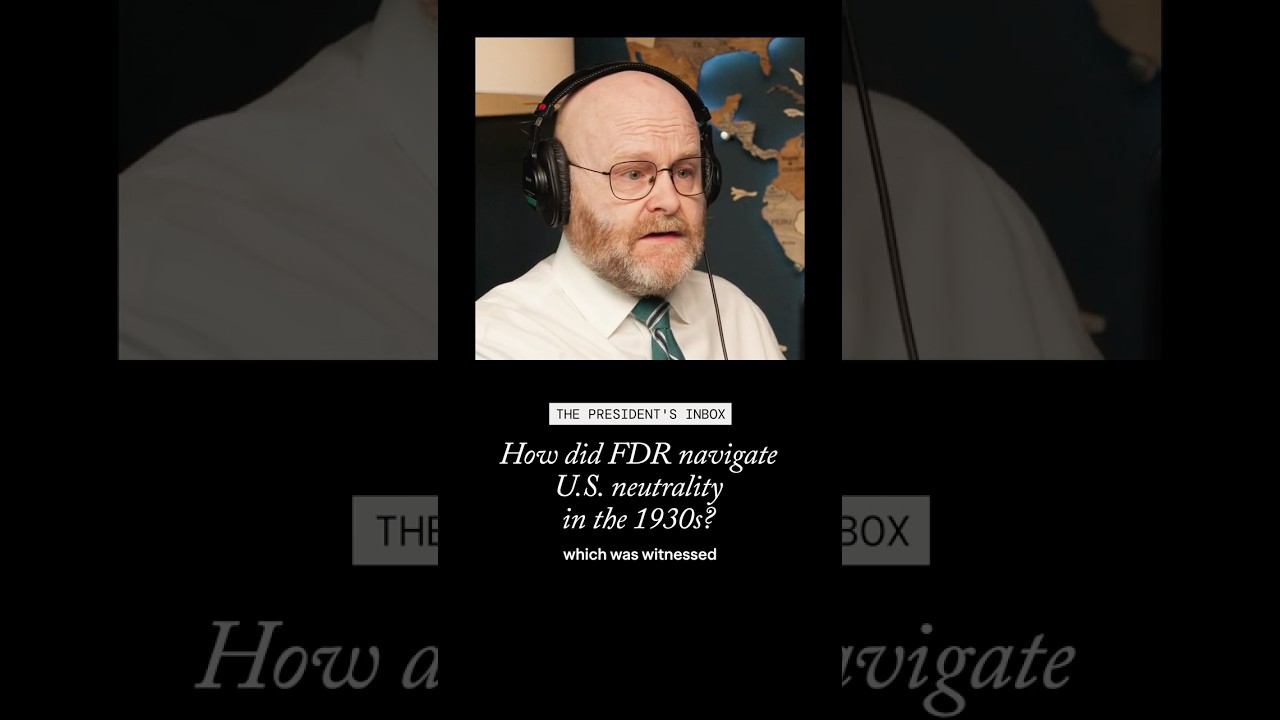
How did FDR navigate U.S. neutrality in the 1930s?
“Roosevelt was, above all, a political animal. . . . He really measured his actions to a great degree in terms of how it would affect him politically. And I think . . . he was at his weakest when things were really heating up in Europe,” says Lynne Olson, author of Those Angry Days: Roosevelt, Lindbergh, and America’s Fight Over World War II.
Olson joined James M. Lindsay on The President’s Inbox podcast to discuss the history of the Lend-Lease Act of 1941 and the domestic political struggles that shaped the entry of the United States into World War II.
Subscribe to our channel: https://goo.gl/WCYsH7
This work represents the views and opinions solely of the author. The Council on Foreign Relations is an independent, nonpartisan membership organization, think tank, and publisher, and takes no institutional positions on matters of policy.
Visit the CFR website: http://www.cfr.org
Follow CFR on X: http://www.twitter.com/cfr_org
Follow CFR on Facebook: https://www.facebook.com/councilonforeignrelations/