
 World Food Programme India
112d ago
World Food Programme India
112d ago
▶
Climate-Smart Farming in Odisha: How the WFP's RIISE Project is Supporting Smallholder Farmers
In Ganjam district of Odisha, smallholder farmers are adopting climate-resilient agricultural practices that are helping them protect crops, reduce costs and strengthen their livelihoods.
The World Food Programme, in collaboration with the Department of Agriculture and Farmers’ Empowerment, Government of Odisha, is implementing the project Resilient and Inclusive Initiatives for Sustainability and Empowerment (RIISE) in Odisha.
The project aims to strengthen climate resilience among smallholder farmers, women farmers and their collectives through an empowerment-based approach. By supporting climate-smart agricultural practices, access to information and community engagement, the initiative is helping farmers adapt to changing environmental conditions while improving their livelihoods. Currently, the RIISE project is supporting 7,700 farmers across 10 Gram Panchayats in four blocks of Ganjam district.
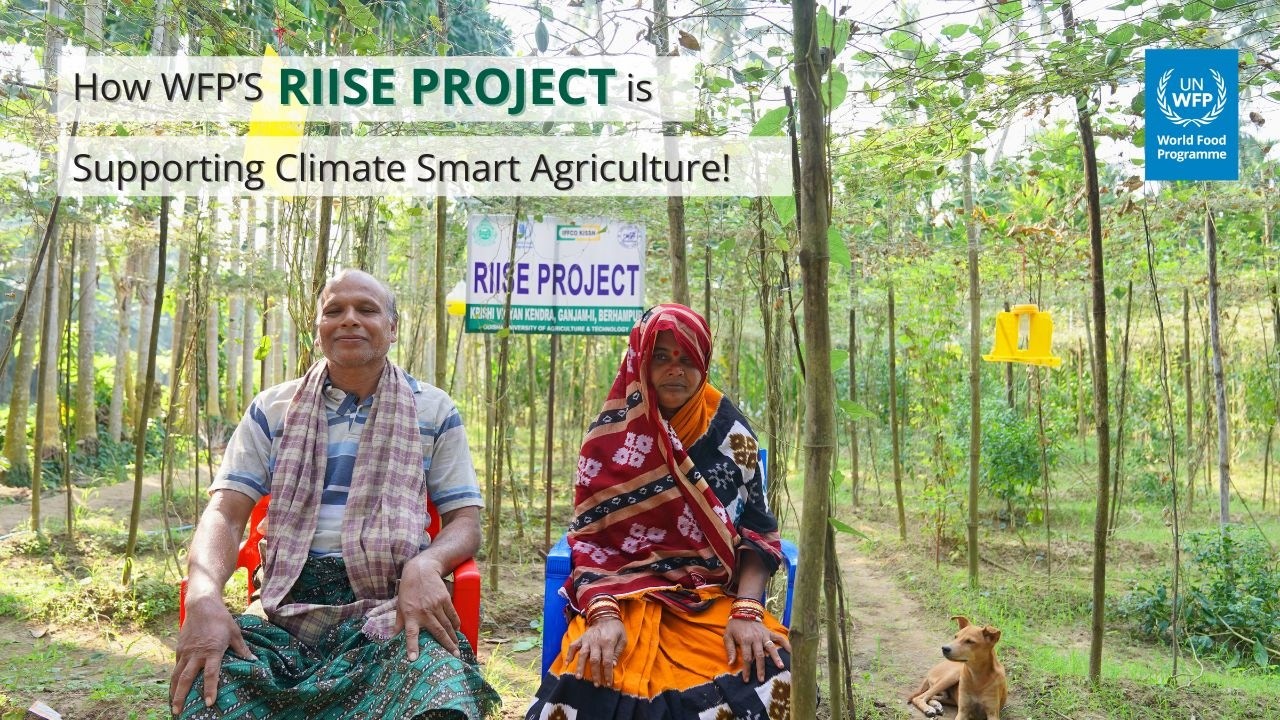
In this video, farmer Subas Pradhan shares how new farming practices and technologies introduced through the RIISE project are helping farmers improve productivity while managing risks from pests, changing weather patterns and climate-related challenges. From using yellow traps to control insects to receiving weather alerts through mobile phones, farmers are able to make better decisions about irrigation, crop protection and farm management. These changes are helping reduce expenses and improve returns from farming.
Through innovation, knowledge sharing and local partnerships, the project is helping build resilient farming systems and sustainable livelihoods for rural communities in Odisha.