
 Humanitarian Academy
41d ago
Humanitarian Academy
41d ago
▶
“AI must be built with national systems and local realities in mind” – a perspective from Nepal
How can AI be used to scale and speed up anticipatory action efforts in disaster-prone regions?
The Humanitarian Leadership Academy and Data Friendly Space's 2025-26 research into how humanitarians are using artificial intelligence (AI) revealed that individual uptake is outpacing organisational readiness. While the 2025 research documented some more detailed use cases from practitioners in Ukraine, Lebanon, Afghanistan and across several African countries, the majority of use cases documented to date have been individual-level applications of commercial AI tools to improve their own workflows. This reflects the adoption patterns across the sector where 75% of humanitarians are using AI regularly to support their work, while only 9% report of organisation-wide integration.
In this interview, we look at a different category of use case: the integration of AI into inter-agency and multistakeholder humanitarian work for anticipatory action, in a context where preparedness has become increasingly central to operations.
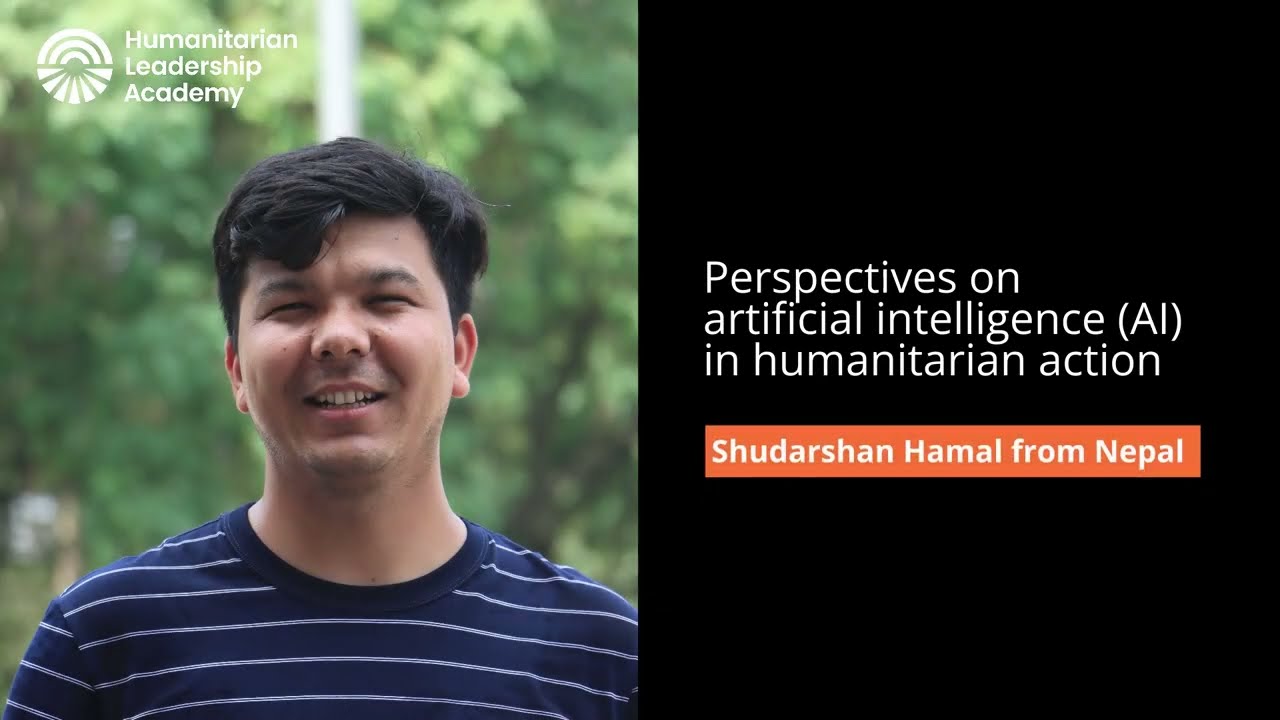
Nepal has long been recognised as a high-risk area for climate-induced humanitarian emergencies - sudden-onset hazards including floods, landslides, to heatwaves and droughts that are intensifying with climate change. Kathmandu-based Shudarshan Hamal is a Programme Manager at NAXA Private Limited, where he supports disaster risk reduction, anticipatory action, and climate resilience initiatives. He leads the implementation of DASTAA (Digital and Spatial Technologies for Anticipatory Action). DASTAA is an integrated, modular platform that combines household-level risk data, geospatial analysis, Earth Observation, GeoAI-assisted hazard mapping, citizen science, and multi-channel early warning communication to support anticipatory action. It is being implemented with local governments and humanitarian partners across Nepal, Bangladesh, and Malawi.
In his own words, drawn from an interview conducted by research co-lead Ka Man Parkinson, Shudarshan explains how AI is being used in Naxa and also incorporated into DASTAA as part of broader process - alongside data quality, stakeholder alignment, AI literacy, and institutional coordination - to strengthen anticipatory action efforts in project implementation areas.
Read the full interview:
https://www.humanitarianleadershipacademy.org/resources/ai-must-be-built-with-national-systems-and-local-realities-in-mind-a-humanitarian-perspective-from-nepal/